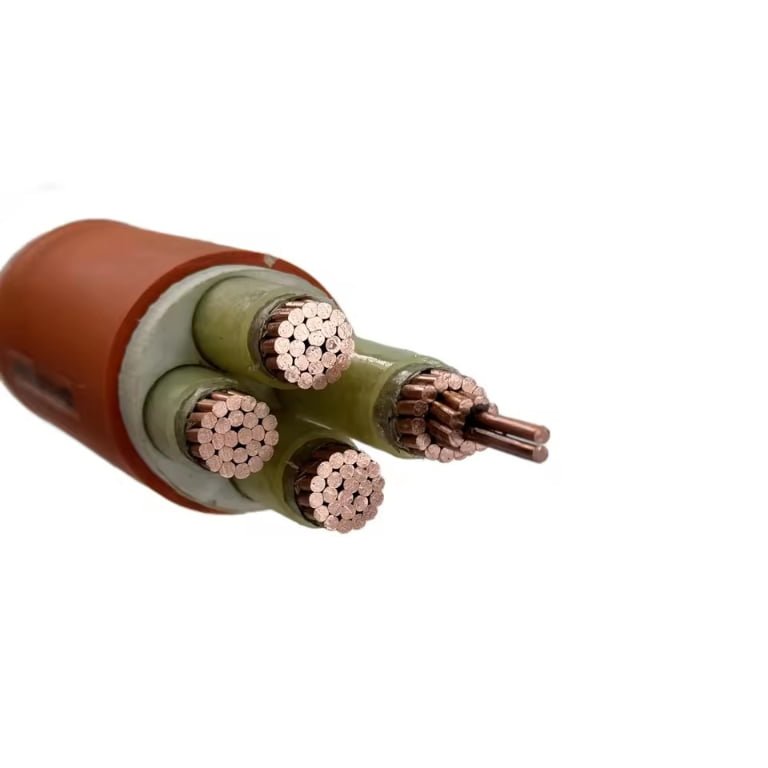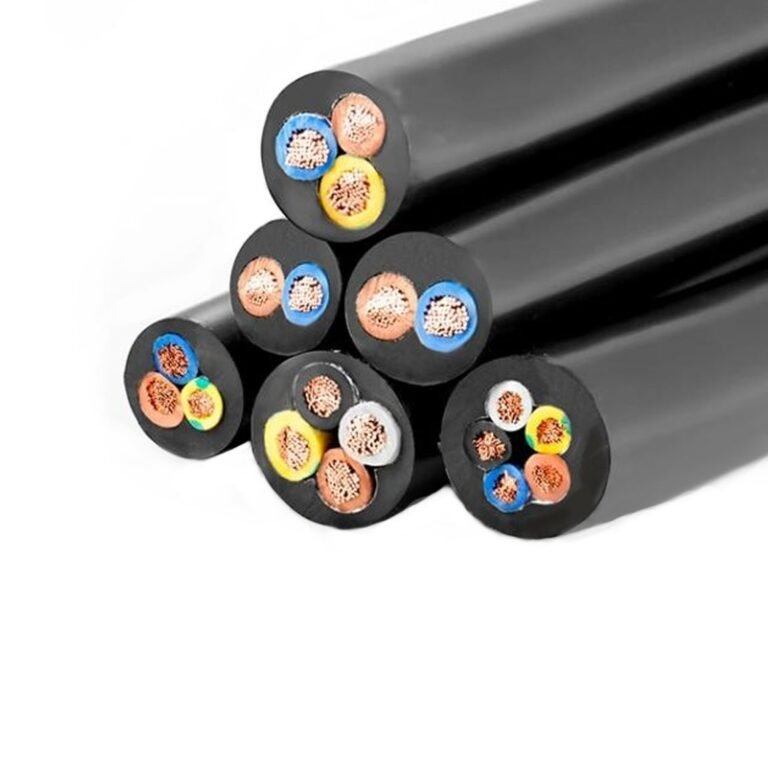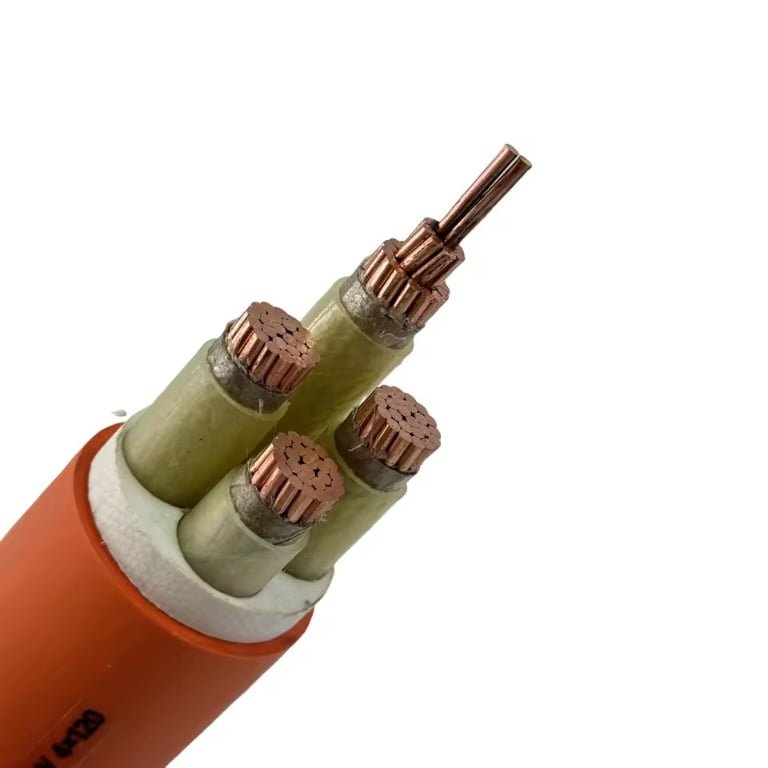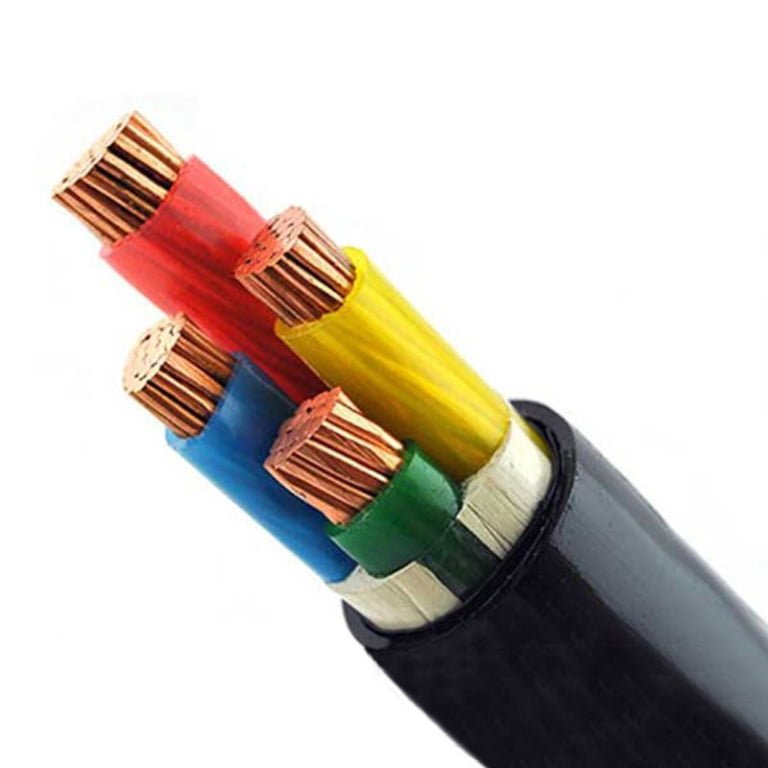
Buried house wire is one of those mistakes that looks harmless until water finds the jacket, insulation resistance drops, a breaker starts nuisance-tripping, or a splice box turns into a corrosion cell. Then the cheap trench becomes a call-back, rework, failed inspection, or damaged load. The fix is not deeper burial of Romex; it is choosing a wiring method rated for underground wet conditions from the start.
No, standard Romex, usually NM-B cable, should not be buried underground or pulled through underground conduit for burial. Under NEC rules, underground raceways are wet locations, and NM-B is generally limited to dry locations. Use UF-B cable, individual THWN-2 or XHHW-2 conductors in approved conduit, or another direct-burial-rated assembly.
The confusion comes from the conduit. On a dry day, a PVC run looks like protection, and mechanically it is; electrically and code-wise, it is still expected to collect moisture over time. That one distinction drives the whole decision: cable jacket rating, conductor insulation marking, burial depth, GFCI protection, and whether the inspector signs off without making you open the trench.
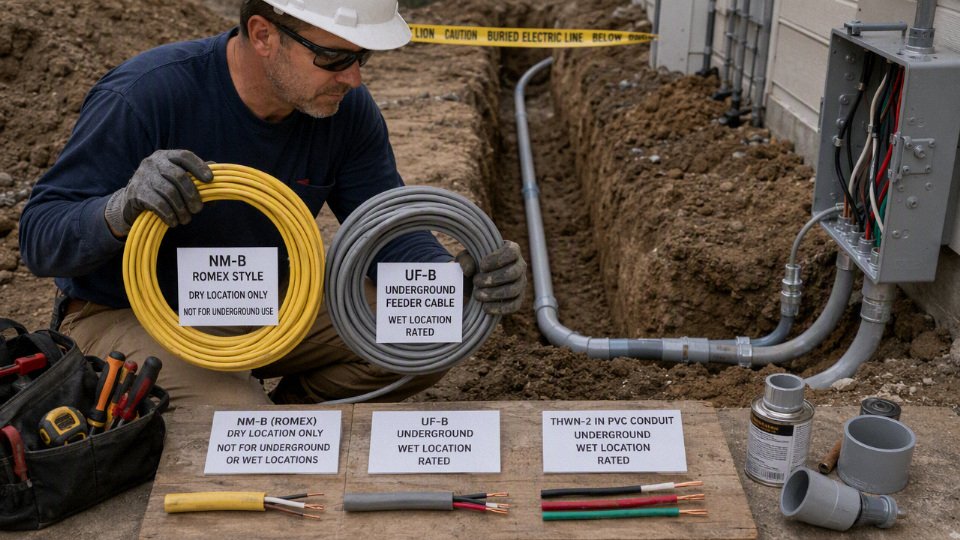
Why NM-B fails underground
NM-B fails underground because it is a dry-location building cable being placed into a wet, chemically active, mechanically hostile environment it was never tested or listed to survive. The problem is not only direct soil contact; even NM-B pulled through buried conduit is still in a wet location under NEC treatment, so the cable remains misapplied.
NM-B cable, the product many people casually call “Romex,” is built for protected interior branch wiring. A typical assembly has:
- Individually insulated circuit conductors, usually PVC-based insulation in modern NM-B.
- A bare or sometimes covered equipment grounding conductor.
- Paper wrap, separator paper, or filler material around the conductors.
- A nonmetallic outer sheath intended to bundle and protect the conductors inside walls, ceilings, and other dry building cavities.
That construction works well in the environment it was designed for: framing cavities, bored studs, attic runs protected from physical damage, and dry indoor routing where the jacket is not asked to resist soil chemistry or standing water. The outer sheath is not the same thing as a direct-burial jacket. It is easy to confuse “plastic-covered” with “waterproof,” especially when the cable looks intact on the reel, but those are very different engineering claims.
NM-B cable becomes acceptable for underground burial if it is installed inside PVC conduit.False
Underground raceways are treated as wet locations under NEC 300.5(B). Conduit may provide physical protection, but it does not convert a dry-location cable into a wet-location wiring method.
The listing problem comes before the field failure
NM and NM-B cable are not listed for wet locations. That single fact should stop the design before anyone starts arguing about how tight the conduit joints are or how shallow the trench is. Electrical products are not approved in a vague, all-purpose way; they are evaluated for defined constructions, environments, temperatures, installation methods, and failure modes.
Using NM-B below grade takes it outside that evaluated envelope. From a procurement and inspection standpoint, that means the installed system no longer rests on the cable’s listing. A local inspector does not need to prove that water has already damaged the cable. The misapplication is enough.
For buyers, this is where a cheap material decision becomes expensive. A purchasing team may save a small amount by buying familiar NM-B instead of UF-B, THWN-2, XHHW-2, or a direct-burial-rated assembly. If the installation fails inspection after trenching, backfill, wall penetrations, and panel work are complete, the cost is no longer cable price. It is labor, schedule recovery, excavation, replacement fittings, retesting, and the uncomfortable meeting where everyone asks why the wrong wiring method was released for construction.
Soil is not just “dirt”
Below grade, a cable sees a mix of water, chemistry, pressure, and movement. That environment changes by site. A dry sandy yard in August may become a saturated trench in March. An industrial site near a washdown area or loading dock can be worse than a residential lawn because runoff carries salts, oils, cleaning chemicals, and fine debris.
Common underground stressors include:
- Groundwater and perched water: trenches often collect water even when the surrounding grade looks dry.
- Condensation: temperature swings pull moisture out of the air inside raceways and enclosures.
- Dissolved salts and fertilizers: these raise conductivity and accelerate corrosion where moisture reaches metal.
- Hydrocarbons and chemicals: fuel, oils, solvents, and process residues can attack jacket materials not selected for that exposure.
- Microorganisms and organic acids: especially in wet soil, landscaping areas, farms, and wastewater-adjacent sites.
- Freeze-thaw movement: seasonal expansion and contraction can rub cable against conduit edges, stones, or fittings.
- Mechanical pressure: backfill settlement, rocks, traffic loading, and thermal movement can deform non-rated jackets.
The failure mechanism is usually not dramatic at first. The jacket may abrade at a conduit bell end, swell slightly, harden, or split at a stress point. Moisture then tracks along paper fillers and conductor interfaces. Once water finds a path, capillary action can carry it farther than most people expect. I have seen terminations corrode in “dry” boxes because the real leak path was several feet away.
Buried conduit is still a wet location
This is the code concept that catches a lot of otherwise competent installers: the inside of an underground conduit is considered a wet location. NEC 300.5(B) treats underground raceways that way because moisture gets in through normal physics, not only through sloppy workmanship.
Moisture enters buried conduit through several paths:
- Condensation from temperature cycling: the conduit cools below the dew point, and water forms on the inside wall.
- Imperfect seals: threaded fittings, PVC joints, box entries, and field-cut ends are rarely perfect for the life of the installation.
- Capillary action: small gaps can pull water along interfaces, especially at terminations and sleeves.
- Pressure changes: heating and cooling move air in and out of raceways.
- Service damage and settlement: a conduit that tested fine on day one may shift after backfill, frost, or vehicle loading.
Here is the counter-intuitive part: heavily sealed conduit can still end up with water inside. A very tight raceway may reduce bulk water entry, but it can also trap condensation once moisture is present. The raceway becomes a long, buried bottle with electrical conductors in it. That is why wet-location conductor ratings exist.
Conduit has a valid job underground. It can protect conductors from physical damage, provide a replaceable pathway, help with organized routing, and satisfy cover or protection requirements when used correctly. What it cannot do is change the environmental rating of the cable inside it. A dry-location cable inside a wet underground raceway is still a dry-location cable in a wet location.
The trade-off is practical. Pulling individual wet-rated conductors such as THWN-2 or XHHW-2 in conduit often requires more attention to conduit fill, bend count, pulling lubricant, and termination practice than simply running a cable assembly. In exchange, the conductors match the environment and are usually easier to replace later if the raceway is well designed. Direct-burial UF-B or other listed assemblies can reduce conduit work, but they may be harder to pull, less flexible, and still need physical protection where emerging from grade. The preferred choice flips with distance, load, routing complexity, damage exposure, and whether future replacement matters.
How NM-B underground typically fails
The failure path is usually progressive, which is part of the danger. The installation may energize normally. It may pass a basic continuity check. It may even run for a while before symptoms show up, especially on lightly loaded circuits.
A common progression looks like this:
- Outer sheath damage or degradation starts. Abrasion during pulling, contact with a sharp conduit edge, jacket swelling, or pressure from backfill creates the first weak point.
- Moisture enters the cable assembly. Paper and filler materials can hold and transport water rather than shedding it.
- Insulation stress increases. Wet contamination lowers insulation resistance, especially when salts, fertilizers, or conductive dirt are present.
- Leakage current appears. GFCI or AFCI/GFCI devices may trip intermittently, often after rain, irrigation, snowmelt, or overnight temperature drops.
- Terminations begin to corrode. Moisture travels toward boxes, devices, splices, and panel entries. Copper darkening, green corrosion products, rusted screws, and damp wirenuts are warning signs.
- Heat and fault risk increase. A poor termination or compromised insulation can create localized heating, arcing, shock exposure, or a ground fault severe enough to damage equipment.
Intermittent faults are the expensive ones. A dead short is easy to find. A circuit that trips only after a storm, or only when the irrigation pump runs, burns maintenance hours. Someone resets the breaker twice, swaps a GFCI once, blames the outdoor receptacle, and only later discovers the wrong cable in the trench.
A sleeve is not the same as an underground wiring method
There is a legitimate use of short conduit sleeves with NM-B in some building work: protecting cable from physical damage where it passes through a vulnerable area, subject to the applicable code rules and local interpretation. That concept gets misused underground.
A short protective sleeve at a wall penetration or where cable emerges into a protected dry space is not the same as using NM-B through a buried raceway across a yard, under a driveway, out to a detached garage, or into a site light pole. The question is not whether the cable touches conduit. The question is what environment the cable occupies and whether the wiring method is listed for that environment.
This boundary matters: the conclusion that NM-B is unsuitable applies to below-grade and wet-location routing, including underground raceways. It does not mean NM-B is a bad cable inside its intended dry, protected building environment. Used correctly, it is a standard product. Used below grade, it is the wrong product.
The commercial exposure is just as real as the electrical exposure. Failed inspections, insurance disputes after an incident, warranty refusal, tenant turnover delays, and rework after landscaping or concrete is complete often cost far more than specifying the correct cable at bid stage. On a project drawing or purchase order, the safer habit is simple: if the route goes underground, specify a wiring method and conductor insulation rated for underground wet-location service, then verify cover depth, GFCI requirements, raceway type, and local amendments before the trench is closed.
Code and listing basics
Code acceptance for underground wiring starts with the cable’s listing, labeling, and installed wiring method, not with whether the cable “looks heavy enough.” In practice, the inspector or project engineer will look for the printed jacket marking, conductor insulation marking, datasheet, and certification, then compare those against the exact installation: direct burial, underground conduit, wet location, physical protection, and required cover.
The practical rule is simple but often missed on job sites: electrical equipment and wiring methods must be installed in accordance with their listing and labeling. If a cable is listed only for normally dry interior use, putting it in PVC conduit under a driveway does not magically convert it into an underground cable. The raceway may protect it from shovel damage, but it does not change the cable construction, moisture rating, or conductor insulation listing.
Romex-type NM-B cable can be made code-compliant underground by pulling it through sealed conduit.False
Underground raceways are treated as wet locations under NEC 300.5(B), and NM-B is generally limited to dry locations. Conduit may provide physical protection, but it does not change the cable's wet-location suitability or listing.
The code concepts that actually decide the answer
For most branch-circuit and feeder decisions, the underground suitability check comes down to these linked code concepts:
- Location classification: dry, damp, or wet. Underground installations are not treated like interior wall cavities, even if the conduit seems sealed.
- Direct burial rating: whether the cable assembly itself is listed and marked for burial in earth.
- Underground raceway rules: whether the conduit is PVC, metal, or another approved raceway, and whether the conductors inside are rated for wet locations.
- Physical protection: whether the wiring needs extra protection from traffic, tools, livestock, landscaping equipment, or building damage where it emerges from grade.
- Ampacity: whether the conductor size and insulation rating support the load after applying temperature, fill, grouping, and termination limits.
- Conductor insulation type: whether the individual conductors are marked for wet use, such as THWN-2 or XHHW-2.
- Minimum cover: burial depth, which under NEC underground rules commonly ranges from about 6 in to 24 in depending on wiring method, voltage, GFCI protection, residential versus non-residential location, and exposure to traffic.
Minimum cover is a good example of where procurement and installation have to speak to each other. A buyer can order the right cable and still create a failed installation if the trench detail is wrong. The reverse is also true: a neat 24 in trench does not rescue a cable that is not listed for wet underground service.
Why underground conduit is still a wet location
NEC 300.5(B) is one of the most practical rules in this discussion: conductors and cables installed underground are considered exposed to moisture, and raceways installed underground are considered wet locations. That matches what electricians see in the field. Conduit breathes with temperature swings, fittings are not laboratory-sealed forever, and water finds low points through condensation, imperfect solvent joints, damaged threads, or the open end of a stub-up before the cap goes on.
The mechanism matters. Moisture does not have to flood the conduit to cause trouble; repeated wetting, drying, and temperature cycling can attack materials not designed for that environment. Over time, insulation resistance can drop, jackets can degrade, and nuisance GFCI trips may show up long before a complete fault. In a plant or farm installation, that may mean one feeder trip stops a pump, gate operator, lighting circuit, or small outbuilding panel at the worst possible time.
The trade-off is that conduit gives better mechanical protection and makes conductor replacement easier than many direct-burial arrangements, but it raises the requirement for wet-rated conductors inside the raceway. The preferred choice flips when the route is rocky, exposed to vehicle traffic, or likely to be modified later; then conduit with properly rated conductors often beats direct-burial cable despite the added fittings, labor, and trench planning.
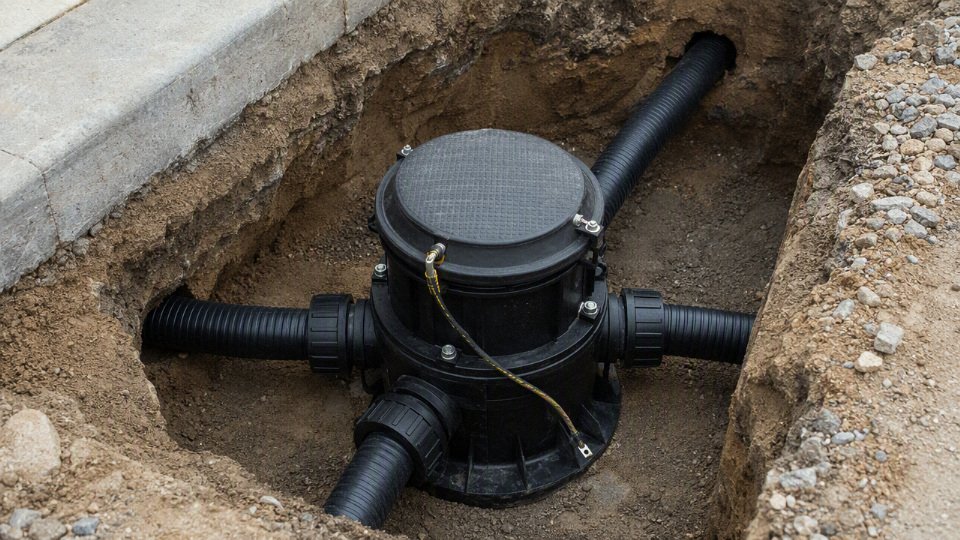
Where NM-B, UF, THWN-2, and XHHW-2 fit
NM-B, the cable many people call Romex, is normally associated with NEC Article 334 and is intended for normally dry interior building spaces. It is common in houses because it is fast to pull, easy to staple, and economical for protected indoor branch circuits. That convenience is exactly why it gets misapplied outdoors and underground.
UF cable is handled separately and is built for moisture-resistant performance suitable for direct burial when installed according to code. It is stiffer and less pleasant to strip than NM-B, but that is part of the construction difference: the conductors are embedded in a tougher, moisture-resistant assembly rather than sitting inside the same kind of dry-location cable structure used indoors.
For conduit underground, the usual answer is not “Romex in pipe.” It is individual conductors with wet-location markings. Common examples include:
- THWN-2: widely used where wet-location and heat ratings are required, often dual-marked with THHN on building wire.
- XHHW-2: cross-linked polyethylene insulation, often selected for feeders, industrial work, and installations where insulation toughness or pulling behavior is valued.
- Other accepted wet-location markings: allowed only when the listing, project specification, and local code basis support the intended use.
The small marking on the insulation matters. A spool described casually as “THHN” may actually be dual-rated THHN/THWN-2, but that must be verified on the conductor print or manufacturer documentation. Seller text on a web page is not enough for inspection, and it is a poor basis for a purchase order on a commercial project.
The AHJ and project documents decide borderline cases
Branch circuits to sheds, feeders to workshops, service entrance conductors, landscape lighting, pool equipment, agricultural buildings, airport lighting, industrial yards, and utility-side work can fall under different NEC articles, utility standards, or project specifications. The same trench may even contain circuits governed by different requirements if communications, power, controls, and utility-owned conductors share the corridor.
The authority having jurisdiction has the final say for code enforcement, but they are not the only technical voice. A utility engineer may control service lateral requirements. A project consultant may specify insulation type, burial depth, warning tape, separation, duct bank details, or spare conduits. An inspection agency may require certification documents and cable markings to match the submittal package, not just the installer’s verbal explanation.
Do not buy underground cable by color, jacket feel, brand familiarity, or a seller’s loose phrase like “outdoor wire.” The safe purchasing check is whether the printed jacket marking, conductor insulation marking, datasheet, certification, and planned installation method all point to the same answer. This guidance stops holding when local amendments, utility rules, classified locations, corrosive soil, submerged conditions, or special industrial specifications apply; those cases need the current code basis and project documents reviewed before material is released for shipment.
Acceptable underground wiring methods
The compliant replacement for Romex is not one product; it is a wiring method matched to soil, load, route risk, inspection practice, and future maintenance. For most residential branch circuits the choice is usually UF-B or individual wet-location conductors in PVC conduit, while commercial, industrial, service, and control circuits often justify heavier raceway, armored direct-burial cable, or application-specific cable designs.
NM-B cable can be made acceptable for underground use simply by pulling it through PVC conduit.False
Underground raceways are treated as wet locations under NEC 300.5(B), and NM-B is generally limited to dry locations. The conduit may protect against impact, but it does not change the cable's wet-location listing.
UF-B cable for simple buried branch circuits
UF-B is the closest practical substitute when someone originally planned to bury Romex for a small residential or light commercial circuit. It is built as a solid, moisture-resistant cable assembly rather than a paper-filled dry-location cable, so it can be listed for direct burial where the local code and installation conditions allow it.
In practice, UF-B is common for:
- Detached garage lighting and receptacles
- Yard lights and landscape circuits
- Small sheds and accessory buildings
- Irrigation controllers or small outdoor loads, when sized and protected correctly
- Short, straightforward branch-circuit runs with limited future change expected
Its strength is simplicity. You trench, maintain the required cover, protect the cable where it rises from grade, and avoid the labor of pulling individual conductors through conduit. For a homeowner or small contractor, that can reduce material cost and installation time.
The trade-off is maintainability. If UF-B fails under a driveway edge, tree root zone, or future landscaping bed, you normally dig it up. There is no spare raceway path, no easy conductor replacement, and no clean way to upsize later if the shed becomes a workshop with a compressor, heater, or EV charger. UF-B is also stiff, especially in cold weather; anyone who has tried dressing it neatly into a small weatherproof box in January knows it is not as friendly as THWN-2 conductors in conduit.
UF-B still needs mechanical protection where exposed. The riser up a wall, pole, pedestal, or equipment base is usually sleeved in conduit, and the transition has to be arranged so the cable is not nicked by the conduit edge. Use proper bushings or fittings, not a rough-cut PVC stub with a sharp burr.
PVC conduit with THWN-2 or XHHW-2 conductors
PVC conduit with individual wet-location conductors is often the most balanced underground method for feeders, branch circuits, outbuildings, pumps, powered gates, signs, lighting poles, and outdoor equipment. Schedule 40 PVC is common underground, while Schedule 80 is often used where the raceway emerges and is exposed to physical damage; local inspectors may be particular about this detail.
The important part is the conductor rating. Underground conduit is a wet location even if every joint was glued carefully and the run “looks sealed.” Condensation, groundwater migration, and temperature cycling put moisture inside raceways. Conductors such as THWN-2 or XHHW-2 are intended for wet locations when properly marked and used within their temperature and voltage ratings.
Typical reasons engineers and maintenance teams choose conduit include:
- Conductors can often be replaced without retrenching, if the raceway was installed with sane bend count and pull access.
- Circuit size can sometimes be increased later, provided conduit fill, derating, voltage drop, and equipment ratings still work.
- Faulted conductors can be isolated and pulled, rather than abandoning a direct-buried cable.
- Pull boxes, handholes, and sweeps give inspectors and maintenance staff visible access points.
- The route can cross under traffic or hardscape with better mechanical planning.
THWN-2 is widely used and familiar to electricians. XHHW-2, with cross-linked polyethylene insulation, is often favored on larger feeders or tougher environments because it has good moisture and heat performance and can be more rugged during pulling, depending on construction. The preferred choice can flip based on conductor size, conduit length, pulling difficulty, termination space, and purchasing availability. For a short 20 A branch circuit, THWN-2 in PVC may be economical and easy. For a long feeder to a shop, XHHW-2 may be worth reviewing, especially when voltage drop and pull tension start to matter.
The mechanism behind the cost difference is not just wire price. A long run with several bends increases pulling tension and sidewall pressure. If the insulation is damaged during installation, the job may pass rough inspection and still fail later after moisture and load cycles do their work. Good crews use proper sweeps, pulling lubricant compatible with the insulation, measured fill, and pull boxes where needed. Bad conduit work turns a “repairable” system into a buried rope trick.
Rigid metal conduit, IMC, and galvanized rigid steel
Rigid metal conduit, intermediate metal conduit, and galvanized rigid steel belong where the route needs serious mechanical protection or where industrial practice demands a more durable raceway system. They show up around loading docks, plant yards, traffic areas, fuel islands, exterior equipment pads, and places where forklifts, skid steers, snowplows, or maintenance contractors have a habit of finding anything fragile.
Compared with PVC, metal raceway can provide:
- Higher impact and crush resistance
- Better protection at exposed risers and equipment entries
- A robust equipment grounding path when installed with listed fittings and continuity maintained
- Better suitability for some classified, industrial, or high-abuse locations, subject to the actual code requirements
- Cleaner integration with metallic industrial equipment, strut systems, and rigid supports
The cost is real. Threading, corrosion protection, fittings, labor, and equipment support add up quickly. Burial corrosion also has to be taken seriously; soil chemistry, fertilizers, deicing salts, coastal exposure, and dissimilar metals can shorten service life. A plant that washes down exterior areas or stores chemicals outdoors should not assume standard galvanized steel will live forever underground.
Many jobs use a hybrid approach: PVC underground with rigid galvanized steel or Schedule 80 PVC risers where the raceway comes out of the ground. That is often commercially sensible, but the transitions, grounding continuity, expansion fittings, and corrosion protection must be designed rather than improvised at the trench.
Direct-burial armored, metal-clad, and industrial cable options
Direct-burial armored or metal-clad cable can be a strong option when conduit is difficult, the route is long, or the project wants a factory-built cable assembly with mechanical protection. This is more common in industrial, utility-adjacent, mining, petrochemical, infrastructure, and large site-power work than in ordinary residential branch circuits.
Do not buy “armored cable” by name alone. Procurement needs to verify:
- The cable is listed or certified for direct burial, not only for dry indoor armor use.
- The outer jacket is suitable for soil, moisture, sunlight where exposed, and any oil or chemical exposure expected.
- The armor material and construction match corrosion conditions.
- The grounding path is code-compliant for the installation, or a separate grounding conductor is included.
- The voltage rating, conductor insulation, temperature rating, and installation environment match the load.
- Terminations, glands, and fittings are available and approved for the cable type.
The expensive failure with industrial direct-burial cable is usually not the cable core; it is a mismatch between jacket, armor, soil chemistry, and termination hardware. A buyer can save a few percent on cable and lose it many times over in special glands, delayed inspection approval, or early jacket deterioration.
USE-2 and service-related conductors
USE-2 conductors are normally associated with underground service entrance and utility-side or service-related work, not general interior branch-circuit wiring. They may be appropriate between a utility service point, meter equipment, service disconnect, or other permitted service arrangement, depending on the installation and local authority requirements.
The limitation that catches people is transition into buildings. Some USE conductors are not permitted for interior wiring beyond the allowed point unless they carry another suitable rating, such as a dual rating that permits the indoor portion under the applicable rules. On a procurement sheet, “USE-2” by itself is not enough if the conductor will pass into an enclosure, raceway, basement, switchroom, or panel area where a different wiring method is required.
Specialty underground cables for controls, drives, instruments, and low voltage
Tray cable, instrumentation cable, control cable, VFD cable, communications cable, and low-voltage landscape or signal cable can be used underground only when the exact construction is rated for the conditions. This is where catalogs get dangerous because similar-looking part numbers may differ in burial rating, sunlight resistance, oil resistance, shield type, voltage class, flame rating, and wet-location suitability.
For technical buyers, the purchase description should state the actual conditions, not just the cable family:
- Direct burial or installed in underground raceway
- Wet-location rating required
- Sunlight exposure at risers or trays
- Oil, fuel, coolant, wastewater, or chemical exposure
- Shielding and grounding requirements for instrumentation or VFD noise control
- Voltage rating and insulation temperature
- Crush, rodent, or armor requirements
- Applicable listing, certification, or project specification
VFD cable deserves special care. A pump feeder may be physically underground but electrically demanding because reflected wave voltage, high-frequency noise, grounding, and shield termination affect motor and drive life. Ordinary wet-rated power conductors may be code-compliant for some loads but still be a poor engineering choice for a long VFD-fed submersible or remote motor run.
Method comparison for underground wiring
| Wiring method | Wet-location rating | Direct burial suitability | Conduit suitability | Common use | Key caution |
|---|---|---|---|---|---|
| Romex NM-B | Generally no | No | Not for underground wet-location raceway | Dry indoor residential wiring | Conduit underground does not make NM-B acceptable |
| UF-B cable | Yes, when properly listed | Yes, where permitted | Can be sleeved for protection; not usually pulled like singles | Residential and light commercial branch circuits | Protect risers and exposed sections; difficult to replace later |
| THWN-2 in conduit | Yes | No as loose conductors without raceway | Yes | Branch circuits, feeders, site equipment, pumps, signs | Conduit fill, bends, pulling tension, and wet-location markings matter |
| XHHW-2 in conduit | Yes | No as loose conductors without raceway | Yes | Larger feeders, tougher pulls, commercial and industrial work | Termination space, bend radius, and availability affect installed cost |
| USE-2 | Yes for intended service use | Often used for underground service conductors | May be used as permitted by rating and code | Utility/service entrance portions | Interior use is limited unless dual-rated or otherwise permitted |
| Direct-burial industrial cable | Depends on exact listing | Yes only if marked/listed for burial | Sometimes, depending on cable and raceway fill | Industrial power, controls, infrastructure, harsh routes | Verify armor, jacket, corrosion resistance, grounding, and terminations |
When conduit is worth the extra work
Conduit is preferable even when direct-burial cable is technically allowed if the circuit is asset-critical, likely to change, or exposed to higher damage risk. I would lean toward conduit for commercial yards, rocky soil, road crossings, parking lot lighting, gates that get hit by delivery trucks, pump circuits that cannot be down long, and any feeder where future load growth is plausible.
The hidden costs are easy to miss during bidding:
- Trench depth: Cover requirements commonly fall somewhere around 6 in to 24 in depending on wiring method, voltage, GFCI protection, and location, but the exact requirement must be checked against the applicable code and site condition.
- Backfill quality: Sharp rock against cable or conduit is cheap on day one and expensive five freeze-thaw cycles later.
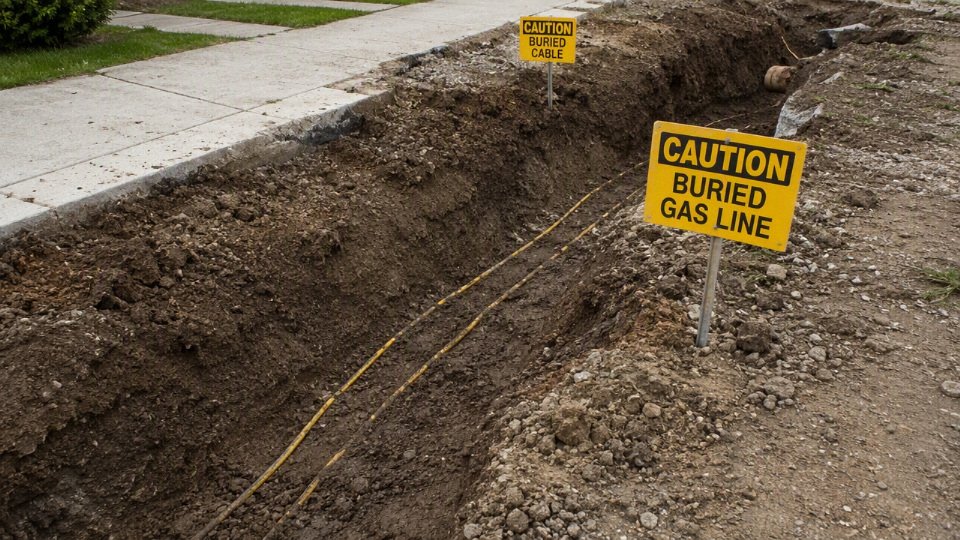
- Warning tape: A simple buried warning tape above the run can prevent a backhoe repair bill.
- Sweeps and bend count: Tight elbows make future pulls miserable or impossible.
- Pull boxes and handholes: They cost money, but they convert a buried system into a maintainable system.
- Derating and conduit fill: More conductors in one raceway may force larger wire or additional raceways.
- Voltage drop: Long outdoor runs often need upsized conductors even when ampacity looks adequate.
- Pulling tension: Long pulls with large conductors need calculation, not guesswork.
- Inspection access: Inspectors like seeing method, depth, protection, and transitions before the trench disappears.
- Repair strategy: If repair means cutting concrete, the cheaper method may not be cheaper.
Direct burial still has its place. For a straight run to a small load across a stable yard, with little chance of future paving, digging, or load increase, UF-B or a properly specified direct-burial cable may be the practical choice. The boundary is disturbance risk: once the route crosses traffic, rock, future construction, or production-critical equipment, conduit starts looking less like an upgrade and more like insurance.
Burial depth and protection
Minimum burial cover is not a single number you can copy from a chart and apply everywhere. It depends on the wiring method, circuit voltage and rating, GFCI protection, residential versus commercial use, traffic loading, and local amendments. Burial depth is checked only after the cable or conductors are already rated for underground use; deeper cover does not make NM-B or “Romex” acceptable below grade.
NEC-based cover requirements commonly land somewhere around 6 in to 24 in, but the details matter. A small residential branch circuit with GFCI protection may qualify for relatively shallow cover in some conditions, while a feeder to a detached garage, shop, pump house, sign base, or commercial equipment pad may need deeper cover such as 18 in or 24 in depending on whether it is direct-burial cable, PVC raceway, rigid metal conduit, or another approved method. Local inspectors may also raise the bar for frost zones, landscaping areas, public access, agricultural sites, or vehicle areas.

Cover depth and trench depth are not the same thing. Cover is measured from finished grade to the top of the cable, conduit, or raceway, not to the bottom of the trench. If the trench is 24 in deep but 3 in of bedding goes under the conduit and finished landscaping later removes 2 in of soil, the actual cover may no longer be 24 in. I have seen this bite projects after paving, when the electrical work was correct during rough-in but the final grade changed.
A practical burial layout should account for these items before the trench is opened:
- Wiring method: UF-B, individual wet-location conductors in conduit such as THWN-2 or XHHW-2, or another listed direct-burial assembly.
- Circuit type: branch circuit, feeder, control cable, service lateral, lighting circuit, pump circuit, or equipment supply.
- Voltage and protection: low-voltage landscape wiring is not treated the same as a 120/240 V feeder; GFCI protection can affect allowable cover in certain residential cases.
- Location: lawn, driveway, loading apron, warehouse yard, farm lane, plant utility corridor, or public walkway.
- Traffic exposure: hand tools and lawn aerators are one risk; forklift traffic, dump trucks, and skid steers are another.
- Local rule changes: municipal amendments, utility requirements, and inspector interpretation can change the installed requirement even when the national table looks clear.
Physical protection is just as important as cover. The weak points are usually not the straight underground run; they are the places where the wiring comes out of the ground, turns up a wall, enters a pole, reaches an equipment pad, or transitions from one wiring method to another. Direct-burial cable that is fine below grade often needs a sleeve, raceway, guard, or other protection at risers because shovels, string trimmers, pallet jacks, snow blades, and maintenance crews tend to find those spots. On industrial sites, I prefer to assume somebody will eventually lean a ladder, chain, or pipe wrench against the riser.
Route planning deserves a walkdown, not just a line on a drawing. Avoid:
- Foundation footings, grade beams, and areas likely to be underpinned or cut later.
- Tree roots, especially where growth or removal may disturb the run.
- Drainage swales, French drains, downspout discharge zones, and wet low spots.
- Future excavation zones near water lines, gas lines, compressed air, irrigation, or process piping.
- Utility corridors where locating errors become expensive.
- High-temperature areas near steam condensate lines, boiler rooms, asphalt heating zones, or sun-baked equipment pads.
- Places where heavy equipment can compact soil and deform raceways.
The mechanism is straightforward: soil movement, water migration, point loading, and thermal exposure all attack the installation differently. A sharp stone under a direct-burial cable can create a pressure point that worsens with compaction. A shallow PVC conduit under a driveway may not fail electrically on day one, but repeated wheel loading can ovalize the raceway, making future pulls difficult and concentrating stress on conductors. Heat raises conductor operating temperature and can reduce ampacity margin, especially where several loaded conductors share a raceway.
Backfill quality is part of the electrical installation, even if a civil crew is holding the shovel. Remove sharp rocks, scrap metal, broken concrete, and construction debris. Use sand or suitable bedding where required by specification, soil condition, or cable manufacturer instructions. Maintain required separation from other utilities, and do not let a mini-excavator bucket push conduit sideways while backfilling. For PVC, uneven support and aggressive compaction can create bellies that collect water; underground raceways are treated as wet locations under NEC 300.5(B), but trapped water still makes pulling, replacement, and freeze behavior worse.
Conduit work has its own practical limits:
- Use long-sweep elbows where conductors must be pulled, not plumbing-style tight bends.
- Keep total bend count within code and good pulling practice; too many bends turn a simple pull into insulation damage.
- Install pull boxes or handholes on long runs, directional changes, or future service points.
- Respect conduit fill limits and conductor jam ratio concerns on larger pulls.
- Use pulling lubricant compatible with the conductor insulation and conduit material.
- Deburr cut conduit, install proper bushings where required, and keep glue, primer, and dirt out of raceway interiors.
- Consider expansion fittings where PVC emerges from earth, crosses structural joints, or sees large temperature swings.
- Plan drainage and entry sealing so water is managed rather than assumed away.
There is a trade-off between direct burial and conduit. Direct-burial cable can reduce material and labor cost on a simple residential yard run, but it is harder to replace and more vulnerable during later digging. Conduit costs more and requires better installation discipline, but it improves mechanical protection and future serviceability. The preferred choice flips when the route crosses paved areas, commercial yards, equipment pads, or any place where downtime to retrench later would cost more than the raceway did up front.
Identification should not be treated as decoration. Place warning tape above the run at a sensible depth before final backfill. Use detectable marking or tracer wire where nonmetallic conduit or direct-burial cable may be hard to locate, if permitted and appropriate for the installation. Keep as-built drawings with dimensions from fixed references, not “about three feet from the fence” when the fence may move. Label panels, disconnects, junction boxes, pedestals, and equipment ends with durable circuit identification that will survive sun, water, and maintenance cleaning.
Grounding and bonding need the same attention as the live conductors. Metal raceways must be properly bonded. Equipment grounding conductors must be sized and installed for the circuit, not casually borrowed from a nearby pipe or structure. Transitions between PVC, rigid metal conduit, flexible connections, direct-burial cable, and equipment enclosures need listed fittings and continuous grounding paths. A buried installation can look neat and still be unsafe if the fault-current path is poor.
Correct burial depth alone can make Romex suitable for underground installation.False
NM-B cable is generally limited to dry locations. Underground cover depth is a separate installation requirement and does not change the cable's listing or wet-location suitability.
Selection criteria for projects
Use the purchasing specification to describe the installation, not just the cable name. “Underground feeder cable, 4 cores, copper, waterproof” is not enough for a buyer to control code compliance, installation risk, or inspection acceptance. A practical specification should lock down the load, environment, installation method, construction, standards, documentation, and delivery conditions before price comparison starts.
A cable marketed as outdoor, waterproof, or heavy duty is automatically acceptable for underground direct burial.False
Underground acceptance depends on the cable listing, markings, insulation/jacket construction, and the wiring method allowed by the applicable code and authority having jurisdiction. Marketing terms do not replace UL, CSA, IEC, utility, or project-specific approval requirements.
Define the electrical load
Start with the load schedule, not the trench drawing. The cable that works for a small residential branch circuit is not automatically suitable for a motor feeder, pump station, EV charging bank, or industrial skid.
Specify at least:
- System voltage: for example, 120 V, 120/240 V, 208Y/120 V, 480Y/277 V, 600 V, or project-specific low-voltage distribution.
- Phase and conductor arrangement: single-phase, three-phase three-wire, three-phase four-wire, separate equipment grounding conductor, or concentric/combined construction where permitted.
- Full-load current and continuous load factor: continuous loads normally need sizing margin under the applicable code method, not just nameplate amperes copied into a spreadsheet.
- Fault current at the supply point: the cable and accessories must tolerate available short-circuit conditions until the protective device clears.
- Startup or inrush current: motors, transformers, compressors, welders, and large power supplies can create voltage sag even when steady-state ampacity looks acceptable.
- Harmonic content: VFDs, UPS systems, rectifiers, LED drivers, and data-center loads can heat neutrals and conductors differently from simple resistive loads.
- Voltage drop limit: define the allowable drop at operating current and at starting current where applicable.
- Future capacity margin: spare capacity is cheap in the specification stage and expensive after paving, landscaping, or a concrete apron is in place.
The mechanism is straightforward: conductor size affects resistance, resistance creates voltage drop and heat, and heat drives insulation aging. Upsizing conductors improves voltage regulation and thermal margin, but it increases reel weight, conduit fill, bend stiffness, lug size, and pulling difficulty. In practice, the preferred choice flips when the route is short and accessible; then a smaller compliant cable may be more economical than paying for copper or aluminum that never earns its keep.
Define the underground environment
Underground work should be treated as a wet-location application unless the code and project documents prove otherwise. Under NEC 300.5(B), underground raceways are considered wet locations, even when the conduit looks well sealed on installation day. Condensation, groundwater, nicked fittings, and seasonal flooding have a way of proving the rule right.
List the actual exposures:
- Direct soil contact or raceway-only installation
- Sunlight exposure at risers, pole drops, rooftops, or tray transitions
- Oil, fuel, coolant, fertilizer, salt spray, washdown chemicals, or process chemicals
- Minimum and maximum ambient temperature
- Soil temperature and burial depth
- Rodent, termite, or insect risk
- Corrosive soil, high moisture soil, coastal ground, or industrial contamination
- Flooding, poor drainage, or submerged handholes
- Mechanical impact from vehicles, forklifts, excavators, or farm equipment
A cable jacket that is fine in a clean PVC conduit may be a poor choice in oily soil around a generator pad. A direct-burial-rated assembly may still need extra mechanical protection where it emerges from grade. This is where plant-floor experience matters: many failures happen in the last 2 m near a riser, not in the straight trench run.
Define the installation method
The wiring method determines both the legal cable type and the labor risk. Do not buy cable until the route is frozen enough to know how it will be installed.
Common methods to call out include:
- Direct burial: lower raceway cost, but harder to replace and more exposed to soil conditions.
- Underground conduit: better mechanical protection and replaceability, but still a wet location; conductors must be suitable for wet use, such as THWN-2 or XHHW-2 where applicable.
- Duct bank: good for commercial and industrial feeders, but thermal derating and pulling calculations become more serious.
- Cable tray transition: requires a cable construction and listing suitable for the tray portion and the underground portion, or a proper splice/transition method.
- Handholes and pull boxes: must be sized and located for pulling, drainage, identification, and future maintenance.
- Pole risers and building entries: need sunlight resistance, physical protection, grounding continuity, and proper sealing at the entry.
- Equipment skids: vibration, oil exposure, tight bends, and OEM interface requirements often drive a different cable choice.
- Utility interface: utility service rules may override the owner’s preferred construction.
Direct burial can look attractive on first cost. The trade-off is maintainability: if a cable fault develops under a driveway, production yard, or landscaped area, locating and repairing it can cost far more than the raceway that was omitted. That does not mean direct burial is wrong; it means it belongs where the owner accepts the replacement risk and the cable is specifically rated and marked for that method.
Define standards, certifications, and inspection rules
A good purchase order names the standard path clearly. Depending on project location and owner requirements, that may include:
- NEC requirements for wiring method, wet-location suitability, cover depth, ampacity, grounding, and physical protection.
- UL listing or recognition, including the relevant cable type and marking.
- CSA certification for Canadian projects or owner specifications requiring it.
- IEC-based construction or testing for international industrial projects where IEC cable classes are specified.
- Utility standards for service laterals, transformer connections, meter points, and approved materials.
- Fire performance requirements such as flame propagation, smoke, halogen content, or building-entry limitations.
- Local authority having jurisdiction rules, which can be stricter than the base code.
- Owner engineering standards, often seen in petrochemical, mining, water treatment, logistics, and large campus projects.
The cable marking and listing file should support the exact installation method being purchased, not a similar-sounding use case. If the inspector, consultant, or utility asks for proof, a glossy catalog page with “waterproof” in large type will not carry the same weight as a certificate, listing reference, and correct print legend on the jacket.
Define cable construction requirements
Once the duty and approval route are known, translate them into construction details:
- Conductor material: copper for compact terminations and lower resistance; aluminum for cost and weight savings where terminations and sizing are designed for it.
- Strand class: solid, Class B, flexible, or fine-stranded depending on pulling, vibration, and termination compatibility.
- Insulation type: for example, wet-location thermoplastic or thermoset insulation selected against temperature, voltage, and chemical exposure.
- Jacket material: chosen for sunlight, abrasion, oil, moisture, cold bend, and soil exposure.
- Armor or metallic protection: useful where mechanical damage is credible, but it adds weight, bending stiffness, corrosion concerns, and grounding details.
- Shielding: needed for some medium-voltage or noise-sensitive applications, not usually a residential branch-circuit concern.
- Grounding conductor: size, material, insulation color, and whether it is integral or separate.
- Color coding: phase identification, neutral, ground, and any owner-specific convention.
- Print legend: cable type, voltage, temperature rating, approvals, manufacturer, date or batch reference, and burial/wet-location suitability where applicable.
- Sequential length marking: highly useful on long pulls and drum management; I like it because it prevents small site arguments from turning into delay claims.
Define installation engineering limits
Large underground cable work can fail before energization if pulling and thermal limits are ignored. Ask for or calculate:
- Minimum bend radius
- Maximum pulling tension
- Maximum sidewall pressure at bends
- Conduit fill
- Number and angle of bends between pull points
- Thermal derating for grouping, duct bank layout, ambient temperature, and soil conditions
- Soil thermal resistivity where high loads or duct banks are involved
- Allowable ampacity calculation method
Thermal performance is often misunderstood. A cable in free air sheds heat differently from a cable in conduit, in a duct bank, or surrounded by dry compacted soil. If multiple loaded circuits are grouped together, each cable becomes part of the heat source for its neighbor. The section’s conclusion stops holding when site soil, grouping, or load profile differs materially from the assumed calculation; at that point, the ampacity needs engineering verification, not a catalog shortcut.
Define documentation and logistics for procurement
For residential work, documentation may be simple. For commercial and industrial procurement, especially bulk cable, it should be part of the bid package:
- Datasheet with construction and ratings
- Type test or routine test report, as applicable
- Certificate of conformity
- Listing or certification evidence
- Packing list
- Drum schedule with cable length per reel
- Batch or production traceability
- Installation instructions
- Storage requirements
- Export packing requirements
- Shipping method and unloading plan
- Project phasing and delivery windows
- Spare length allowance
- After-sales technical support contact path
Reel size is not a clerical detail. A reel that is too large may not fit the site forklift, laydown area, cable trailer, or container unloading plan; a reel that is too small creates extra joints or waste. Outdoor storage also needs attention: cable ends should be sealed, reels kept out of standing water where practical, and markings protected enough that the crew can still identify the product months later.
For large international cable projects, early engineering review helps prevent a common purchasing failure: buying a technically good cable that is wrong for the approval route, pulling plan, or destination paperwork. Jinda’s integrated R&D, production, technical support, after-sales service, production traceability, and export-oriented documentation are most useful when the buyer provides the load schedule, route details, installation method, required standards, and project delivery plan before final cable construction is locked.
Existing buried Romex risks
Existing buried Romex should be treated as a potentially unsafe, noncompliant condition until proven otherwise by inspection and testing. The immediate question is not “Can it keep working?” but “What does it feed, how wet has it been, and what failure mode would hurt people, livestock, equipment, or property if it faults tomorrow?”
Common discovery scenarios are not always dramatic. I have seen suspect NM cable show up during small jobs that were never meant to become electrical investigations:
- A failed inspection for a shed, garage, sign, pump, or outdoor receptacle circuit.
- Cable exposed by landscaping, fence-post digging, trenching, irrigation repair, or stump grinding.
- Nuisance GFCI trips or breaker trips after rain, snowmelt, or sprinkler cycles.
- Outdoor equipment failures where motors, lights, gates, or controls behave erratically.
- Unexplained corrosion in exterior boxes, conduit bodies, disconnects, or panel terminations.
- A real estate inspection that finds indoor cable disappearing into grade or outdoor conduit.
- Renovation of an older property where previous owners “extended power” without permits.
If the cable might be NM-B or another indoor-only assembly, do not energize it, tug on it, splice it, re-bury it, or try to “dry it out” and put it back in service. That sounds conservative, but it is the right field posture. Pulling on aged cable can split an already brittle sheath; opening a wet splice can expose energized conductors; re-burying hides the evidence and makes the next failure harder to diagnose. Identify the circuit first, then have it evaluated by a qualified electrician.
Visible warning signs are useful, but they are not the whole story. Look for:
- White or yellow NM-style jacket entering soil, sleeve, PVC conduit, metal conduit, or an outdoor box.
- Paper filler, bare grounding conductor, or individual conductors exposed where the jacket has split.
- Cracked, flattened, chewed, sun-baked, or abraded outer sheath.
- Green, blue-green, black, or powdery corrosion on copper conductors or terminals.
- Wet junction boxes, sweating conduit bodies, mud inside fittings, or standing water at low points.
- Wire-nut splices, taped splices, buried boxes, or heat-shrink repairs with no direct-burial listing.
- Missing cable markings showing “UF,” “USE,” “direct burial,” “sunlight resistant,” “wet location,” “THWN-2,” or “XHHW-2,” depending on the wiring method.
A buried cable that looks clean at the exposed end is not automatically safe.True
Moisture can migrate inside a cable assembly and degrade insulation or terminations away from the point where the cable is visible. A dry-looking jacket at one end does not verify the condition of the full buried route.
A proper assessment is usually straightforward, but it needs discipline:
- Isolate the circuit. Turn it off, lock it out if this is a facility circuit, and verify absence of voltage at the load and accessible boxes.
- Trace the route. Identify what the circuit feeds and where it enters or leaves buildings, slabs, posts, landscape areas, or equipment pads.
- Read the jacket markings. Do not rely on jacket color alone. Confirm the actual cable type, conductor size, voltage rating, and any wet-location or direct-burial marking.
- Verify breaker size and load. Check whether conductor ampacity, breaker rating, motor starting current, lighting load, and GFCI requirements match the installation.
- Inspect transitions. Pay close attention where cable leaves a panel, enters conduit, passes through a wall, dives underground, or emerges at outdoor equipment. Many failures start at these changes in environment.
- Test insulation resistance where appropriate. A qualified electrician may use an insulation resistance tester, but the test voltage and method must suit the connected equipment. Do not megger through controls, surge devices, electronics, or lamps unless they are isolated.
- Document findings. Photos, route sketches, breaker identification, cable markings, and box conditions help with repair planning, insurance questions, and permit discussions.
Repair splicing is usually a poor strategy when the underlying problem is the wrong cable type. A listed underground splice may fix one damaged location, but it does not turn NM-B into a wet-location or direct-burial cable. The durable correction is normally to abandon or remove the improper run and replace it with a compliant wiring method such as UF-B where allowed, individual wet-rated conductors in suitable raceway, or another assembly selected for the location and load.
Urgency depends on consequence. Circuits feeding sump pumps, well pumps, sewage pumps, powered gates, outdoor lighting in public walkways, detached buildings, livestock areas, docks, washdown zones, pool-related areas, and publicly accessible equipment deserve faster shutdown or correction. A failed garden light is irritating; a faulted pump circuit in a wet pit or an energized gate post is a different risk class.
There are commercial consequences too. Once noncompliant underground wiring is known, it can become an issue in property transfer, insurance review, facility safety audits, lease negotiations, and post-incident investigations. If the corrective scope, burial depth, raceway choice, or inspection path is uncertain, bring in the local authority having jurisdiction or a licensed electrical contractor before trenching. The cheapest fix is the one that passes inspection once and does not have to be dug up a second time.
Frequently asked questions
Can Romex be buried if it is inside PVC conduit?
No. Standard Romex, meaning NM-B cable, is generally listed for dry locations only. Under NEC 300.5(B), underground raceways are treated as wet locations, even when they are glued PVC and even when the installer believes the conduit is sealed.
PVC conduit underground does not make NM-B cable acceptable for burial.True
Underground raceways are considered wet locations, and NM-B cable is not normally listed for wet-location use. The raceway provides mechanical protection and a wiring path; it does not change the cable listing.
Can Romex be used outdoors above ground?
Usually not where it is exposed to weather, sunlight, or wet conditions. NM-B may pass through parts of a building wiring system in dry protected spaces, but exterior walls, open siding cavities, damp service areas, and exposed runs need a wiring method rated for that environment.
A common mistake is running NM-B out of a garage wall into a PVC box for a light, receptacle, or small pump. That short exposed portion is often where the installation fails inspection.
What cable can be buried directly in soil?
Typical direct-burial choices include:
- UF-B cable for many residential branch-circuit installations
- USE-type conductors or assemblies, where permitted for the specific application
- Direct-burial-rated armored or jacketed industrial cables
- Medium-voltage or control cables specifically marked for direct burial, where project conditions require them
The marking matters. “Outdoor,” “sunlight resistant,” or “water resistant” does not automatically mean direct burial.
Is UF-B the same as Romex?
No. UF-B and NM-B may look similar to a non-electrician because both are nonmetallic building cables, but they are built and listed for different environments. UF-B has a moisture-resistant construction suitable for underground use when installed under the applicable rules; NM-B is normally limited to dry locations.
UF-B is also stiffer and slower to strip. Anyone who has pulled it through a tight LB fitting knows the difference.
Can I strip Romex and use the individual wires in conduit?
No, not as a normal compliant method. The insulated conductors inside NM-B are part of a listed cable assembly; they are not automatically listed and marked as individual building wires for conduit use.
For conduit runs, specify conductors such as THWN-2 or XHHW-2, sized and colored properly, with insulation markings visible along the wire.
Is THHN acceptable underground?
Only if the conductor is also rated for wet locations, which is commonly shown by a THWN or THWN-2 marking. Many modern building wires carry combined markings such as “THHN/THWN-2,” but the installer should verify the actual print on the insulation or reel tag.
Do not approve it from memory or from the purchase order description alone.
What is the difference between THHN and THWN-2?
THHN is a dry/damp-location nylon-jacketed thermoplastic conductor designation. THWN-2 is rated for wet locations and higher temperature use under its listed conditions.
For underground conduit, the wet-location rating is the critical point. In practice, many suppliers stock dual-rated THHN/THWN-2, but older inventory, imported stock, and jobsite leftovers should be checked before installation.
How deep does underground electrical cable need to be?
Burial cover commonly ranges from about 6 in to 24 in, depending on the wiring method, circuit voltage, GFCI protection, location, and whether the run is under a driveway, yard, slab, or building approach.
Do not use a single depth rule for every trench. A residential GFCI-protected branch circuit in PVC and a feeder crossing a commercial traffic area are not the same installation.
Does low-voltage landscape wire follow the same rules?
Not exactly, but it still has rules. Low-voltage landscape cable must be listed for the application, suitable for wet soil exposure, and installed according to the transformer, cable, and local code requirements.
The risk profile is different from a 120 V branch circuit, but shovel damage, water intrusion, poor splices, and overloaded small conductors still cause failures.
Can a short section of Romex pass through an outside wall?
Sometimes NM-B can terminate in an interior dry box and transition properly to an outdoor-rated wiring method. The problem starts when NM-B continues into a wet or exterior location, even for a short distance.
Use a proper junction box, fittings rated for the location, conductor type approved for the run, and weatherproof enclosure where required.
Can underground conduit ever be dry?
No installation should be designed on that assumption. Buried conduit collects moisture from condensation, imperfect seals, temperature cycling, and water migration through fittings or damaged raceway.
Even a conduit that pressure-tests well on a dry afternoon can have moisture later. Soil temperature swings are enough to move vapor and create condensation inside the raceway.
What should I do if an inspector rejects buried NM-B?
Treat the rejection as a wiring-method issue, not a paperwork argument. The usual corrective path is to remove the noncompliant cable and replace it with UF-B, wet-rated conductors in conduit, or another approved underground wiring method.
Before buying replacement material, ask the inspector or design professional to confirm:
- Required wiring method
- Minimum cover depth
- Raceway type and schedule, if used
- GFCI requirements
- Junction box and transition details
- Any local amendments
Does a waterproof conduit fitting make Romex acceptable underground?
No. A watertight fitting may reduce water entry at one point, but it does not change the wet-location classification of the underground raceway or the listing of NM-B cable.
This is where field judgment and code language line up: buried conduit systems age, move, and breathe. Betting the cable life on perfect sealing is poor engineering.
Can industrial cable be custom-made for direct burial?
Yes, industrial cable can be specified for direct burial when the manufacturer supports that construction and the cable is designed, tested, and marked for the intended service. The specification must define the job, not just say “underground cable.”
Useful details include:
- Voltage class
- Conductor material and size
- Number of cores
- Insulation and jacket requirements
- Armor or mechanical protection needs
- Moisture, oil, chemical, sunlight, or termite exposure
- Applicable standards and approval requirements
- Drum length, pulling conditions, and project destination
Who confirms the final cable choice for a project?
The final choice should be confirmed by the project electrical engineer, the authority having jurisdiction, and the cable supplier against the actual installation conditions. Procurement should not substitute cable types based only on similar appearance, stock availability, or a cheaper quote.
For industrial and export projects, get the cable data sheet, markings, applicable standard, and installation assumptions reviewed before issuing the purchase order. That small check prevents a very expensive trench from being opened twice.
Verify your burial cable choice
Do not bury standard Romex, and do not solve the problem by pulling NM-B through underground conduit. Choose a cable or conductor system listed for the actual environment: wet location, direct burial where applicable, correct voltage class, suitable protection, and terminations that match the equipment at both ends.
An underground conduit run is not automatically a dry location just because the conduit is glued or appears sealed.True
NEC 300.5(B) treats the interior of underground raceways as a wet location, so conductors and cables must be selected for that environment. Verify the adopted code edition and local amendments with the authority having jurisdiction.
Before purchase, run the material choice through a short but disciplined verification list:
- Cable or conductor marking: confirm the printed jacket or insulation marking matches the specified wiring method, not just the catalog description.
- Wet-location rating: required for conductors in underground raceway, including conduit that looks well sealed.
- Direct-burial rating: required where the cable will be placed directly in soil, sand, duct bank fill, or similar backfill without a complete raceway system.
- Voltage rating: match the circuit voltage and system category, with margin only where the standard and equipment allow it.
- Conductor size and ampacity: check load, voltage drop, ambient conditions, raceway fill, grouping, and termination temperature limits.
- Burial depth: verify the required cover for the wiring method, voltage, GFCI protection, traffic exposure, and local inspection practice.
- Mechanical protection: account for vehicle areas, landscaping work, trench rock, equipment pads, risers, and building entries.
- Termination compatibility: confirm lug material, conductor stranding, insulation diameter, gland size, bending space, and enclosure rating.
- Local approval: do not assume a cable accepted in one country, state, or utility territory will be accepted in another.
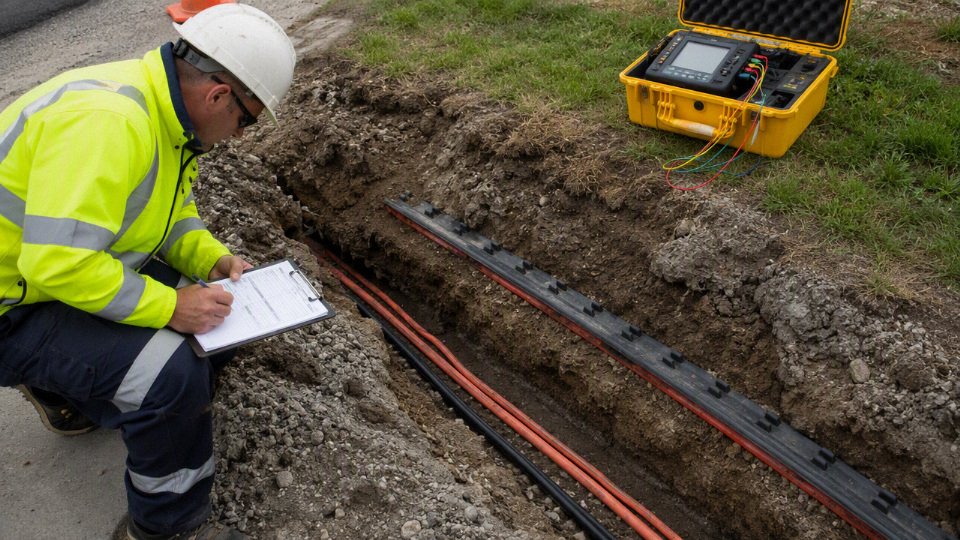
Document the installation basis before ordering reels. At minimum, keep the drawings, load schedule, route plan, installation method, applicable code edition or project standard, environmental conditions, inspection requirements, and equipment termination details in the purchasing file. That paperwork prevents the common procurement failure where the cable is technically good cable, but wrong for the trench, the inspector, or the switchgear lugs.
Resolve transitions early, especially:
- indoor NM-B changing to outdoor conduit;
- service entrance conductors changing to building wiring;
- direct burial cable rising into equipment;
- underground feeders entering metallic enclosures;
- control or instrumentation cables sharing a route with power circuits;
- spare conduit runs intended for future circuits.
For bulk procurement, request datasheets, certification documents, sample jacket markings, reel schedules, and factory test documentation before approving production. Shandong Jinda Special Cable Group Co., Ltd. supports international projects requiring underground, wet-location, direct-burial, armored, control, power, and custom-engineered cable solutions.
Share the project voltage, load, route length, installation method, required standard, destination country, and any drawings or equipment termination details. Jinda’s technical team can help verify a suitable underground cable specification before materials are manufactured or shipped.