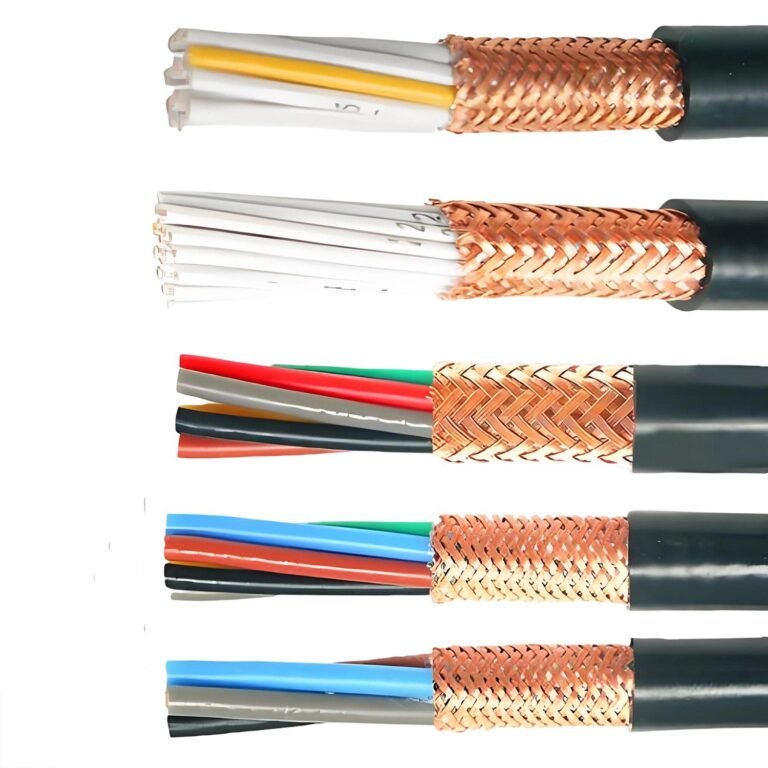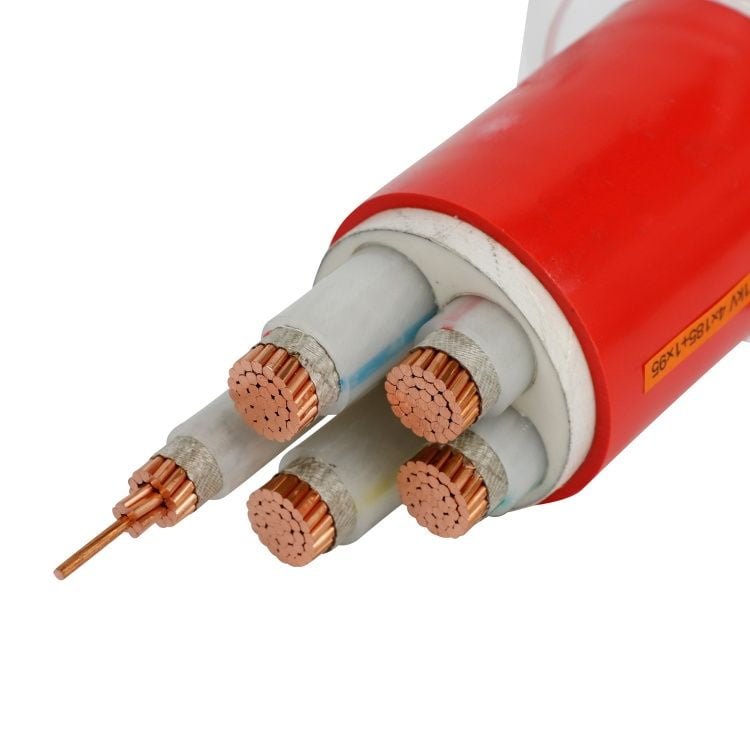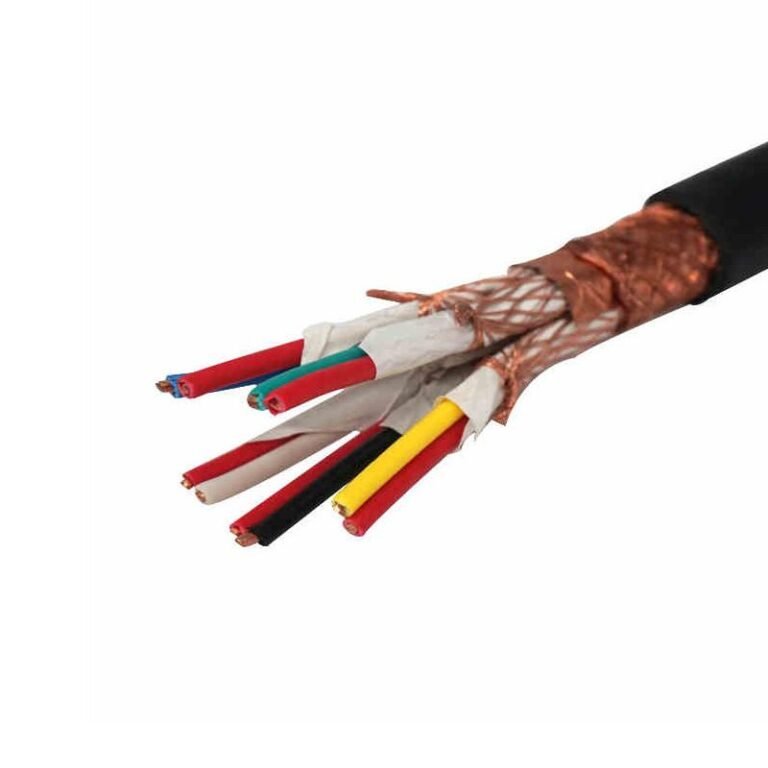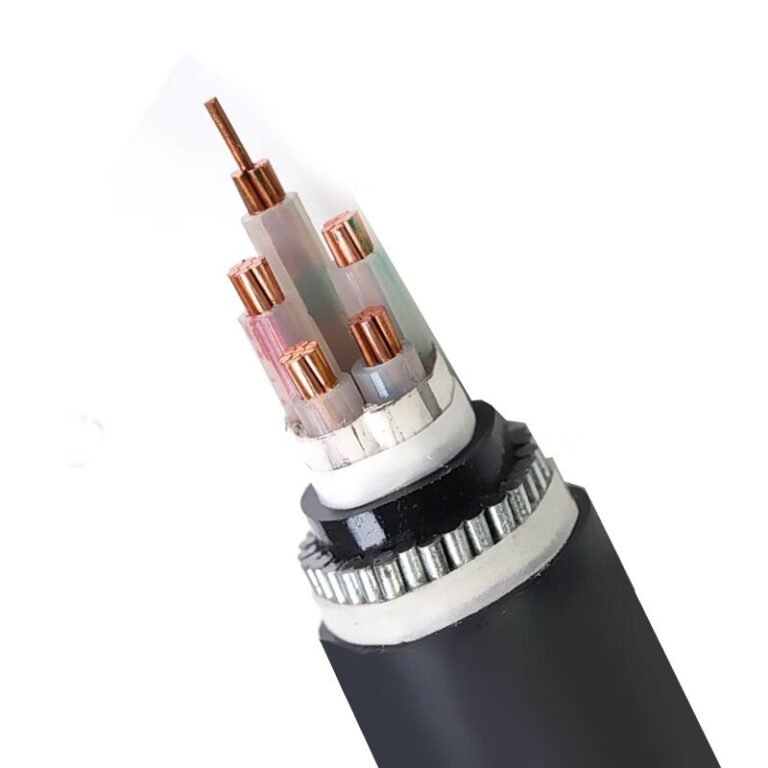
Burying the wrong cable is one of those mistakes that looks fine until the first rainy season, failed inspection, or nuisance trip starts chasing maintenance around the site. Standard indoor Romex can wick moisture, degrade, and create a fault path underground, and by then the trench, landscaping, concrete, or production yard access may already be paid for twice. The right answer starts with choosing a wiring method rated for wet underground service, not just hiding NM-B in a pipe.
No, you generally cannot run standard Romex underground, even inside conduit, because underground conduit is treated as a wet location. For buried residential or light commercial branch circuits, use UF-B direct-burial cable where permitted, or individual wet-rated conductors such as THWN-2 or XHHW-2 installed in approved conduit at the required burial depth.
The confusion comes from the word “conduit.” On the plant floor, conduit often means mechanical protection; in the electrical code, it does not automatically make a location dry. The real decision is which cable or conductor insulation is approved for the environment, how deep the run must be, and what the inspector will accept before the trench is closed.
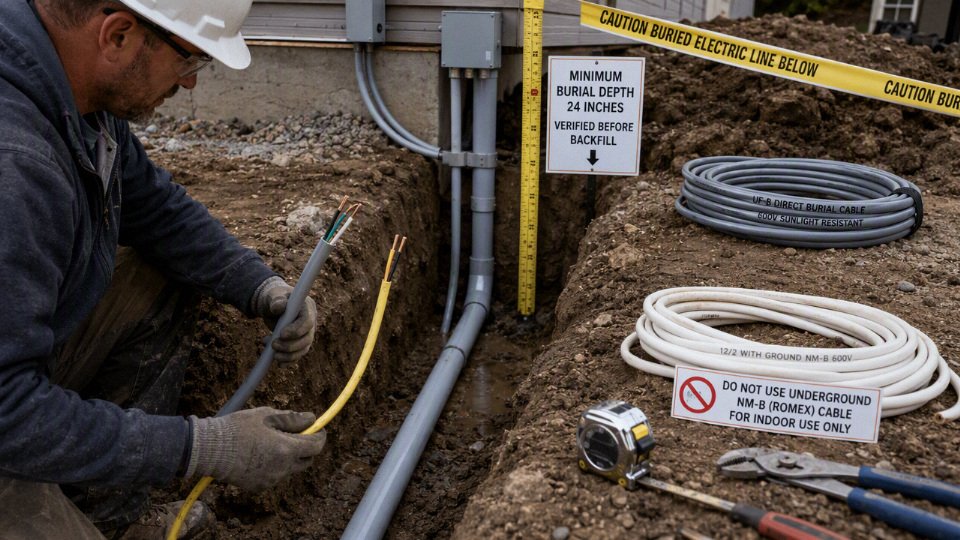
Why Romex fails underground
Romex fails underground because it is a dry-location building cable being placed into a wet, chemically variable, mechanically hostile environment. The problem is not that NM-B instantly dissolves in dirt; it is that its jacket, fillers, markings, and listing do not support direct burial or wet underground raceway use, so the installation becomes both a reliability risk and a code problem.
“Romex” is a trade name that electricians often use casually for nonmetallic-sheathed building cable. In most residential and light commercial discussions, that means NM-B cable: insulated copper conductors, a bare or insulated grounding conductor depending on construction, paper wrap or filler, and a flat or round nonmetallic outer jacket. It is excellent for the job it was designed for: dry, protected interior wiring pulled through studs, stapled to framing, routed through bored holes, and protected by the building envelope.
That last condition is the part that gets ignored. Inside a wall cavity, NM-B may see dust, warm air, the occasional construction scrape, and maybe a mouse if the building is poorly sealed. Underground, it sees a completely different duty cycle.
NM-B construction is not a burial moisture system
NM-B is not built like UF-B, tray cable, submersible pump cable, or individual wet-location conductors such as THWN-2 or XHHW-2 in an approved raceway. The outer jacket on NM-B is mainly a handling and assembly jacket. It keeps the conductors together, gives basic abrasion protection during installation, and carries identification markings. It is not a continuous engineered water block.
A typical NM-B assembly contains materials that make sense in a dry building cavity but create trouble below grade:
- Thermoplastic conductor insulation selected and rated for the cable’s intended environment, not for indefinite soil or flooded conduit exposure.
- Paper wrap, separators, or fillers that can absorb and hold moisture against the insulated conductors.
- An outer nonmetallic jacket that is not evaluated as a direct-burial sheath or wet-location barrier.
- Printed jacket markings that identify the cable type and listing, which become important during inspection and later maintenance.
The mechanism is slow and unglamorous. Water does not need to pour into the cable like a garden hose. It can migrate through damaged jacket spots, cut ends, nicks from a utility knife, staple bruises made before the cable was reused, or capillary paths along fillers and conductor interfaces. Once moisture sits inside the cable body, it has time, minerals, and temperature cycling on its side.
Running NM-B inside underground conduit makes it acceptable for burial.False
Underground conduit is generally treated as a wet location. Conduit can provide physical protection, but it does not change the wet-location rating of the conductors or cable installed inside it.
Underground is wet even when the trench looks dry
A trench that looks dusty in August can behave very differently in March. Plant-floor people understand this from cable trays near washdown areas: the area may look dry during installation, then the maintenance history tells another story. Below grade is the same, only harder to inspect.
Underground wiring may be exposed to:
- Soil moisture that remains in contact with the cable jacket for months.
- Groundwater after heavy rain, irrigation leaks, snowmelt, or poor grading.
- Condensation inside raceways caused by temperature swings between soil, air, and conductors under load.
- Flooding in low spots, handholes, yard boxes, and building entry points.
- Freeze-thaw movement that flexes cable, opens joints, and pumps water through tiny gaps.
- Fertilizers and lawn chemicals around houses, farms, greenhouses, and landscaped commercial sites.
- Deicing salts near driveways, loading areas, and parking lots.
- Hydrocarbons such as fuel, oil, and solvent residue near shops, generators, garages, and service yards.
- Insects and rodents that exploit jacket damage or warm conduit paths.
- Mechanical pressure from soil settlement, rocks, roots, concrete edges, and later digging.
None of these needs to be extreme to matter. A cable can pass a basic continuity check on day one and still be wrong. Six months later the customer gets nuisance GFCI trips after rain. Two winters later a circuit starts showing intermittent ground leakage. Five years later someone opens a junction box and finds green copper corrosion and a smell that tells you the splice has been warm.
That delayed failure pattern is why bad underground cable choices are so expensive. The original saving may be the difference between using leftover NM-B and buying the proper UF-B cable or wet-rated conductors. The repair cost can include a locator call, trench reopening, landscape repair, new conduit or cable, inspection rework, customer downtime, and uncomfortable questions after an incident.
Conduit below grade is not a dry sleeve
This is the most common misunderstanding I see with buyers and owners: “We put it in PVC, so it is protected.” Protected from what? A Schedule 40 or Schedule 80 PVC conduit can protect conductors from soil contact, minor impact, and some digging abuse. It does not guarantee a dry interior.
Underground conduit collects water through several ordinary paths:
- Condensation forms because one end of the raceway may be warmer or cooler than the buried section.
- Solvent-welded joints can be imperfect, especially in cold weather or rushed work.
- Threaded adapters, locknuts, and box entries may leak if not detailed correctly.
- Expansion and contraction can stress fittings over seasonal cycles.
- Cracked conduit or damaged sweeps can occur during backfill, settlement, or later excavation.
- Above-grade terminations can admit rainwater that runs down into the buried raceway.
Anyone who has opened an underground pull box has seen it: a few inches of water, silt in the bottom, maybe a frog if it has been neglected long enough. That is not an unusual failure condition; it is a normal design assumption. For that reason, conductors installed in underground raceways must be suitable for wet locations under the applicable code and product listing. NM-B is not.
Conduit provides mechanical protection; it does not upgrade a dry-location cable into a wet-location cable. That separation matters in specifications. Physical protection addresses crushing, impact, and later contact with shovels or tools. Environmental rating addresses moisture, insulation performance, material compatibility, and long-term electrical leakage. You need both problems solved, not one used as an excuse to ignore the other.
The failure is electrical, mechanical, and administrative
The practical failure modes do not always look dramatic. They often look like annoying maintenance issues until someone traces them back to the cable selection.
| Failure path | What happens in practice | Typical consequence |
|---|---|---|
| Moisture migration into cable body | Paper or filler materials hold water near conductors | Leakage current, insulation stress, intermittent faults |
| Corrosion at conductor ends or splices | Water reaches copper, connectors, wirenuts, lugs, or device terminals | Heating, voltage drop, loose terminations, failed devices |
| Jacket damage under soil pressure | Rocks, roots, or backfill pressure deform or nick the assembly | Reduced insulation margin and fault risk |
| Chemical exposure | Fertilizers, salts, oils, or contaminated soil attack materials not chosen for that service | Shortened service life, brittle jacket, tracking paths |
| Inspection rejection | Cable markings show NM-B or lack direct-burial/wet-location rating | Rework before energizing, delayed occupancy, failed sign-off |
| Intermittent GFCI trips | Wet cable or fittings create leakage paths after rain or thaw | Nuisance shutdowns and hard-to-schedule troubleshooting |
The inspection side deserves blunt treatment. Inspectors are not approving an installation because the trench looks neat or because the conduit is straight. They are checking the wiring method against code, listing, location rating, burial depth, protection, and local amendments. If the cable jacket says NM-B, the installer has handed the inspector the reason to reject it. Covering the trench before inspection only makes that conversation worse.
There is a commercial angle here too. Procurement sometimes sees NM-B, UF-B, and loose THWN-2 conductors as interchangeable copper with different packaging. They are not. The installed cost of an underground circuit includes the full system:
- Cable or conductors
- Raceway, fittings, elbows, and boxes
- Trenching and backfill
- Labor hours and pulling difficulty
- Inspection scheduling
- Downtime risk
- Future service access
- Liability if the circuit serves pumps, gates, outbuildings, signage, or production equipment
The trade-off is straightforward. NM-B is cheap and easy inside a building, but that advantage disappears underground because it cannot legally or reliably perform the environmental duty. UF-B may be stiffer and slower to strip, and individual wet-rated conductors in conduit require more material coordination and conduit-fill checking, but they put the installation inside a defendable wiring method.
The boundary of this conclusion is narrow: NM-B can pass through short protected sections where code allows dry-location cable to be guarded from physical damage in otherwise dry areas, such as a sleeve through a wall or floor detail. That is not the same as a buried run, a wet underground raceway, or a conduit system that spends its life below grade. If the route is underground, assume water will find it, then select the wiring method accordingly.
Code rules that matter
For U.S. work, the controlling idea is simple: underground wiring is treated as a wet, damage-prone installation, so the cable or conductor must be listed for that environment and installed at the required cover depth. The National Electrical Code gives the common framework, but the inspector, local amendments, utility requirements, and project specifications decide what is acceptable on the job.
The NEC is the starting point, not the final signature
The National Electrical Code is widely used across the United States, and most electrical designers, inspectors, and contractors use it as the baseline reference for underground branch circuits and feeders. Still, the NEC does not approve your trench by itself. The authority having jurisdiction, usually called the AHJ, has the final say on the installation in that city, county, plant, campus, or utility service territory.
In practice, that means a drawing that looks correct on paper can still be rejected for a local condition. I have seen this happen for very ordinary reasons:
- A municipality has amended burial depth requirements.
- A utility has separate rules for service laterals or meter locations.
- A commercial site specification requires rigid galvanized steel conduit where the NEC would otherwise allow PVC.
- A plant safety standard requires extra mechanical protection in forklift or yard-tractor areas.
- An inspector wants the trench left open until depth, bedding, warning tape, and transition protection are visible.
That last one is not paperwork trivia. If a contractor backfills before inspection, the owner may end up paying to reopen the trench. For a short backyard circuit, that is irritating. For a 200-foot plant run under compacted stone, it becomes labor, equipment, schedule delay, and a few unpleasant phone calls.
Dry-location cable versus wet-location wiring
The key code distinction is not “conduit or no conduit.” It is whether the wiring method is approved for the environment. NM cable, commonly called Romex, is limited to dry locations. Underground raceways are generally considered wet locations, even if they are glued PVC conduit and even if the trench looks dry during installation.
Putting NM-B cable inside underground conduit does not make it suitable for underground use.True
Underground raceways are treated as wet locations, and NM-B is not listed for wet locations. The conduit may provide mechanical protection, but it does not change the cable’s listing or moisture rating.
This catches people because the conduit feels like the protective element. Mechanically, it does help. Electrically and legally, it does not re-rate the cable jacket, conductor insulation, paper fillers, or assembly construction. Water gets into underground raceways through condensation, imperfect joints, damaged fittings, grade changes, boxes, and seasonal breathing. Anyone who has opened an exterior pull box in spring has seen the puddle.
The accepted approach is to select one of the wiring methods listed for the installation:
| Installation situation | Commonly used wiring method | Code concept to verify |
|---|---|---|
| Direct-buried residential branch circuit | UF-B or another cable listed for direct burial | Direct-burial marking, depth, protection at risers |
| Underground conduit with individual conductors | THWN-2, XHHW-2, or equivalent wet-location conductors | Wet-location insulation marking, conduit fill, pulling limits |
| Underground feeder or larger project cable | Listed direct-burial cable assembly, duct-rated cable, or engineered raceway system | Listing, voltage class, ampacity, soil/thermal conditions, specs |
| High-damage areas above grade or at transitions | Rigid metal conduit, intermediate metal conduit, Schedule 80 PVC, or other approved protection | Mechanical protection and corrosion suitability |
The markings matter. A reel tag, jacket print, or conductor print is not decoration; it is the field evidence the inspector and maintenance team rely on. If the cable says NM-B and nothing about wet locations or direct burial, do not bury it and do not run it through underground conduit.
Direct burial requires a direct-burial cable
Direct burial is allowed only when the cable assembly is listed and marked for direct burial. For many residential branch-circuit applications in the U.S., UF-B is the familiar choice. It has a construction intended for moisture exposure and burial, unlike NM-B, which is intended for dry interior use.
The trade-off is handling. UF-B is tougher to strip, stiffer to route, and less pleasant to terminate in a cramped weatherproof box. It also needs mechanical protection where it comes out of the earth. Conduit with individual conductors is often cleaner for longer or more serviceable runs because conductors can be pulled through a raceway, but conduit adds fittings, trench coordination, expansion considerations, and pull-box planning.
For a homeowner feeding a small detached shed, UF-B may be the economical method if the route is simple and future replacement is not a concern. For a factory yard circuit feeding equipment, lighting poles, or a gate operator, I would usually look harder at a raceway system because maintenance access and mechanical protection tend to matter more than saving a few fittings on day one. That preference stops holding when the raceway route has too many bends, poor pull access, corrosive exposure, or a specification that favors direct-burial armored or jacketed cable assemblies.
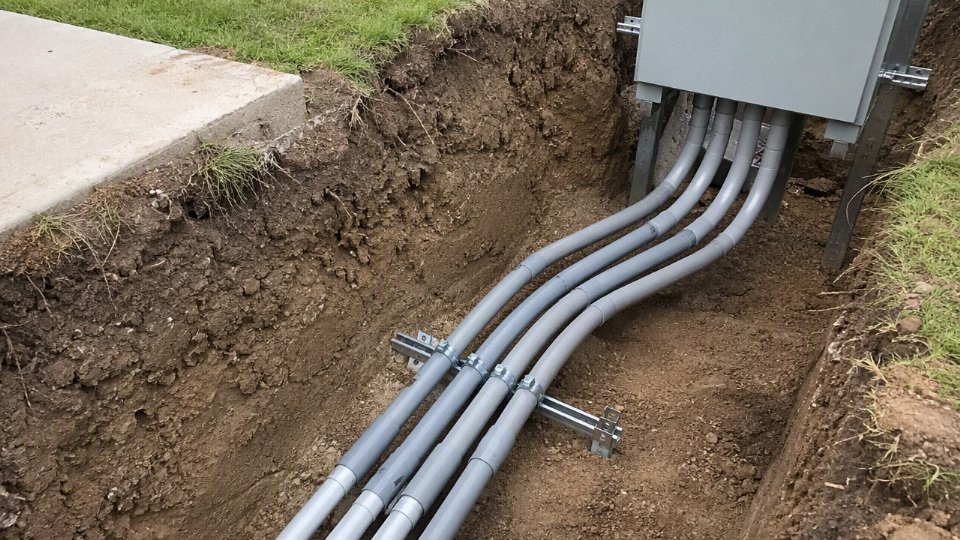
Conductors in underground conduit need wet-location ratings
When individual insulated conductors are pulled through underground conduit, the insulation must be suitable for wet locations. Common markings include THWN-2 and XHHW-2, though the exact acceptable marking depends on the conductor type, equipment terminations, temperature rating, and applicable code edition.
This is where procurement can accidentally create a field problem. A buyer may order “THHN wire” because that is what the maintenance shop calls all building wire. Many modern conductors are dual-rated, such as THHN/THWN-2, but you cannot assume that without checking the print legend and submittal sheet. If the conductor is only dry-location rated, it is the wrong product for underground raceway.
Before release, check:
- The conductor insulation marking, not just the catalog description.
- Copper or aluminum compatibility with the equipment lugs.
- Ampacity adjustment for conductor count, temperature, and raceway conditions.
- Conduit fill, especially where multiple circuits share a raceway.
- Pulling tension and bend radius for longer runs.
- Wet-location rating of boxes, fittings, splices, and terminations.
A good installation can still fail inspection if the box transition is sloppy. Underground-rated conductors pulled into a wet handhole, then spliced with indoor wirenuts or terminated in a box not suitable for the exposure, create the same kind of weak link plant maintenance crews hate finding later.
Burial depth is a design variable, not a guess
NEC Table 300.5 is the usual planning reference for minimum cover requirements in U.S. underground installations. It is not one universal trench depth. Cover depends on wiring method, circuit voltage, residential branch-circuit conditions, GFCI protection, whether the run is under a driveway, the type of raceway, and other site details.
Typical planning benchmarks often look like this:
| Planning benchmark | Where it may apply | What must be verified |
|---|---|---|
| Roughly 12 inches of cover | Certain residential branch circuits with GFCI protection under specific raceway or protection conditions | Exact NEC condition, GFCI requirements, residential limitation, local acceptance |
| Roughly 18 inches of cover | Many residential PVC conduit installations | Raceway type, circuit type, driveway or traffic exposure, local amendments |
| Roughly 24 inches of cover | Many direct-burial cable installations | Cable listing, voltage, location, physical protection, AHJ requirements |
These numbers are useful for early estimating, not final construction release. A procurement manager can use them to compare trenching cost and material method during budgeting. The engineer or electrician still needs to confirm the actual table condition before issuing drawings, ordering cable lengths, or scheduling excavation.
The mechanism is straightforward: less cover reduces trench labor and rock excavation, but it usually requires a wiring method or protection scheme that qualifies for the shallower depth. Deeper burial can allow simpler direct-burial methods in some cases, but it increases digging cost, spoil handling, conflict with irrigation, gas, drainage, and existing electrical routes. The cheapest material is not always the cheapest installed system once trench depth, inspection timing, and restoration are counted.
Conduit may still be required with direct-burial cable
A cable marked for direct burial is not automatically allowed to run exposed wherever it wants. It still needs protection where physical damage is likely. The most common spots are the same ones that get hit by string trimmers, shovels, vehicles, pallets, and careless maintenance work.
Use conduit or another approved protective method where the cable:
- Emerges from the ground at a building, pole, pedestal, or equipment pad.
- Passes through a wall, sleeve, slab edge, or foundation area.
- Runs up an exterior surface before entering a box.
- Crosses a location subject to damage from vehicles, tools, livestock, or plant traffic.
- Needs protection at a transition from buried route to above-grade equipment.
- Is routed near landscaping, irrigation repairs, or future digging activity.
PVC is common for corrosion resistance and cost. Schedule 80 PVC is often used where extra impact resistance is needed above grade. Rigid metal conduit brings stronger mechanical protection but requires corrosion awareness, bonding continuity, compatible fittings, and more labor. On industrial sites, the decision often comes down to what the area does all week, not what it looked like during installation. A quiet wall today may become a pallet staging area next month.
Inspection is part of the wiring method
Underground electrical work should be planned around inspection access. Many jurisdictions require the trench to remain open until the inspector can verify cover depth, wiring method, conduit type, warning tape if required, transitions, and sometimes GFCI protection or panel details.
A practical field checklist before backfill:
- Confirm jacket or conductor markings are visible and match the approved method.
- Measure cover depth from finished grade, not just the bottom of a rough trench.
- Photograph depth measurements with a tape in the trench if the project allows it.
- Verify conduit joints, sweeps, risers, and expansion provisions where applicable.
- Check that direct-burial cable is protected at all emergence points.
- Confirm wet-location ratings for conductors, boxes, fittings, and splices.
- Keep the trench open until the AHJ or project inspector releases it.
- Record as-built routing before the trench disappears under soil, concrete, gravel, or landscaping.
That last record saves money later. A vague “runs somewhere from panel to shed” note is not much help when someone is trenching for water line repair five years from now.
Outside the United States, use the same engineering logic
For projects outside the U.S., do not copy NEC language blindly unless the contract or local law uses it. Apply the same technical decision path under the national standard and local inspection system that governs the site.
The questions remain familiar:
- Is the cable or conductor rated for dry, damp, or wet conditions?
- Is it specifically approved for direct burial if no raceway is used?
- Does the raceway system suit underground water exposure and soil conditions?
- What mechanical protection is required at risers, crossings, walls, and traffic areas?
- What minimum cover depth applies to the voltage, location, and installation method?
- Who has inspection authority before backfill?
- Do the project specifications impose requirements beyond the legal minimum?
That approach works whether the job is a residential outbuilding, a commercial lighting circuit, or a bulk cable purchase for an international project. The exact markings and standards change by country, but the engineering boundary does not: dry-location cable belongs in dry locations, underground wiring needs wet-location suitability, and buried work should be inspectable before it is hidden.
Acceptable underground wiring methods
For most underground branch circuits, the practical choices are UF-B direct-burial cable, PVC conduit with individual wet-rated conductors, or a heavier engineered raceway/cable system for mechanical risk and industrial duty. The right answer depends less on “can I get power there?” and more on serviceability, damage exposure, load size, inspection expectations, and whether you may need to pull new conductors later.
Indoor NM-B cable, commonly called Romex, can be part of the building wiring up to an approved transition point, but it is not the underground wiring method.True
Underground raceways are treated as wet locations in typical code practice, and NM-B is not a wet-location or direct-burial cable. The transition to outdoor-rated cable or conductors must occur in a listed junction box, panel, disconnect, or equipment enclosure approved for the location.
UF-B direct-burial cable
UF-B is the common residential answer when the job is a light-duty underground run to a shed, detached garage branch circuit, gate operator, landscape equipment, small pump, post light, or similar outdoor load. It is listed for wet locations and direct burial, so it can be installed in the trench without a full raceway system when the installation conditions, burial depth, protection, and local inspection requirements are satisfied.
The attraction is obvious on a small property job: fewer parts, fewer fittings, no long conductor pull, and less chance that a poorly glued conduit joint becomes the weak point. For a simple 120 V or 240 V branch circuit, UF-B often keeps the material list short:
- UF-B cable of the required conductor size and conductor count
- Trench at the required depth for the wiring method and protection scheme
- Conduit sleeves where the cable rises out of the ground or passes through damage-prone areas
- Approved outdoor boxes, fittings, clamps, and equipment terminations
- GFCI protection where required by the circuit type and location
Its main strength is that the cable assembly itself is designed for the wet underground environment. Unlike NM-B, the conductors are embedded in a tougher moisture-resistant jacket system. That does not make it armor. A shovel, auger, fence post driver, or skid-steer tooth can still ruin it, and once damaged below grade, the repair is usually a dig-up job.
UF-B has a few shop-floor annoyances that matter more than catalog sheets admit. It is stiff, especially in cold weather. Stripping it cleanly takes patience; a hurried knife cut can nick insulation before anyone notices. Pulling long UF-B through conduit is usually a bad plan unless the raceway is only for a short protective sleeve and the installation stays within fill and pulling rules. If you have a long run with several bends, individual conductors in conduit are usually the cleaner architecture.
UF-B works best where the route is stable and future modification is unlikely. If the owner may later add a welder, EV charger, larger pump, heater, or second feeder, direct burial can become false economy. The first installation looks cheap; the second trench makes it expensive.
PVC conduit with wet-rated individual conductors
PVC conduit with individual wet-rated conductors, commonly THWN-2 or XHHW-2 depending on the application and specification, is the default serviceable method for many residential, commercial, agricultural, and light industrial underground branch circuits. It costs more in fittings and labor than direct burial cable, but it gives better routing control and a realistic path for conductor replacement or upsizing if the raceway was sized with that in mind.
The mechanism is simple: the conduit becomes the physical pathway, while the insulation rating of the individual conductors handles the wet-location requirement. Underground conduit almost always accumulates water through condensation, imperfect seals, or temperature cycling. The system is therefore designed on the assumption that water will be present, not on the hope that every joint stays dry for twenty years.
A good PVC underground installation depends on details that are easy to miss:
- Use conductors marked for wet locations, not merely indoor building wire.
- Size the conduit for code fill, pulling friction, and future work, not just bare minimum diameter.
- Use long sweeps rather than sharp plumbing-style turns.
- Keep the trench bottom reasonably smooth and bedded where soil conditions are rough.
- Apply solvent cement correctly: clean, full engagement, proper set time, no dry “wipe-on and shove” joints.
- Account for expansion and contraction on long aboveground or sun-exposed risers.
- Plan pull boxes or handholes before the pull becomes a wrestling match.
- Manage water at terminations with proper fittings, drainage strategy where applicable, and weather-rated enclosures.
Conduit’s biggest advantage is not that it keeps water out. It usually does not, at least not forever. Its advantage is mechanical organization: it protects the route, defines the pathway, allows conductors to be pulled in a controlled manner, and makes future troubleshooting less destructive. In a plant or farmyard, that difference is not academic. A failed underground cable under a concrete apron can stop a pump, scale, compressor, or gate, and the repair crew may spend more time locating the fault than replacing the wire.
The trade-off is installation discipline. A conduit system with too many bends, undersized raceway, bad glue joints, or no pull points can be worse than direct burial because it gives the illusion of serviceability while making conductor replacement nearly impossible. Long runs also raise voltage-drop questions, heat considerations, and pull-tension limits. Those are not guesses; they require conductor size, load current, run length, insulation type, ambient conditions, and raceway configuration.
Rigid metal conduit and other robust raceways
Rigid metal conduit, intermediate metal conduit, and other listed robust raceways make sense where the underground or exposed portions face serious mechanical risk. Think vehicle traffic, industrial yards, loading areas, exposed risers on building walls, utility zones where forklifts scrape corners, or places where a PVC stub-up will eventually get snapped by a mower, pallet jack, or snowplow.
Metal raceways bring strength, but they also bring procurement and installation questions that should be settled before material is ordered:
- Corrosion suitability for soil, chemicals, fertilizer, washdown, salt, or coastal air
- Thread protection and compatible fittings
- Bonding and grounding continuity
- Transition fittings between metal and PVC raceway
- Burial depth and cover requirements for that raceway type
- Equipment connection details at panels, disconnects, motors, pumps, and control cabinets
Rigid metal raceway is often used selectively rather than everywhere. A common pattern is PVC underground with rigid metal risers where the conduit emerges from grade and is exposed to impact. That hybrid approach can be commercially sensible: spend money where damage risk is high, not where soil cover already provides protection. The preferred choice flips when the route passes through an industrial yard with frequent excavation, heavy vehicles, or exposed equipment drops; then robust raceway may be cheaper than repeated outage repairs.
Other cable options for heavier-duty projects
For heavier loads, longer runs, industrial equipment, and harsh environments, the wiring method should be engineered rather than chosen from a residential habit. Options may include USE-2 conductors or cable assemblies where permitted, wet-rated conductors in raceway, listed armored cable types suitable for the specific environment, mobile equipment cable only where allowed by code and the equipment use case, or custom industrial cable designs reviewed against the project specification.
This is where buyers need to slow down. A cable that is “outdoor rated” is not automatically direct-burial rated. A flexible cable used on a movable machine is not automatically permitted as fixed underground building wiring. Armored construction may improve crush or rodent resistance, but the armor, jacket, grounding method, and termination system still need to be listed or approved for the wet, buried, corrosive, or hazardous environment involved.
For industrial procurement, the minimum application data should include:
- Load type: motor, heater, lighting, receptacles, controls, VFD-fed equipment, pump, charger, or mixed load
- Voltage, phase, full-load current, starting current, and duty cycle
- Approximate route length and allowable voltage drop
- Burial environment: soil, concrete encasement, duct bank, tray transition, wet pit, chemical exposure, or vehicle zone
- Termination equipment and available gland, lug, or conduit-entry space
- Inspection jurisdiction, project standard, and any owner engineering specification
Comparing the main choices
| Wiring method | Best fit | Main advantage | Main limitation |
|---|---|---|---|
| UF-B direct burial | Residential and light-duty outdoor branch circuits | Simple material list and no continuous raceway required | Hard to service after burial; needs protection at transitions and damage-prone points |
| PVC conduit with THWN-2 or XHHW-2 conductors | Residential, commercial, agricultural, and many industrial branch circuits | Serviceable pathway, better routing control, easier upgrades if sized well | Requires good trenching, fittings, pull planning, fill checks, and wet-location terminations |
| Rigid metal or intermediate metal conduit | Exposed risers, industrial yards, traffic zones, high-impact areas | Strong mechanical protection and grounding continuity when properly installed | Higher cost, corrosion planning, threading/fitting labor |
| Engineered industrial cable system | Long runs, harsh environments, heavy loads, special equipment | Can be matched to load, environment, and project standard | Requires engineering review, supplier documentation, and inspection approval |
Indoor cable can transition to outdoor underground wiring only at an approved junction box, panel, disconnect, or equipment enclosure. From that point onward, the conductors or cable assembly must be suitable for the location and wiring method. No inspector wants to see NM-B disappear into a sleeve and reappear at a shed; the sleeve does not change the cable’s rating.
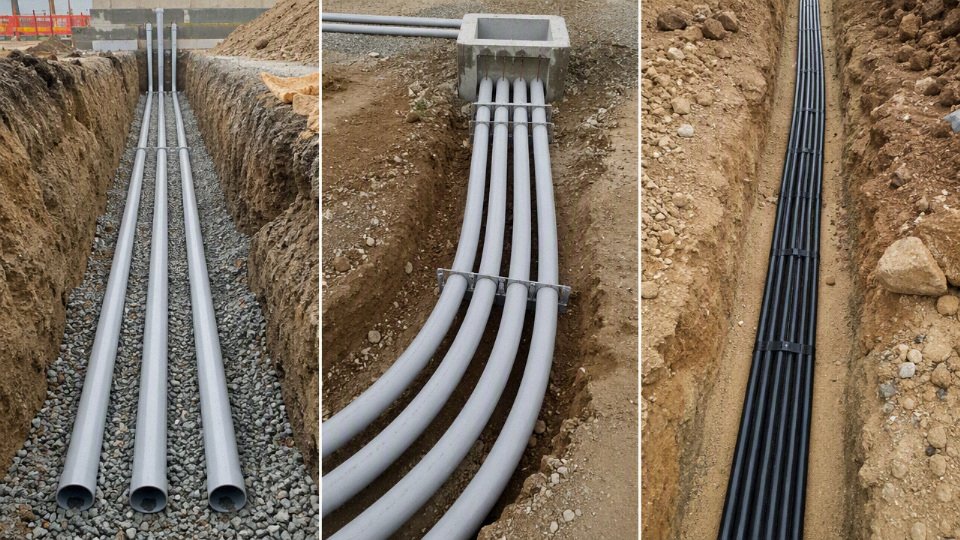
Choose direct burial when the run is simple, protected, and unlikely to change. Choose conduit when replacement, route control, or future capacity matters. Choose an engineered cable or robust raceway system when the load, environment, mechanical exposure, or owner standard makes a residential wiring method too fragile. The boundary is inspection and listing: if the cable marking, raceway method, and termination hardware do not match the wet underground environment, the installation is not made acceptable by neat workmanship alone.
Conduit is not a cure
Conduit can protect a wiring method from shovels, stones, and physical abuse, but it does not turn indoor NM-B “Romex” into an underground-rated cable. Below grade, the raceway may be acceptable while the cable inside it is still wrong, because the installation is normally treated as wet and the conductor or cable marking has to match that environment.
Running NM-B cable through underground conduit makes it suitable for burial.False
Underground conduit is generally considered a wet location. NM-B is not listed for wet locations, so the presence of conduit does not change the cable's environmental rating.
The trap is easy to understand. On a clean drawing, a PVC conduit run looks sealed: glued joints, threaded adapters, weatherproof box, gasketed cover. On the plant floor or at a site trench, it behaves differently. Water gets in, vapor moves through the system, and condensation forms even when nobody sees a leak during installation.
Why underground conduit becomes wet inside
Underground raceway sees two different climates at the same time. The soil is relatively stable and cool, while the air at the riser, panel, equipment pad, or junction box swings with the day. That temperature difference drives condensation.
A typical sequence looks like this:
- Warm, humid air enters through a box, panel hub, pull elbow, or imperfect fitting.
- The conduit section below grade stays cooler than the air.
- Moisture condenses on the inside wall of the raceway.
- Water runs to low points, offsets, elbows, and bellies in the trench.
- The next temperature cycle repeats the process.
You do not need a cracked conduit for this to happen. A long run feeding a gate operator, pump, sign, detached garage, or outdoor machine can collect water slowly over months. In colder regions, freeze-thaw cycles make it worse. In coastal plants or fertilizer yards, the water may also carry salts or chemicals, so insulation damage becomes more than a nuisance.
Conduit systems are assembled from parts, and every part is a potential moisture path:
- Solvent-welded PVC joints that were not fully seated or were glued in wet soil.
- Threaded adapters where sealant was skipped or poorly applied.
- Pull boxes with covers facing irrigation spray or washdown.
- LB fittings and elbows opened later by maintenance and not resealed well.
- Equipment entries where vibration loosens a hub or locknut.
- Conduit bodies located lower than the equipment enclosure, creating a drain point into the wrong place.
Even “watertight” fittings are not a promise that the inside of a buried raceway will remain dry for the service life of the installation. They reduce water entry. They do not erase the wet-location classification that drives cable and conductor selection.
Raceway rating and conductor rating are separate decisions
A listed underground raceway solves only one part of the job. The raceway must be suitable for burial, sunlight exposure where it emerges, corrosion conditions if metal is used, and the mechanical damage expected at the site. The conductors or cable inside still need their own approval for the location.
That distinction matters in procurement because the words sound interchangeable to non-specialists:
| Item being selected | What it must be suitable for | Common mistake |
|---|---|---|
| PVC conduit or rigid metal conduit | Burial, physical protection, corrosion exposure, installation conditions | Assuming the conduit rating transfers to the cable |
| Individual conductors such as THWN-2 or XHHW-2 | Wet locations, voltage, temperature, insulation type, pulling conditions | Buying dry-location building wire because it is cheaper or in stock |
| Cable assembly such as UF-B or other direct-burial-rated cable | Direct burial or wet-location use as marked, plus physical protection where required | Calling every flat residential cable “Romex” on the purchase order |
The raceway can be perfectly acceptable and the installed cable can still fail inspection because the cable jacket and conductor insulation markings do not match the environment. Inspectors do not just look for gray PVC in the trench. They look at the wiring method, cable type, conductor insulation, burial depth, protection at risers, GFCI conditions where applicable, and whether the installation matches the approved plan.
Why pulling complete NM-B through conduit creates its own problems
Even aside from code suitability, complete NM-B cable is awkward inside conduit. It was not designed to be a long underground pull through elbows and sweeps. The outer jacket is relatively broad and flat compared with individual conductors, so it fills raceway quickly and drags hard.
The practical problems show up in familiar ways:
- Difficult pulling: Flat cable does not slide like round individual conductors. It tends to twist, wedge, and scrape, especially after two or three bends.
- Jacket abrasion: A sharp conduit edge, rough PVC joint, or dirty pull box can score the sheath. Once the jacket is damaged, the assembly has lost part of the protection it was relying on.
- Conduit fill trouble: Cable assemblies count differently than individual conductors, and a flat cable can consume more usable space than expected. Oversizing conduit may help pulling, but it does not fix the wet-location issue.
- Heat dissipation concerns: Stuffing a complete cable assembly into a raceway changes how heat leaves the conductors. Ampacity questions then depend on conductor count, insulation rating, ambient conditions, and the applicable code tables.
- Messy terminations: NM-B inside long conduit often leaves the installer fighting the jacket at boxes, connectors, and equipment entries. I have seen electricians spend more labor making a bad wiring method fit than it would have taken to pull the correct wet-rated conductors in the first place.
There are cases where short conduit sleeves are entirely normal. A permitted direct-burial cable may need a rigid sleeve where it rises from grade, passes through a wall, crosses a damage-prone area, or enters equipment. That sleeve is physical protection, not a legal disguise. The cable is already suitable for the underground environment before the sleeve is added.
What inspectors and buyers should require
From an inspection standpoint, “it is in conduit” is not enough information. The cable or conductor marking is evidence. The raceway marking is evidence. The trench depth, protection method, fittings, and termination details are evidence. A covered trench with no visible markings is a common reason for delay, especially when the installer cannot produce a reel tag, cut sheet, or photo taken before backfill.
For purchasing teams, vague wording causes expensive substitutions. A requisition that says “Romex in conduit to outdoor pump” invites the wrong material, especially if a buyer is matching a contractor’s casual language instead of the electrical design intent. Better specifications name the actual components and installation basis.
A defensible underground wiring specification should identify:
- Cable or conductor type, such as wet-location-rated individual conductors or a direct-burial-rated cable assembly.
- Insulation marking and temperature rating, such as THWN-2 or XHHW-2 where appropriate to the design.
- Raceway material and schedule, including PVC, rigid metal conduit, intermediate metal conduit, or other approved system.
- Burial depth requirement, tied to the wiring method, circuit protection, traffic exposure, and local inspection authority.
- Fittings, boxes, riser protection, expansion fittings, and sealing details where the installation transitions above grade.
- Applicable installation standard, local code edition, and any owner engineering requirement.
- Documentation required before shipment or installation, including reel markings, datasheets, compliance certificates if specified, and photos before backfill.
The trade-off is simple but often ignored: conduit can reduce mechanical risk, yet it adds labor, pulling friction, fill calculations, and more fittings that must be installed correctly. Direct-burial cable may reduce raceway cost on some runs, but it still needs proper depth, protection at emergence, and a cable type actually marked for the service. The right choice flips with site exposure, circuit size, route complexity, inspection expectations, and future maintainability.
This conclusion stops holding only where a specific cable assembly is listed and marked for use in that exact underground raceway or wet-location condition, and the local authority accepts the complete installation. For NM-B used as ordinary indoor branch-circuit cable, conduit below grade does not cure the basic problem.
Design checks before trenching
Use this checklist before a trench is opened, not after the cable reel is sitting in the yard. Most failed underground jobs I see come from a buying decision made too early: the installer bought “outdoor cable” or a roll of NM-B, then discovered the load, route, protection, or inspection requirement called for something else.
- Confirm the load type and duty cycle
- Identify every load on the run:
- Landscape or security lighting
- Outdoor receptacles
- Well pumps, sump pumps, pond pumps, and irrigation pumps
- Gate operators
- Outdoor HVAC equipment
- EV chargers
- Detached workshops or garages
- Irrigation controllers
- Signs
- Farm loads and small industrial equipment
- Separate intermittent loads from continuous or high-duty loads. A gate operator and a few LED lights are a different design problem than a welder in a detached shop or a pump that starts against head pressure ten times an hour.
- Check manufacturer nameplates before estimating. Pump motors, compressors, chargers, and HVAC units often drive conductor sizing more than the “normal running amps” suggest.
- Identify every load on the run:
- Calculate the electrical design before buying cable
- Confirm:
- Circuit amperage
- Voltage
- Number of current-carrying conductors
- Copper or aluminum conductor choice
- Conductor insulation type
- Voltage drop over the full one-way distance
- Motor starting current or charger demand
- Ambient temperature around exposed risers or rooftop sections
- Grouping with other circuits in the same raceway
- Spare capacity for future loads
- Voltage drop is where many long underground runs get ugly. The breaker may protect the wire from overheating, but it does not guarantee the equipment sees healthy voltage at the far end. A 120 V receptacle circuit to a shed can look acceptable on ampacity and still give poor tool performance if the run is long and the conductor is undersized.
- Leave future capacity only if it is intentional. Oversizing conductors improves voltage drop and gives room for later loads, but it increases cable cost, conduit size, termination space, bend difficulty, and pulling force. The preferred choice flips when the route is short, the load is fixed, and the owner is unlikely to expand; then clean code-compliant sizing usually beats paying for copper that will never be used.
- Confirm:
- Verify protection and grounding requirements
- Determine whether the installation needs:
- GFCI protection
- AFCI protection
- A local disconnecting means
- Equipment grounding conductor
- Bonding of metal raceways, boxes, equipment frames, and enclosures
- Surge protection for sensitive controls or long exposed feeders
- Special rules for pools, spas, fountains, docks, farms, fuel areas, dust areas, or other classified locations
- Do not treat GFCI as a substitute for the right cable. It reduces shock risk under certain fault conditions; it does not make NM-B suitable for wet underground service, repair a damaged jacket, or solve a poor splice.
- For motors and controls, confirm whether the equipment supplier requires a separate grounding conductor, specific disconnect location, or surge device to preserve warranty. This comes up often with gate operators, irrigation controllers, and variable-speed pumps.
- Determine whether the installation needs:
An underground raceway can contain moisture, so the conductors installed in it must be rated for wet locations where the code requires that rating.True
Underground conduit systems are commonly treated as wet-location installations because water can enter through condensation, joints, pull boxes, and grade transitions. The exact wiring method and rating must still be verified against the applicable code edition, local authority, and product markings.
- Check cable jacket and conductor markings on the actual product
- Look for markings that match the intended installation:
- UF-B where direct burial residential branch-circuit cable is permitted
- “Direct burial” marking where the cable assembly is intended to be buried without raceway
- Sunlight resistance where the cable or conductor is exposed above grade
- THWN-2 or XHHW-2 on individual conductors intended for wet raceway use
- Voltage rating, commonly 600 V for many building-wire applications, but verify the product
- Copper or aluminum conductor identification
- Temperature rating and any ampacity limitations at terminations
- Check the full reel, not just the cut end. I have seen mixed leftover stock in contractor shops where a short piece was assumed to be THWN-2 because it was black building wire. The printed legend is the contract with the inspector, the maintenance team, and your insurer.
- Look for markings that match the intended installation:
- Select the raceway for the actual ground conditions
- Compare raceway options against:
- Required burial depth, often in the broad 12 in. to 24 in. range depending on wiring method, circuit protection, and location
- Physical exposure at risers and building entries
- Soil movement, rocks, and backfill quality
- Vehicle traffic over the route
- Chemical exposure from fuel, fertilizer, solvents, or process washdown
- UV exposure on vertical risers
- Bend radius and number of bends
- Pulling distance
- Future serviceability
- PVC conduit is common and economical, but it needs proper solvent-welded joints, support above grade, expansion planning where temperature swing is significant, and physical protection where it emerges from the soil. Rigid metal conduit handles abuse better and can sometimes allow shallower burial under certain rules, but it costs more, corrodes in aggressive soils unless selected and protected properly, and demands better tooling. Conduit selection is not just a code line item; it determines whether the next technician can replace conductors without digging the job up again.
- Compare raceway options against:
- Plan the trench route before the trencher arrives
- Mark and verify:
- Existing utilities through the local locating process
- Drainage paths and low spots
- Tree roots and future root growth
- Foundations, footings, slabs, and retaining walls
- Driveways and areas with vehicle loading
- Frost depth where soil movement matters
- Future excavation zones such as fencing, landscaping, irrigation, and building expansion
- Access for panels, disconnects, pull points, and equipment service
- Avoid designing a route that forces a technician to stand in mud, block a driveway, or open a buried junction just to troubleshoot a tripped circuit. The cheapest trench on installation day is not always the cheapest route over ten years.
- Mark and verify:

- Plan transitions, fittings, and identification
- Specify listed components before work starts:
- Boxes and handholes rated for the environment
- Listed fittings and adapters
- Bushings where conductors enter metal raceways or cabinets
- Expansion fittings where long PVC runs cross temperature zones
- Seals where required by location or equipment type
- Warning tape above buried raceways or direct-burial cable
- Marker posts where future excavation risk is high
- As-built route documentation with dimensions from fixed landmarks
- Transitions are where neat drawings turn into maintenance problems. A cable rising out of soil into a wall sleeve, an LB fitting packed with too many stiff conductors, or a junction box placed below a downspout can create faults long before the underground portion itself fails.
- Specify listed components before work starts:
- Schedule inspection and document before backfill
- If the authority having jurisdiction requires trench inspection, schedule it before backfilling.
- Photograph:
- Cable or conductor markings
- Trench depth with a tape measure visible
- Bedding and backfill condition
- Warning tape placement
- Conduit joints and sweeps
- Box entries, risers, and building transitions
- GFCI device or breaker location where relevant
- Keep the photos with the panel schedule and project records. On small properties this feels excessive until somebody adds a fence post, drainage line, or new driveway and has no idea where the feeder runs.
- For bulk procurement, lock down documentation before shipment
- Require from the cable supplier:
- Product datasheet
- Compliance declarations for the target market
- Production traceability by reel or batch
- Routine test reports where applicable
- Jacket marking confirmation
- Packaging suitable for export and site storage
- Reel length tolerance
- Shipping marks and export documentation
- For international or multi-site buying, do not approve a purchase based on a catalog title alone. Confirm the exact construction, marking language, conductor material, insulation designation, sheath rating, and intended installation method before the purchase order is released. Shandong Jinda Special Cable Group can support cable project procurement with manufacturing, technical support, and export supply coordination, but the application data must be specific enough to match the cable to the installation rather than the other way around.
- Require from the cable supplier:
Procurement and quality signals
Underground cable buying should start with the installation standard, the authority having jurisdiction, and the wiring method — not with a familiar name like Romex. A correct purchase order for a buried feeder or branch circuit defines the environment first: wet location, burial method, conduit type if used, voltage, protection, inspection requirements, and any local utility or project specification.
For procurement teams, that changes the conversation with suppliers. Instead of asking for “house wire for underground,” ask for the cable construction that matches the approved installation route. In North American-style projects that may mean UF-B for certain direct-burial residential work, individual wet-rated conductors such as THWN-2 or XHHW-2 in suitable conduit, or a project-specific direct-burial cable assembly. In industrial export projects, the controlling document may be NEC-based, IEC-based, a local national standard, or an owner’s engineering specification. The supplier cannot choose that in isolation.

A useful cable quotation should state the technical identity of the product clearly enough that an inspector, distributor, or site engineer can compare it against the job requirement. At minimum, request:
- Cable type and applicable standard reference, such as UF-style cable, wet-rated single conductor, armored cable, or another approved assembly.
- Conductor material, including copper or aluminum, and whether it is solid, stranded, compacted, or flexible class construction.
- Conductor class and size, with the standard used for sizing and resistance limits.
- Insulation compound, such as PVC, XLPE, EPR, or other specified material.
- Jacket compound, especially where the cable may contact soil, water, sunlight, oils, or chemicals.
- Voltage rating, matched to the circuit and system design.
- Temperature rating, including wet-location temperature rating where applicable.
- Wet-location rating, because underground conduit is treated as wet in practice and by code logic.
- Direct-burial listing or marking, if the cable will be placed in earth without raceway protection.
- Flame rating, where the cable transitions into buildings, trays, tunnels, or other regulated spaces.
- UV resistance, for risers, exposed conduit entries, outdoor reels, and temporary storage.
- Oil or chemical resistance, where the route passes through plants, pump stations, fuel areas, wastewater sites, or process floors.
The mechanism behind most procurement failures is not mysterious. A buyer accepts a cheaper cable with a similar conductor size, but the omitted rating is the part that carries the environmental duty. The copper may pass current, while the insulation system fails the actual service condition: moisture migration, jacket swelling, sunlight cracking, oil softening, or failed inspection because the print legend does not show the required listing.
Manufacturing quality signals matter because underground cable is expensive to replace after the trench is closed. Ask how the manufacturer controls:
- Incoming raw materials, including conductor rod, insulation pellets, jacket compounds, tapes, fillers, and armoring materials.
- Conductor resistance testing, so the delivered cable matches ampacity and loss assumptions.
- Insulation thickness control, not just average thickness but minimum-point control.
- Spark testing during extrusion, to catch pinholes and insulation defects before cabling or jacketing.
- Finished cable voltage testing, according to the relevant product standard or project specification.
- Dimensional inspection, including overall diameter, ovality, insulation thickness, jacket thickness, and armor dimensions where used.
- Print durability and legibility, because faded or weak markings create inspection and inventory problems.
- Drum protection, including flange strength, lagging, end sealing, and weather protection.
- Batch traceability, linking the delivered drum to production records, test reports, and raw material lots.
Third-party certifications and standards alignment are not paperwork decoration. For importers and distributors, they reduce customs, market-access, and liability risk. For contractors, they support inspection approval. For industrial end users, they help maintenance teams replace like-for-like cable years later without guessing from a faded jacket. The exact certification required depends on the destination country, installation code, and application; it should be confirmed against the current standard, project specification, and local authority before purchasing.
Packaging deserves more attention than it usually gets. Underground cable is often heavy, stiff, and sensitive to abuse before it ever sees a trench. Good suppliers will specify wooden or steel drums based on cable weight, length, shipping route, and handling method. Check for:
- Moisture protection on cable ends.
- Pulling direction marks and pay-off instructions.
- Drum length labels and serial numbers.
- Minimum bending radius guidance.
- Export packing suitable for sea freight or long inland transport.
- Protection against flange damage from forklifts.
- Jobsite storage instructions, especially for drums left outdoors before installation.
The trade-off is cost versus control. A bare-bones quote may look attractive on a spreadsheet, but if it omits wet-location markings, standard references, conductor material clarity, insulation thickness, or verifiable test results, the buyer is accepting hidden risk. For underground work, the cheapest cable on purchase day can become the most expensive cable after backfill, inspection failure, or premature fault location.
Established manufacturers are usually better positioned for larger underground cable orders because they can combine production capacity, engineering review, documentation, and repeatable quality control. Shandong Jinda Special Cable Group Co., Ltd., established in 1987, operates multiple production bases with large-scale manufacturing space and serves customers in more than 50 countries. For procurement teams, the practical value is not just factory size; it is the ability to discuss project-specific cable selection, production feasibility, quality documentation, packing requirements, and after-sales support before the purchase order is locked.
A conduit-approved cable and a direct-burial cable are not interchangeable unless the cable markings and project standard allow that installation method.True
Underground wiring approval depends on the complete wiring method, including cable construction, wet-location suitability, direct-burial listing where required, conduit type, protection, and local inspection acceptance.
Frequently asked questions
Can I run Romex underground if it is inside PVC conduit?
No. Standard Romex, meaning NM-B cable, is not rated for wet locations, and underground conduit is treated as a wet location because condensation and groundwater eventually get inside. PVC conduit gives mechanical protection, but it does not turn NM-B into underground-rated cable.
Romex can be buried underground if it is pulled through PVC conduit.False
Underground raceways are considered wet locations, and NM-B cable is not listed for wet-location use. The insulation and cable assembly must be rated for the environment, not just protected by conduit.
Can I bury Romex for only a short distance?
No, not as a compliant wiring method. A two-foot run under a flower bed is still underground exposure, and inspectors do not usually treat “short distance” as an exception to the wet-location and burial rules.
The failure risk is not proportional only to length. One low spot in conduit, one nicked jacket, or one saturated section of soil is enough to create insulation leakage, corrosion, or nuisance tripping.
Is Romex allowed in outdoor conduit above ground?
Sometimes, but only where the location remains dry or otherwise permitted by the applicable code and listing. Outdoor conduit can still be a wet location if it is exposed to rain, washdown, condensation, or temperature cycling that draws moisture into the raceway.
A short protective sleeve on an exterior wall is different from a full outdoor raceway system. If the conduit is outdoors and subject to wet conditions, use conductors or cable marked for wet locations, such as THWN-2 conductors or a properly listed outdoor cable assembly.
What cable can be buried without conduit?
Common choices include UF-B cable for residential branch circuits and other direct-burial cable assemblies specifically marked for underground use. The jacket marking matters; do not buy by appearance alone.
For commercial or industrial projects, engineers may specify direct-burial power cable, armored cable, or conductors in conduit depending on:
- Fault-current exposure
- Soil conditions
- Traffic or impact risk
- Voltage drop
- Maintenance access
- Local inspection practice
- Future expansion requirements
Is UF-B the same as Romex?
No. UF-B and NM-B may look related because both are multi-conductor building cables, but they are built and listed for different environments. NM-B is for normally dry interior locations; UF-B is designed for wet locations and direct burial when installed according to code.
UF-B is usually stiffer and more annoying to strip. That is not a defect. The tougher construction is part of why it survives where NM-B does not.
Can UF-B be installed in conduit?
Yes, UF-B can be run in conduit where the conduit is used for physical protection, such as coming up out of the ground to a panel, post, or outdoor equipment. The practical catch is conduit fill and pulling difficulty.
UF-B is flat and bulky compared with individual conductors. Long conduit pulls with UF-B can become ugly fast, especially through elbows. For longer underground conduit runs, individual wet-rated conductors such as THWN-2 or XHHW-2 are usually cleaner to install.
Can I use THHN underground?
Only if the conductor is also rated for wet locations. Many modern building wires carry dual or multiple markings, such as THHN/THWN-2, but “THHN” by itself is a dry/damp-location insulation designation, not enough for underground wet conduit.
Read the print legend on the wire, not the shelf tag. I have seen reels sold casually as “THHN” that were actually dual-rated, and older stock that was not.
What is the difference between THHN and THWN-2 markings?
THHN relates to thermoplastic, high-heat, nylon-jacketed conductor insulation commonly used in dry or damp locations. THWN-2 indicates the conductor is rated for wet locations and has a 90°C wet rating, subject to the limits of terminals and equipment.
In underground conduit, the wet-location marking is the key issue. A conductor marked only THHN is the wrong selection; a conductor marked THHN/THWN-2 is commonly used where permitted.
How deep should underground electrical cable be buried?
Burial depth depends on the wiring method, circuit rating, GFCI protection, location, and local code adoption. NEC-style benchmarks commonly fall somewhere around 12 inches to 24 inches, but that range is not a universal rule.
Before trenching, confirm:
- Wiring method: UF-B, PVC conduit, rigid metal conduit, or another listed assembly
- Circuit type and voltage
- Residential versus driveway, parking, agricultural, or industrial area
- GFCI protection status
- Local amendments and inspection requirements
Guessing burial depth is a good way to dig twice.
Do I need GFCI protection for underground wiring?
Often, yes, especially for outdoor receptacles, garage feeds, yard equipment, and many residential branch circuits. The exact requirement depends on the load, location, code edition, and local enforcement.
Even when not strictly required for a specific feeder or hardwired load, GFCI protection may be a sensible risk control. It can also expose poor underground workmanship quickly: wet splices, damaged insulation, and wrong cable types tend to show up as trips.
Can I splice underground cable?
Yes, but only with splice kits or enclosures listed for direct burial or wet locations, as applicable. A wirenut wrapped in tape and dropped into the trench is not an underground splice; it is a future fault with a timer on it.
For buried splices, check:
- Voltage rating
- Conductor material and size compatibility
- Wet-location or direct-burial listing
- Strain relief and mechanical protection
- Accessibility requirements, if any, under local rules
Can an indoor circuit be extended to an outdoor underground load?
It can be done, but the wiring method must change at the proper transition point. An indoor NM-B circuit may feed a junction box, then transition to wet-rated conductors in conduit or to UF-B for the underground portion, if the circuit capacity, protection, and code rules allow it.
Do not simply continue the indoor cable through the wall and into the trench. The exterior and underground sections need their own environmental rating.
What happens if buried Romex has already been installed?
Treat it as a defect, even if the light, pump, or shed outlet still works. The cable may be absorbing moisture, the bare ground may be corroding, and insulation resistance can deteriorate before a visible failure appears.
A qualified electrician would normally de-energize, inspect the route, identify the breaker and load, and replace the run with an approved wiring method. If there are nuisance trips, tingling at equipment, damaged jackets, or water in boxes, stop using the circuit until it is checked.
Should I replace buried Romex even if it still works?
Yes, in most cases. “Still works” only proves continuity today; it does not prove insulation integrity, grounding reliability, or code compliance.
The exception is not something to assume from the surface. If documentation shows the cable is not actually NM-B, or the underground portion uses a listed transition to proper cable or conductors, then the installation may be different from what it appears. Verify the jacket markings and installation path before deciding.
What should I tell a cable supplier when requesting a quotation?
Give the supplier enough detail to quote the correct construction, not just “outdoor cable.” At minimum, provide:
- Voltage and phase
- Conductor size or load current
- Copper or aluminum preference, if specified
- Number of conductors, including grounding conductor
- Direct burial or conduit installation
- Wet-location requirement
- Approximate run length
- Burial environment: soil, concrete encasement, driveway, garden, plant yard, or coastal area
- Required standards, approvals, or project specification
- Packaging preference: coils, reels, cut lengths, or bulk supply
For procurement, ask for the exact cable marking, datasheet, applicable listing or standard, and production lead time. That prevents the common purchasing mistake: receiving a cable that is electrically sized correctly but environmentally wrong.
Verify the cable before digging
Standard Romex or NM-B should not be used underground, either bare in soil or pulled through underground conduit. Treat that as the starting decision, not as a preference: once the run is below grade, the installation has to be designed around wet-location exposure, burial depth, mechanical protection, inspection expectations, and the actual cable marking on the jacket.
Before anyone opens a trench, identify the environment the wiring will live in. “Underground” is not one condition; it is several different failure environments that happen to be below grade.
- Direct burial in soil: the cable jacket and insulation must be rated for contact with earth and long-term moisture.
- Underground raceway: the conductors inside the conduit still need wet-location ratings, because buried conduit collects water.
- Exposed riser from grade: sunlight, impact, mower damage, and physical protection become part of the design.
- Wet area or drainage path: standing water, sump discharge, irrigation overspray, and seasonal groundwater change the risk profile.
- Corrosive soil: fertilizer, manure, salts, industrial runoff, or coastal conditions may affect metallic armor, conduit, fittings, and terminations.
- Vehicle area: driveways, yards with forklifts, farm lanes, and loading zones can require deeper burial or stronger mechanical protection.
- Agricultural site: rodents, fertilizers, washdown, and long route lengths often make the cheapest residential wiring choice the wrong one.
- Industrial yard: fault current, voltage drop, cable pulling tension, heat, chemical exposure, and maintenance access matter as much as basic code compliance.
Match the wiring method to that environment instead of shopping by a familiar cable name. UF-B is commonly used for many direct-burial branch-circuit applications where permitted, but it is not automatically the best answer for long routes, heavy loads, or installations that may need future conductor replacement. Wet-rated individual conductors such as THWN-2 or XHHW-2 in a properly selected conduit system are often better where serviceability and mechanical protection matter. For larger, exported, industrial, agricultural, or harsh-environment projects, the safer procurement route is an engineered cable or conductor selection based on the installation conditions and the destination market’s rules.
Putting NM-B cable inside underground conduit does not make it suitable for underground use.True
Underground raceways are treated as wet locations in common code practice, and NM-B is not built or marked for that exposure. The compliant choice depends on the cable or conductor rating, the raceway system, burial depth, protection, and local approval.
Use this final verification sequence before purchase or installation:
- Check the local code basis for the project location, including burial depth, GFCI protection, conduit requirements, and any amendments.
- Ask the inspector or authority having jurisdiction what they expect before trenching; this is cheaper than arguing beside an open trench.
- Read the cable jacket markings, not just the carton label or online product title.
- Confirm the datasheet ratings for wet location, direct burial, sunlight resistance, temperature, voltage, conductor material, and standards or certifications.
- Verify trench depth and protection method against the wiring method, circuit type, traffic exposure, and surface conditions.
- Document the installation with cable type, route photos, trench depth photos, conduit details, pull boxes, risers, and inspection records.
For bulk cable, export supply, industrial loads, or long-term procurement, do not rely on a generic phrase like “underground cable” or “Romex equivalent.” Send the installation environment, voltage, load, route length, burial method, certification requirements, and destination market to Jinda’s technical cable team before ordering. Jinda can review the application requirements and help specify an appropriate underground cable or conductor solution for procurement before the trench is opened.