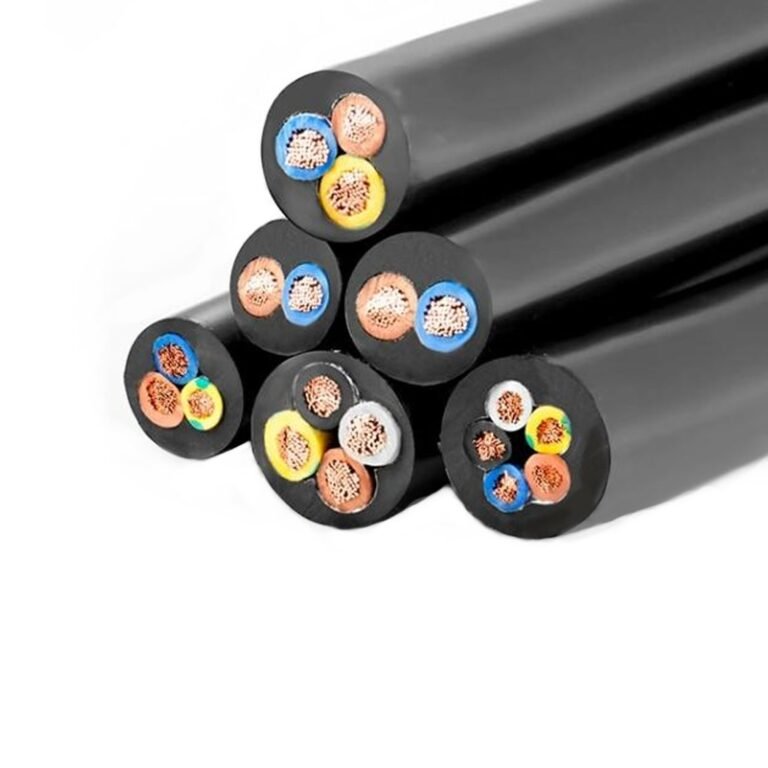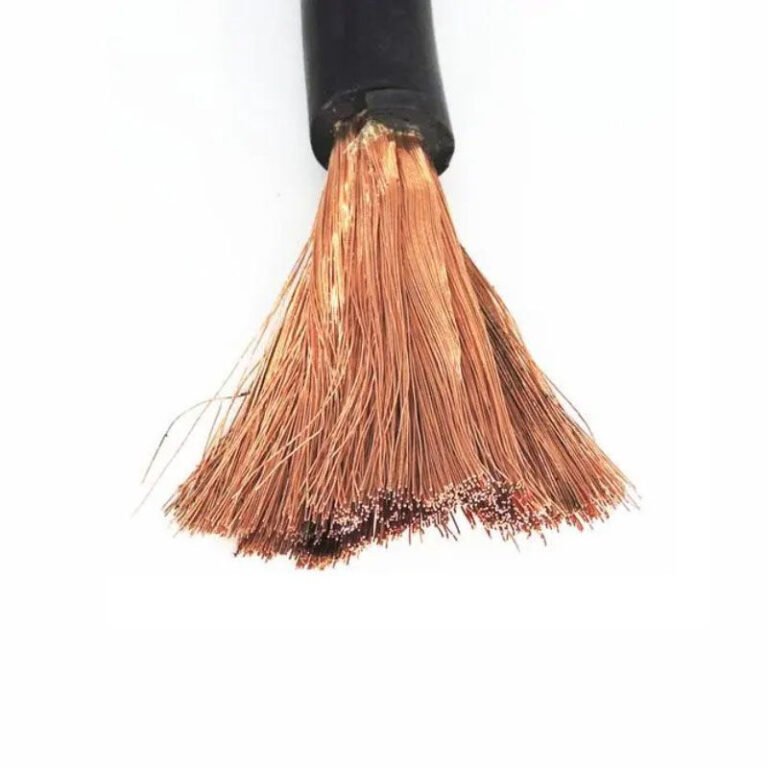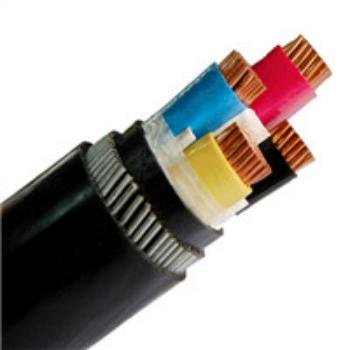
Specify the wrong cable type on a bill of materials — even by one voltage class — and the consequences stack up fast. Insulation rated for 0.6/1 kV sitting on a 6 kV feeder will break down thermally and electrically, usually within months, sometimes weeks during peak summer load. That means unplanned shutdowns, damaged switchgear, potential fire risk, and a replacement job that costs three to five times what the correct cable would have cost originally. Getting the type right from the start is not a fine detail; it is the specification.
Power cables are broadly divided by voltage class — low-voltage (up to 1 kV), medium-voltage (1–35 kV), and high-voltage (35 kV and above) — and further differentiated by insulation material (PVC or XLPE), conductor type, armoring, and application environment. Each combination is engineered for specific thermal, mechanical, and electrical demands, and substituting one type for another carries real operational risk.
The voltage tiers are the obvious starting point, but in practice the type decision gets more complicated almost immediately. Insulation material, for instance, determines your continuous operating temperature ceiling — and that ceiling directly affects how much current you can actually pull through a given cross-section before you are cooking the conductor. There are also environment-driven choices: direct burial, cable trays, offshore platforms, moving machine tooling. Each one narrows the field considerably, and a few combinations that look interchangeable on a datasheet will behave very differently after three years of service.
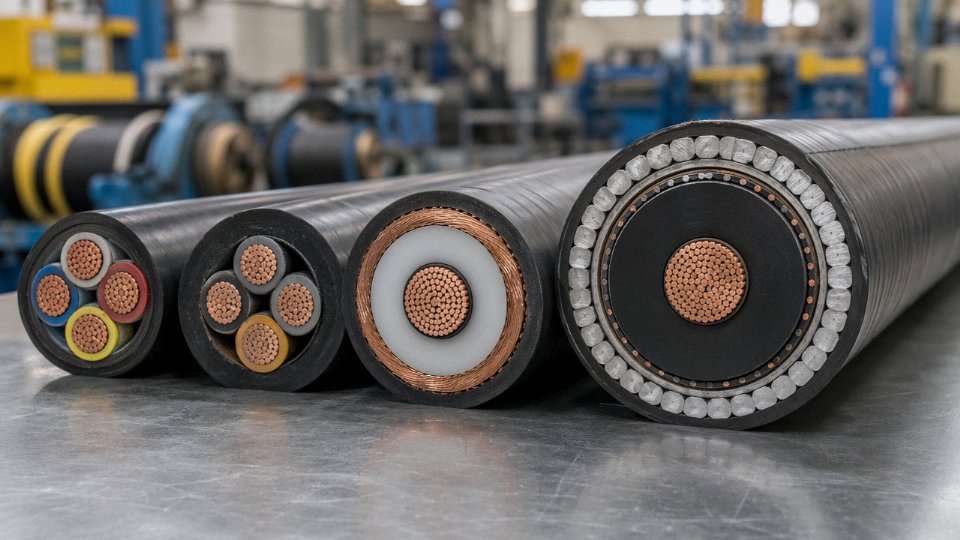
Voltage Class as the Primary Sorting Criterion: Low, Medium, High, and Extra-High Voltage Cables
Voltage rating is where every cable selection decision has to start. Before you consider conductor material, armor type, or installation method, the operating voltage of your circuit determines insulation thickness, whether you need metallic shielding, how the cable must be jointed, and what the whole assembly will cost per meter in the ground. Get that first classification wrong and nothing else matters — you’re either looking at a safety failure or a significant over-spend on unnecessarily rated hardware.
The industry broadly divides power cables into four tiers, and IEC standards give those tiers their formal definitions.
Low-Voltage Cables (Up to 1 kV)
The 0.6/1 kV class covers the vast majority of building wiring, final distribution boards, motor connections in light-duty industrial settings, and residential installations worldwide. IEC 60502-1 is the governing document for this range. PVC insulation at a 70°C continuous conductor temperature is still the workhorse for most LV applications, though XLPE — rated to 90°C continuous — is increasingly specified where load density is higher or conduit fill is tight and you need to push more current through the same cross-section. Shielding is generally not required at LV; the insulation wall thicknesses are modest, and installed cost per meter stays relatively low. This is the cable type most people have handled on a job site.
Medium-Voltage Cables (1 kV to 35 kV)
Step up to MV and the rules change noticeably. IEC 60502-2 governs cables in the 1–30 kV range, and above that the IEC 60840 family picks up. At these voltages, electrostatic stress at the conductor surface becomes a real engineering concern — you can’t just pile on more PVC and call it solved. XLPE has largely displaced paper-oil insulation in new MV installations because it handles moisture better, handles the thermal cycling of industrial load profiles better, and doesn’t require the ongoing maintenance that mass-impregnated systems demand. Metallic screen layers (copper tape or wire) are standard at MV to control the electric field geometry and provide a fault-current return path. Industrial plant distribution, urban cable networks, wind farm collector systems, and campus utility loops are the typical deployment environments. A medium-voltage cable for a 10 kV feeder in an industrial park might have an insulation wall of roughly 3.4–4.5 mm depending on voltage class and standard — compare that to perhaps 0.7 mm for a 1 kV PVC cable of similar conductor size.
High-Voltage Cables (35 kV to 220 kV)
HV cables are transmission infrastructure, not distribution wiring. These serve grid interconnections, long feeder runs between substations, and underground city-center transmission routes where overhead lines aren’t viable. XLPE dominates here too, and the engineering becomes considerably more involved: lead or corrugated aluminum sheaths for moisture exclusion, sophisticated joint and termination designs, and installation procedures that require factory-trained jointers. IEC 60840 governs cables in the 30–150 kV range and partially overlaps with IEC 62067 at the upper end.
Extra-High Voltage Cables (220 kV and Above)
Above 220 kV — sometimes defined as starting at 150 kV depending on the standard you’re referencing — IEC 62067 applies. These are bespoke, project-specific cables for major transmission corridors, offshore HVDC links, and grid backbone reinforcement. Lead-sheathed XLPE or cross-bonded systems are typical. The engineering, testing, and installation qualification requirements at this level are in a different category from anything below them.
Why the Boundaries Are Not Interchangeable
A cable rated for a lower voltage class must never be substituted for a higher-voltage application — not temporarily, not “just for commissioning,” not because a supply delay is holding up the project. The insulation wall is physically thinner, the electric stress it was designed to withstand is lower, and the consequences of dielectric breakdown at elevated voltage range from catastrophic equipment damage to fatal arc flash events. This isn’t a procedural formality; it’s a physics constraint.
Using a cable rated below the circuit's operating voltage will cause premature insulation breakdown and creates immediate risk of arc flash or ground fault.True
Insulation systems are engineered with defined stress limits tied to voltage class. Operating above those limits accelerates partial discharge degradation and can lead to rapid dielectric failure, regardless of how short the duration.
| Voltage Class | Typical Voltage Range | Applicable IEC Standard | Common Insulation | Typical Application |
|---|---|---|---|---|
| Low Voltage (LV) | Up to 1 kV | IEC 60502-1 | PVC, XLPE | Buildings, final distribution, light industrial |
| Medium Voltage (MV) | 1 kV – 35 kV | IEC 60502-2 | XLPE, EPR | Industrial plant networks, urban grids, wind farm collectors |
| High Voltage (HV) | 35 kV – 220 kV | IEC 60840 | XLPE | Substation interconnections, underground transmission |
| Extra-High Voltage (EHV) | 220 kV and above | IEC 62067 | XLPE (lead/Al sheathed) | Grid backbone, HVDC corridors, major transmission projects |
For procurement teams managing multi-phase projects that span several of these tiers — a new industrial campus might need LV wiring, MV plant distribution feeders, and an HV utility connection all in one scope — sourcing all voltage classes from a single qualified manufacturer simplifies qualification audits, consolidates documentation, and reduces the coordination overhead of managing multiple supply chains. Jinda’s production capability covers all four voltage classes, which in practice means a project’s cable BOM can be addressed under one technical discussion rather than four separate vendor qualifications.
Insulation Material Showdown: PVC, XLPE, EPR, and LSZH Compared
Once voltage class is settled, insulation material is usually the next decision that actually keeps procurement managers up at night — and with good reason. The wrong insulation in the wrong environment doesn’t just shorten cable life; it can create a toxic smoke event in a metro tunnel, cause premature insulation breakdown in a wet switchroom, or void an insurance policy after a fire. Getting this right matters before the purchase order is signed, not after the cable is pulled.
PVC — The Baseline Everyone Knows
Polyvinyl chloride is still the most widely installed insulation material for low-voltage cables worldwide, mostly because it’s cheap, flexible enough for most indoor routing, and easy to process on standard extrusion lines. Continuous conductor temperature tops out at 70°C. That’s fine for general building wiring, panel boards, and light commercial installations where load profiles are predictable and ambient temperatures are controlled.
The problem is fire behavior. PVC burns with dense black smoke and releases hydrogen chloride gas — corrosive, toxic, and damaging to electronics in the vicinity. For a warehouse with a small number of staff and adequate ventilation, you might accept that trade-off. For a hospital corridor or an underground car park with limited egress, you shouldn’t. Many European and Middle Eastern specifications have already banned PVC in those environments, and the trend is accelerating. Use PVC where it belongs: dry, indoor, low-density occupancy. Don’t stretch it beyond that just to save a few percent on unit cost.
XLPE — The Industry Default for a Reason
Cross-linked polyethylene has become the standard insulation for medium-voltage and high-voltage cables, and increasingly for LV installations where thermal performance matters. The crosslinking process converts thermoplastic PE into a thermoset material that holds its structure at elevated temperatures — 90°C continuous operation, and up to roughly 250°C under short-circuit conditions before permanent damage sets in. That 20°C advantage over PVC translates directly into higher current-carrying capacity for the same conductor cross-section, which sometimes lets you specify a smaller cable and still meet the thermal rating.
XLPE also resists moisture ingress and most industrial chemicals well, which matters in cable trenches, direct burial, and outdoor tray installations. Electrical properties — dielectric strength, insulation resistance — are superior to PVC across the board. For any new MV or HV project, XLPE should be your starting point unless something specific about the application pushes you elsewhere.
XLPE insulation supports continuous conductor operating temperatures of 90°C, compared to 70°C for standard PVC, while also tolerating short-circuit temperatures up to approximately 250°C.True
These ratings are consistent with IEC 60502 and IEC 60228 standards and reflect the thermoset nature of crosslinked polyethylene, which maintains structural integrity at elevated temperatures unlike thermoplastic PVC.
EPR — Flexibility and Cold-Weather Resilience
Ethylene propylene rubber is the material you reach for when the cable needs to survive repeated flexing, extreme cold, or both. Shore hardness is lower than XLPE, which means EPR cables handle tight bending radii on mobile mining equipment, shipboard applications, and offshore platform installations without cracking the insulation during routine movement. Performance at -40°C or below remains reliable — something XLPE doesn’t always guarantee depending on compound formulation.
EPR costs more. Expect roughly 20–40% higher insulation material cost compared to XLPE, depending on compound grade and order volume. For a fixed land installation, that premium is hard to justify. For a cable that gets coiled and uncoiled three times a day on a drilling rig, it pays for itself quickly in avoided replacement costs.
LSZH — Now Mandatory in Many Regulated Environments
Low-smoke zero-halogen insulation has moved from a premium option to a procurement requirement in a growing list of applications. Metro systems, railway tunnels, hospitals, offshore platforms, and densely occupied public buildings increasingly specify LSZH as a condition of approval, not a preference. The reasoning is straightforward: in a confined-space fire, it’s smoke inhalation and toxic gas that kill people before flames do. LSZH compounds are formulated to minimize both.
Compliance is typically verified against IEC 60332 (flame propagation) and the EN 50525 series for flexible cables, though project specifications sometimes add oxygen index requirements or smoke density tests on top. Don’t assume all LSZH cables are equivalent — formulations vary by manufacturer, and a cable that passes the single-wire flame test under IEC 60332-1 may not pass the bunch-wiring test under IEC 60332-3. Specify the correct test category for your installation geometry.
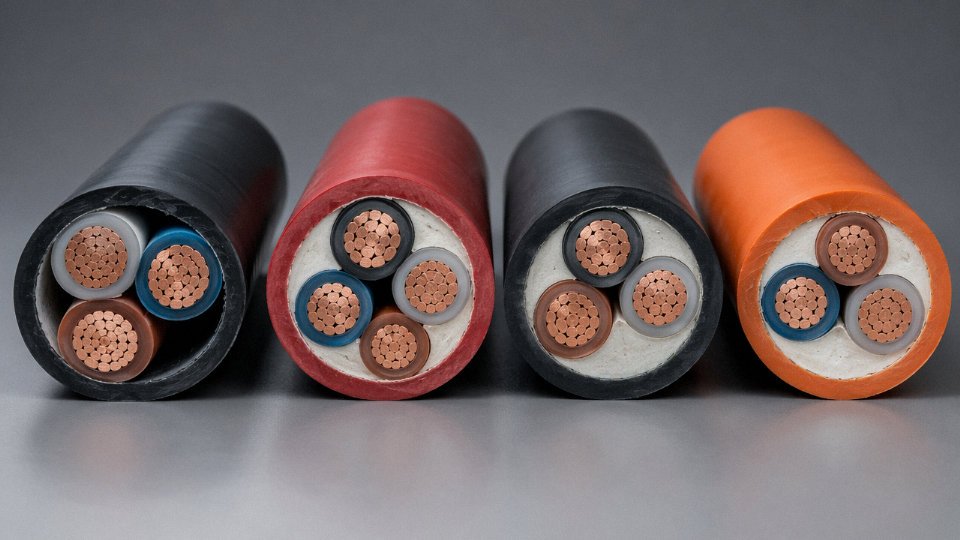
Side-by-Side Property Comparison
| Insulation Material | Max Continuous Temp | Dielectric Strength | Flame Performance | Typical Voltage Class | Relative Cost |
|---|---|---|---|---|---|
| PVC | 70°C | Moderate | Poor — toxic HCl gas, dense smoke | LV (up to 1 kV) | Low (baseline) |
| XLPE | 90°C (250°C short-circuit) | Excellent | Moderate — requires additive for LSZH compliance | LV / MV / HV | Low–Medium |
| EPR | 90°C (varies by grade) | Good | Moderate — halogen-free grades available | LV / MV | Medium–High |
| LSZH | 70–90°C (compound-dependent) | Good | Excellent — IEC 60332 / EN 50525 compliant | LV / MV | Medium–High |
Cost index is relative to PVC baseline and shifts with order volume, conductor cross-section, and compound source. A 10,000 m order behaves very differently from a 500 m project buy.
How Insulation Compound Performance Gets Locked In at the Manufacturing Stage
The data in that table only holds if the compound itself is consistent and correctly processed. This is where vertical integration in manufacturing actually matters rather than being a marketing bullet point. Jinda’s R&D team formulates and validates insulation compounds in-house, running dielectric testing, thermal aging trials, and flame performance verification against customer-specified standards — whether that’s IEC, BS, NF, or project-specific requirements — rather than relying entirely on a third-party compound supplier’s certificate. In practice, this allows formulation adjustments when a project spec requires a specific oxygen index or smoke density threshold that a standard off-the-shelf compound doesn’t quite hit. For procurement managers sourcing against tightly written technical schedules, that capability reduces the risk of a submittal rejection after a 12-week lead time.
Conductor Choices: Copper vs. Aluminum, Solid vs. Stranded, and Conductor Cross-Section Selection
Once voltage class and insulation material are settled, the conductor itself becomes the next decision — and it’s one that directly affects installed cost, termination labor, long-term reliability, and how the cable actually behaves during installation on a real job site.
Copper vs. Aluminum: The Numbers Behind the Debate
Copper’s electrical conductivity sits around 58 MS/m under standard conditions, aluminum at roughly 35 MS/m. That gap — about 40% lower conductivity for aluminum — means you need a larger aluminum cross-section to carry the same current. In practice, the conventional rule of thumb is to step up roughly one or two standard cross-section sizes when substituting aluminum for copper, though the exact upsize depends on the specific installation method and derating factors applied.
So why use aluminum at all? Weight and cost. For large cross-sections — say, 240 mm² and above — aluminum is roughly one-third the weight of an equivalent copper conductor, and the cost differential per meter becomes significant enough that it drives the economics of entire substation feeder projects. Overhead transmission lines are almost universally aluminum (or ACSR) for exactly this reason. Large underground MV and HV feeders in utility networks follow the same logic.
The catch with aluminum is at the terminations. Aluminum oxidizes readily, and aluminum oxide is a poor conductor. A loose or improperly made termination on an aluminum cable gets hot, the oxide layer grows, resistance increases further, and you get a self-reinforcing failure mode that ends in a burnt lug or worse. Proper bi-metallic lugs, anti-oxidant compound applied at assembly, and correct torque on compression fittings are not optional steps. This is where a lot of field failures actually originate — not in the cable itself, but in a termination that was done quickly by someone who treated it like a copper joint.
For control wiring, instrumentation loops, building circuits below around 95 mm², and anywhere termination space is constrained, copper remains the default. The smaller cross-section needed for equivalent ampacity genuinely matters in a crowded panel or a multi-core cable tray.
Aluminum conductors require a larger cross-section than copper to carry equivalent current due to aluminum's lower electrical conductivity of approximately 35 MS/m versus copper's approximately 58 MS/m.True
This is consistent with published conductivity values in IEC and international standards. The conductivity difference directly reduces current-carrying capacity per unit cross-section, requiring aluminum cables to be upsized for equivalent ampacity.
Solid, Stranded, and Fine-Wire Stranded: Matching Construction to Application
Solid conductors make sense for small fixed-wiring applications — they’re cheaper to produce and have marginally better conductivity at the same nominal cross-section because there are no inter-wire gaps. Above roughly 10 mm², solid conductors become impractical to bend without cracking.
Standard stranded conductors per IEC 60228 Class 2 are what most power cables use. The stranding gives enough flexibility to handle installation routing without conductor damage, while keeping construction relatively simple. Fine-wire stranded Class 5 and Class 6 conductors are a different category — these are built for repeated flexing, used in trailing cables for mobile mining equipment, festoon systems, and flexible cords. Using a Class 2 cable in a trailing application is a common specification error that leads to conductor fatigue failures within months.
Cross-Section Selection: Derating Is Where Engineers Earn Their Keep
Selecting cross-section by ampacity table alone is how you end up with cables that run hot. The IEC 60364-5-52 installation method correction factors exist because the same cable behaves very differently buried at 0.8 m in dry sandy soil versus installed in a ventilated tray in a 45°C ambient engine room. Grouping cables together reduces each cable’s ability to dissipate heat; the derating factor for a bunch of 9 cables can reduce allowable current by 40–50% depending on arrangement. Soil thermal resistivity — which varies seasonally in some climates — affects buried cable ratings significantly and is often just assumed rather than measured on real projects.
Sector-shaped conductors appear in multi-core MV cables and deserve a mention here. Instead of circular conductors, each core is shaped like a pie segment. The result is a noticeably smaller overall cable diameter for the same conductor cross-section, which reduces conduit sizing requirements, trench width, and the volume of insulation and sheath material needed. For a large project ordering several kilometers of 3-core 185 mm² MV cable, that material reduction is economically meaningful.
Jinda’s conductor drawing and stranding lines cover the full practical range — 1.5 mm² through 2,500 mm² in both copper and aluminum — which means cross-section continuity across a project’s full cable schedule can be sourced from a single facility rather than split across multiple suppliers with different dimensional tolerances and quality systems.
Armoring and Sheathing Systems: SWA, AWA, Steel Tape, and Corrugated Aluminum for Mechanical and Environmental Protection
The armor choice is where a lot of project specs quietly go wrong. Engineers spend hours debating conductor cross-section or insulation grade, then specify “SWA” across the board because that’s what the last project used — without checking whether it’s actually the right call for the installation environment or the AC system configuration. Getting it wrong doesn’t always cause immediate failure; sometimes it causes years of elevated losses, accelerated sheath degradation, or a cable pulled out of a trench after eighteen months because the armor couldn’t handle the backfill conditions.
Steel Wire Armoring (SWA)
SWA is the workhorse of multicore power cable construction in European and international markets. Galvanized steel wires wound helically over the inner sheath give you genuine tensile strength — relevant for vertical risers, steep-grade buried runs, and any installation where the cable gets dragged through conduit over long pulls. It resists crushing loads well enough for direct burial in most soil conditions, including reasonably compacted backfill. The IEC 60502 series governs most SWA cable construction for LV through MV ranges.
The one case where you absolutely should not use SWA is on single-core AC cables. Steel is magnetic. On a single-core cable carrying AC current, the armor sits in an alternating magnetic field and develops circulating eddy currents that translate directly into heat and measurable losses. In practice, this can reduce the cable’s effective current-carrying capacity by a meaningful margin, and in a high-load installation the thermal effect compounds over time. It’s not theoretical — any experienced MV or HV engineer has seen it.
Aluminum Wire Armoring (AWA)
AWA solves the single-core AC problem cleanly. Aluminum is non-magnetic, so the armor doesn’t interact with the cable’s own magnetic field the way steel does. AWA is standard for single-core MV and HV cables in AC systems. It’s also noticeably lighter than SWA — relevant when you’re handling large-diameter HV cables on a submarine route or a long overhead-to-underground transition where the cable weight during installation matters. The tradeoff is slightly lower tensile strength compared to steel wire of the same cross-section, though for most burial and duct applications this is not a limiting factor.
Steel Tape Armoring (STA)
Steel tape armor uses one or two overlapping helical steel tapes rather than individual wires. It provides adequate crush resistance for cables in static, non-tensile installations — fixed routing in cable trays, short buried runs, in-building risers where there’s no significant axial load. Cost is lower than SWA. STA is common in cables built to Chinese national standards (GB/T 12706), which is why you’ll see it frequently in domestic Chinese infrastructure projects and in export cables specified to GB standards. It’s not ideal for long direct-burial runs where ground movement, frost heave, or vehicle loading is a real possibility.
Corrugated Aluminum Sheath (CAS)
CAS is a different animal entirely. It’s used on HV and EHV cables — typically 66 kV and above — where the outer metallic layer needs to serve simultaneously as a longitudinal and radial moisture barrier, an earth screen, and mechanical protection. The corrugation allows the sheath to flex during installation without cracking, which matters on submarine cable routes and long land transmission pulls where the cable bends repeatedly around drums and sheaves. For any cable going into a submarine environment or a high-humidity buried transmission corridor, CAS is essentially the standard approach. You cannot substitute SWA or AWA and expect equivalent moisture performance over a 30–40 year service life.
Outer Sheath Selection
The armor is only part of the story. The outer sheath material — the last layer the environment actually touches — needs its own deliberate choice.
PVC outer sheaths are low cost and adequate for most indoor and moderate-burial applications, but they soften above roughly 70°C ambient and become brittle in sustained cold below about -15°C, depending on the formulation. PE (polyethylene) handles direct burial better, with higher resistance to moisture ingress and soil chemicals. LSZH (low smoke zero halogen) sheathing is mandatory in tunnels, metro systems, and densely occupied buildings in most European jurisdictions — it won’t eliminate fire risk, but it dramatically reduces toxic smoke emission, which is the actual life-safety concern in confined spaces. Polyurethane sheathing is a niche but genuinely useful option for cables exposed to oils, hydraulic fluids, or mechanical abrasion in industrial environments like offshore platforms or mining conveyors.
UV resistance is relevant any time the cable runs exposed above ground. Standard black PE offers reasonable UV stability; standard PVC less so. If the sheath isn’t rated for UV exposure and the cable sits on a surface tray in direct sunlight for years, sheath cracking is a when, not an if.
| Installation Environment | Recommended Armor | Recommended Outer Sheath | Relevant Standard |
|---|---|---|---|
| Direct burial, multicore LV/MV | SWA | PE or PVC | IEC 60502-1/-2 |
| Direct burial, single-core MV AC | AWA | PE | IEC 60502-2 |
| Static indoor/tray, LV | STA | PVC or LSZH | GB/T 12706 / IEC 60502-1 |
| Tunnel or metro, multicore | SWA | LSZH | IEC 60502 + local fire codes |
| Submarine or EHV land transmission | CAS | HDPE | IEC 60840 / IEC 62067 |
| Industrial, oil/chemical exposure | SWA or AWA | Polyurethane or LSZH-PU | IEC 60502-2 |
Jinda produces power cables simultaneously certified to both IEC/EN and Chinese GB/T standards from the same production lines.True
Jinda operates five manufacturing bases with R&D and quality systems capable of dual-standard production, which is verified through their international certifications and export track record to 50+ countries. This is a documented operational capability, not a marketing claim.
For international EPC contractors running projects that mix Chinese-sourced equipment with European or Middle Eastern grid interconnection requirements, this dual-standard capability is genuinely useful. It removes the need to source armor and sheath variants from separate supply chains, and it means the same cable reel can be documented against both standards for customs and commissioning sign-off. In practice, that simplifies a surprisingly painful part of the project handover paperwork.
Application-Specific Power Cable Families: Flexible, Mining, Fire-Resistant, Submarine, and Wind-Energy Cables
Voltage class and insulation material get most of the attention in specifications, but a surprising number of project failures trace back to using a standard fixed-installation cable somewhere it was never designed to go. The application-specific families below exist because the mechanical, chemical, or thermal demands of those environments are simply outside the performance envelope of ordinary power cable.
Flexible Trailing Cables for Continuous Movement
A rubber-insulated trailing cable on a port gantry crane or a continuous miner might flex tens of thousands of times per year. Standard fixed-wiring cable, with its compact stranded or solid conductors, will work-harden and fracture under that kind of cyclic stress — usually at a termination, always at the worst time.
Trailing cables use Class 5 or Class 6 fine-wire conductors per IEC 60228, where the individual wires are fine enough that the bundle stays genuinely flexible under load. The insulation is typically polychloroprene (PCP) or EPR rubber, chosen for oil resistance and the ability to withstand repeated deformation without cracking. Compliance with IEC 60245 bending cycle tests is the baseline; a reputable cable should have test data showing how many cycles at what bend radius, not just a catalog claim.
In practice, the cable management system matters as much as the cable itself — if the festoon or reeling drum imposes a bend radius tighter than the cable’s rated minimum, no amount of conductor fineness will save it.
Mining Cables: More Than Just Tough
Underground coal mining introduces risks that go well beyond mechanical abuse. Methane atmospheres mean any electrical fault capable of producing a spark or hot surface becomes a potential ignition source. Intrinsically safe cable designs limit the energy available to the circuit; the cables themselves must be mechanically robust enough to resist the kind of abuse they get in a longwall heading — heavy equipment running over trailing cables is not hypothetical, it is routine.
MSHA certification in the US, and equivalent national mining safety approvals in other markets, are non-negotiable for these applications. The certification isn’t just paperwork — it drives construction decisions around flame propagation, water ingress resistance, and jacket toughness.
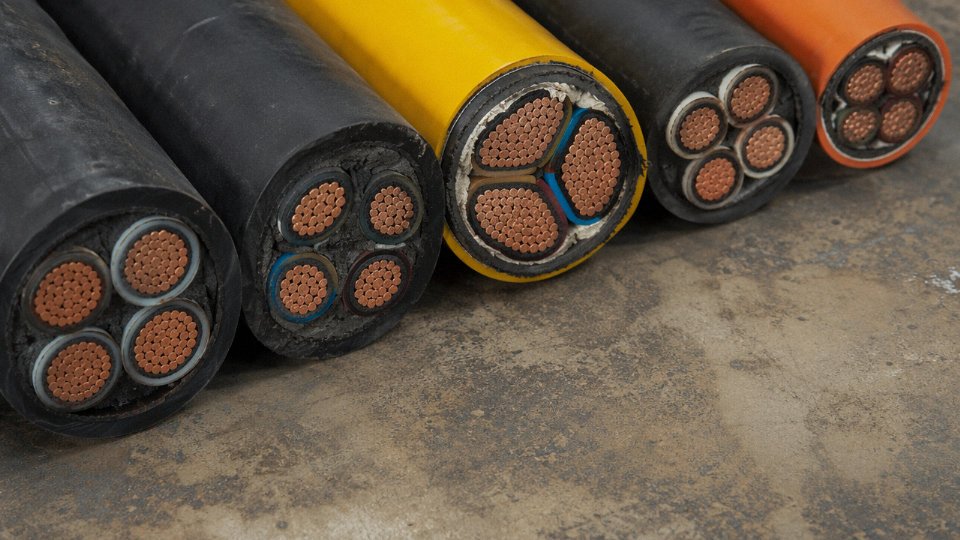
Fire-Resistant Cables: Circuit Integrity Under Flame
This is a distinction that gets blurred constantly in specifications: fire-resistant (FR or FP) cables and low-smoke zero-halogen (LSZH) cables are not the same thing and do not substitute for each other.
LSZH is about what the cable produces when it burns — limited smoke and no halogen acid gases. Fire-resistant cables are about whether the circuit keeps working while the cable is on fire. IEC 60331 defines 30-, 60-, and 120-minute circuit integrity classes. Emergency lighting, fire alarm circuits, and smoke extraction motor feeds typically require 60 or 120 minutes. Using a plain LSZH cable for an emergency circuit because it passes a smoke test is a specification error with life-safety consequences.
IEC 60331 fire-resistant cables maintain circuit integrity under direct flame for 30 to 120 minutes depending on classification, which is a distinct requirement from low-smoke or halogen-free performance.True
IEC 60331 is the international standard for circuit integrity testing under fire conditions. LSZH standards such as IEC 60754 and IEC 61034 address smoke and halogen emissions separately and do not require the cable to remain functional during combustion.
Submarine Cables: Pressure, Corrosion, and Dynamic Motion
River crossings and nearshore inter-island connections don’t need the same cable as a deep-sea HVDC link, but they still demand construction that shore-side cable simply cannot match. Jinda’s submarine cables for these applications use XLPE insulation, lead or corrugated aluminum water-blocking sheaths, and heavy galvanized steel wire armor configured to resist both the hydrostatic pressure and the abrasion from being laid on or pulled across a riverbed.
Shallow-water and tidal zone installations add a dynamic motion element — current-induced movement means the cable sees low-frequency fatigue loading over its service life. That’s an engineering input, not just an armoring selection.
Wind-Energy and Solar PV Cables: Cyclic Fatigue and DC Ratings
The cable running from a wind turbine nacelle down through the tower has to accommodate the yaw rotation of the nacelle — in some installations, cumulative twist over a 20-year service life can exceed several full rotations. Torsion-resistant designs with specially laid conductors and flexible insulation are tested to IEC 60811 torsion protocols. Standard flexible cable is not an adequate substitute, regardless of flexibility class, because the failure mode is torsional fatigue rather than simple bending.
Solar DC string cables are a different problem: they’re rated to 1.5 kV DC rather than AC voltage classes, exposed to UV and ozone continuously, and need TÜV or UL 4703 certification for the solar market. The DC rating matters because DC fault current behavior differs from AC, and an undersized or non-certified cable in a utility-scale string array creates both fire risk and warranty issues with inverter manufacturers. It’s a fast-growing segment, and the volume of non-certified product in the market is, frankly, a procurement risk worth taking seriously.
International Standards That Define Cable Types: IEC, BS, NFC, VDE, UL, and GB/T Side by Side
Standards exist for a reason that has nothing to do with bureaucracy. When a cable leaves a factory in Shandong and gets pulled into a duct in Lagos, Riyadh, or Houston, the engineer on the other end needs to know — without calling anyone — that the insulation wall thickness, the conductor resistance, the flame-test performance, and the marking all conform to a documented, auditable specification. That’s what a standard actually does: it defines test methods, dimensional tolerances, material properties, and marking requirements so that cables are interchangeable across supply chains and traceable when something goes wrong. Skipping the standards conversation at PO stage is one of the more expensive mistakes a procurement manager can make.
IEC 60502, IEC 60840, and IEC 62067: The International Baseline
Most national standards trace back to the IEC family. IEC 60502 covers LV (0.6/1 kV) and MV cables up to 30 kV and is probably the most widely referenced document in international EPC contracting. IEC 60840 picks up from 30 kV to 150 kV; IEC 62067 handles 150 kV and above. If a project specification says nothing more specific than “IEC compliant,” 60502 is the default assumption for the bulk of distribution cabling. Jinda’s standard production range is designed and tested against IEC 60502, which means dimensional and electrical test reports are available without special tooling or custom runs.
BS 6724 and BS 7870: Commonwealth Markets and the Middle East
British standards carry far beyond the UK. Many Gulf states, parts of Southeast Asia, and a good share of Sub-Saharan African utilities still specify BS construction — particularly for SWA cables where BS 6724 defines armoring wire diameter, lay, and sheath requirements in detail. If you’re sourcing for a project in, say, a GCC country with a British-trained engineering team, expect BS 7870 to appear in the spec for MV polymeric cables. The construction differences from IEC are not dramatic, but the dimensional tolerances and specific test sequences differ enough that a certificate for one doesn’t automatically cover the other.
NFC 32-321: Francophone Africa and Parts of the Levant
French-standard aluminum-sheathed cables (often called “câble type NFC”) are specified heavily across Francophone West and Central Africa, and appear in some North African and Levantine grids. NFC 32-321 governs construction details including the aluminum sheath dimensions and bonding requirements. Buyers on these projects should confirm NFC compliance explicitly — an IEC 60502 certificate will not satisfy a utility inspector in Côte d’Ivoire or Senegal who is checking against NFC.
VDE 0276: German and European Industrial Projects
VDE standards generally run tighter on dimensional tolerances and require specific electrical test sequences that go beyond the IEC baseline. For industrial projects in Germany or European plants with German-origin engineering standards, VDE 0276 compliance is worth confirming at the RFQ stage, not after samples arrive.
UL 44, UL 854, UL 1277: North American Projects
North American cable is a different world. Conductor sizing runs on AWG/kcmil rather than mm², voltage ratings use a 600V system that doesn’t map cleanly onto the IEC 0.6/1 kV convention, and UL listing (not just testing) is typically required for code compliance. UL 44 covers thermoset-insulated wire and cable; UL 854 governs service-entrance cable; UL 1277 covers electrical power and control tray cables. If your project is in the US or Canada, confirm whether UL listing is a hard requirement or whether third-party test reports to UL standards suffice — the distinction matters for lead time and cost.
GB/T 12706: Chinese-Funded Infrastructure Projects
For Belt and Road and other Chinese-financed projects, GB/T 12706 is frequently written into the procurement specification alongside or instead of IEC. Jinda’s domestic production baseline is GB/T 12706, so compliance documentation is straightforward and doesn’t require additional test runs.
| Standard Body | Key Standard | Voltage Scope | Primary Region of Use | Notes on Jinda Compliance |
|---|---|---|---|---|
| IEC | IEC 60502 | 0.6/1 kV – 30 kV | Global / most EPC contracts | Full test reports available; standard production range |
| IEC | IEC 60840 / 62067 | 30 kV – 500 kV+ | Global HV/EHV transmission | Available on project basis with third-party certification |
| BSI (UK) | BS 6724 / BS 7870 | LV and MV | UK, Middle East, Commonwealth | Produced to BS construction; certificates on request |
| AFNOR (France) | NFC 32-321 | LV and MV | Francophone Africa, parts of Middle East | Specify explicitly at RFQ; not assumed from IEC compliance |
| VDE (Germany) | VDE 0276 | LV and MV | Germany, European industrial | Available; confirm tolerance requirements at inquiry stage |
| UL (North America) | UL 44 / 854 / 1277 | 600V system | USA, Canada | Confirm listing vs. test-report requirement before ordering |
| SAC (China) | GB/T 12706 | LV and MV | China, Chinese-funded projects globally | Domestic baseline; documentation immediate |
The practical advice here is blunt: always write the governing standard into the purchase order, including the edition year where the project engineer has specified it. Jinda’s quality system is structured to issue test reports and third-party certificates to multiple standards simultaneously on a single production run — that’s genuinely useful on projects where, for instance, an IEC 60502 certificate is needed for the engineer-of-record and a GB/T 12706 certificate is needed for the financing authority. Getting that confirmed before manufacturing starts, not during shipping, is what keeps projects on schedule.
Jinda can supply cables with simultaneous third-party certification to multiple international standards including IEC, BS, and GB/T on a single production order.True
Manufacturers operating across international markets routinely maintain quality management systems and third-party audit relationships that allow concurrent certification. This is standard practice among large-volume cable producers supplying global EPC contractors and is consistent with Jinda's stated multi-standard production capability.
How to Read a Power Cable Designation Code: Decoding Part Numbers Like YJV22, N2XSY, and XLPE/SWA/PVC
Every project drawing, bill of materials, and supplier datasheet you’ll encounter uses cable designation codes as shorthand. Get fluent with them and you can verify a specification in seconds. Miss the conventions and you’re likely to accept a substitution that looks equivalent on paper but differs in armor type, sheath material, or screen configuration — differences that only surface after installation, when it’s expensive to fix.
The underlying logic is consistent across standards families: each letter or number encodes one layer of the cable’s construction, reading roughly from the inside out. Conductor material, insulation type, inner sheath or bedding, armor, outer sheath, and sometimes the screen arrangement — all compressed into a short alphanumeric string. Voltage class and conductor details (core count, cross-section) are then appended as a suffix.
Decoding a GB/T Code: YJV22
Take YJV22, one of the most common designations you’ll see in Chinese-sourced cable and in projects across Southeast Asia, the Middle East, and Africa.
- Y — polyethylene-family insulation
- J — cross-linked (combined with Y, this pair = XLPE insulation)
- V — PVC outer sheath
- 22 — double steel tape armor (the first digit indicates armor type; the second indicates the outer sheath over the armor — in this case, both resolving to steel tape plus PVC)
A complete purchase specification reads something like YJV22 8.7/15 kV 3×185 mm² — three copper conductors, 185 mm² each, rated 8.7 kV phase-to-ground / 15 kV phase-to-phase, double steel tape armored, PVC sheathed. That’s the whole construction described in under twenty characters. In practice, the voltage prefix (8.7/15 kV) is what most procurement managers miss when they’re in a hurry — and confusing a 3.6/6 kV cable with a 6/10 kV cable because the armor and insulation look similar is a real field error, not a hypothetical.
Decoding an IEC/VDE Code: N2XSY
European utility specifications, particularly in Germany and countries following VDE conventions, use a different but equally systematic structure. N2XSY breaks down as:
- N — VDE designation prefix, indicating compliance with DIN/VDE standards
- 2X — XLPE insulation (the “2” differentiates it from standard PE in German notation)
- S — copper wire screen (helically applied, gives the cable its radial field control in MV applications)
- Y — PE outer sheath
This type is typical of medium-voltage distribution cables for utility networks, commonly seen in 10–30 kV underground infrastructure. The copper wire screen is the key differentiator from an unscreened equivalent — it controls the electric field, provides a defined fault-current return path, and is mandatory in screened MV systems. Specifying the wrong screen type here has consequences for both personnel safety and protection relay coordination.
The British Plain-English Format
British and many Commonwealth-market specifications simply spell it out: 11 kV 3-core 185 mm² copper XLPE insulated SWA PVC. Construction is stated left to right — voltage class, core count, cross-section, conductor material, insulation, armor, outer sheath. Less compact, but unambiguous and easy to cross-check against IEC 60502-2 without needing to memorize a code table. For international EPC projects this format often appears in employer’s requirements documents even when the supply comes from a GB/T manufacturer.
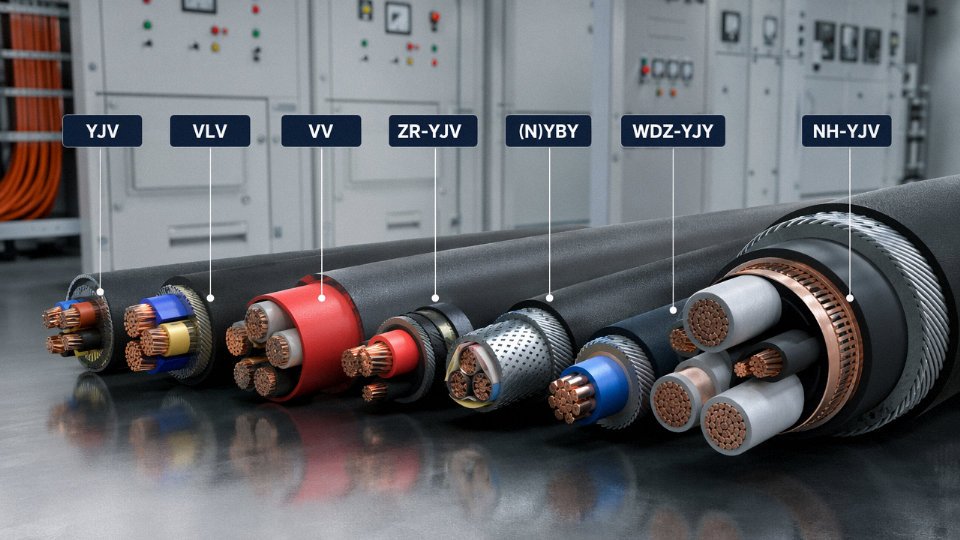
Decoding Cheat Sheet
| Code Element | What It Means | Example Value | Effect on Performance |
|---|---|---|---|
| Conductor prefix (absent / L) | Copper (absent) or aluminum (L in some standards) | YJV = copper; YJLV = aluminum | Current capacity, weight, termination method |
| Insulation code | Dielectric material | YJ / 2X = XLPE; V = PVC | Max operating temp, voltage rating ceiling |
| Screen / shield code | Type and material of electrical screen | S = copper wire screen | Field grading, fault return path — critical in MV/HV |
| Armor code | Mechanical protection layer | 22 = double steel tape; 33 = steel wire | Pull tension, crush resistance, burial suitability |
| Outer sheath code | Final jacket material | V = PVC; Y = PE | UV resistance, chemical resistance, flame class |
| Voltage suffix | Uo/U rating in kV | 8.7/15 kV | Insulation thickness, test voltage, application class |
| Core and cross-section suffix | Number of conductors × mm² | 3×185 mm² | Current capacity, short-circuit rating |
Jinda's product datasheets include both GB/T and IEC equivalent designations for the same cable construction.True
This dual-designation approach is standard practice for Chinese manufacturers exporting to international markets, allowing EPC contractors and foreign buyers to cross-reference against local specifications without requiring a separate technical translation step.
One practical note: when you’re reviewing a supplier’s datasheet and only one designation system appears, ask explicitly for the equivalent in the other. A cable listed only as YJV22 without an IEC cross-reference creates unnecessary friction during third-party inspection, especially on projects where the engineer of record is working from IEC drawings. Jinda’s datasheets carry both, which cuts one round of back-and-forth out of the submittal process — a small thing that matters when you’re managing submittals across fifty line items.
Frequently Asked Questions About Power Cable Types
What is the difference between a power cable and a control cable?
Power cables carry load current — they’re moving energy from a source to a load, whether that’s a 400 V motor feeder or a 33 kV distribution circuit. Control cables carry low-current signals: think 24 V DC to a relay coil, 4–20 mA to a PLC analog input, or interlock signals between switchgear panels. Cross-sections on control cables rarely exceed 1.5 mm², sometimes 2.5 mm², whereas power cables routinely run from 6 mm² to several hundred mm² depending on load.
In practice, both cable types often share the same cable trench or tray route — but they must be specified, purchased, and installed as separate items. Running them too close together without a separator can introduce interference, and using a power cable in place of a control cable because “it was on the shelf” is a procurement shortcut that tends to surface as a nuisance fault six months later.
Can I use an XLPE cable outdoors without additional protection?
It depends on the construction. An armored XLPE cable with a black PE outer sheath — the kind designed for direct burial — handles outdoor and underground conditions well. UV exposure is the critical variable above ground: standard PE sheaths tolerate it reasonably, but unprotected PVC sheaths degrade faster in high-UV climates, particularly in equatorial regions or anywhere with harsh summer sun.
Non-armored XLPE cable pulled through rigid conduit above ground is generally acceptable, provided the conduit itself handles the UV and mechanical exposure. What you cannot do is leave unsheathed or lightly sheathed XLPE cable exposed on an open cable ladder in direct sunlight and expect it to perform over a 20–30 year design life.
What does ‘fire resistant’ mean versus ‘flame retardant’?
These terms are not interchangeable, and confusing them in a specification can have serious consequences. Flame retardant (governed by IEC 60332 series) means the cable will self-extinguish and won’t propagate fire along its length. Fire resistant (IEC 60331) means the cable maintains circuit integrity — it keeps carrying current — while actually burning, typically tested at temperatures around 750–950°C for defined durations.
Both properties can coexist in a single cable, and for emergency systems like fire alarm circuits, sprinkler pump feeds, or smoke extract fans, you generally need both. Specifying only “flame retardant” for a fire-safety circuit is a common and dangerous underspecification.
IEC 60331 fire-resistance tests require cables to maintain circuit integrity at temperatures typically between 750°C and 950°C for durations ranging from 30 to 180 minutes depending on the test protocol.True
IEC 60331 series specifies flame application at 750°C minimum for standard tests, with IEC 60331-2 covering tests up to 950°C, across durations of 30–180 minutes depending on the specific part of the standard applied.
How do I choose between copper and aluminum conductors for a large infrastructure project?
For long runs — roughly 100 m or more — at larger cross-sections above 95 mm², aluminum reduces both cable weight and material cost meaningfully. The weight reduction matters on long overhead or tray runs where structural loading adds up. The cost difference fluctuates with commodity prices but aluminum is consistently cheaper per ampere-meter at scale.
Copper stays the right choice in tight cable routes where you need a smaller diameter to hit the same current rating, in environments with aggressive chemicals that attack aluminum oxide, and wherever termination quality is hard to supervise. Aluminum terminations done sloppily — under-torqued lugs, oxidized contact faces — are a recurring cause of hot joints and, eventually, fires. If your installation contractor is experienced and disciplined, aluminum at large cross-sections is often the better economic decision. If workmanship is variable, copper buys you margin.
What certifications should I require from a cable supplier for international projects?
At minimum: third-party type test reports to the applicable IEC standard or national equivalent, and an ISO 9001 certificate covering the production facility — not a holding company certificate that doesn’t actually touch the factory floor. For projects in Europe, CE marking is required. Some utilities and EPC contractors specify KEMA or similar independent lab endorsements. North American projects often require UL listing.
Jinda holds multiple international certifications and supplies full test documentation with orders. Ask for the specific report, not just a certificate number — a legitimate manufacturer hands it over without hesitation.
Does cable voltage rating affect its physical size significantly?
Yes, noticeably so. Higher voltage requires thicker insulation walls to withstand the electric field stress, and that increases overall diameter and weight regardless of conductor size. A 95 mm² copper XLPE cable at 0.6/1 kV might have an overall diameter in the range of 18–22 mm. The same conductor construction at 8.7/15 kV could measure 35–45 mm overall — the difference depending on manufacturer tolerances, screen construction, and sheath thickness. That gap matters directly when sizing conduits and calculating cable tray fill, both of which are frequently undersized at the design stage when engineers copy conductor cross-sections from an LV design into an MV routing without rechecking.
How far in advance should I plan cable procurement for large projects?
For standard LV and MV cables from a stocked manufacturer, four to eight weeks is a reasonable lead time. Custom configurations — unusual cross-sections, non-standard armor, special sheath compounds — push that toward ten to sixteen weeks. High-voltage cables, submarine cables, and wind-energy umbilicals can require twelve to twenty-four weeks for production alone, sometimes longer if specialized raw materials need to be sourced.
The practical advice: engage the cable supplier at the design stage, not after the purchase order is approved. Locking in lead times and pricing early has avoided more than a few project delays on tight construction schedules. Jinda’s technical and sales teams are set up to support this kind of early-stage involvement.
Sourcing Power Cables Globally: What to Demand From Your Cable Manufacturer
By the time a procurement manager reaches this point in a cable specification project, the technical decisions are largely made. Voltage class is confirmed, insulation material is specified, armoring is selected. What remains — and what causes the most project pain in practice — is finding a manufacturer who can actually deliver against that specification at scale, on schedule, and with paperwork that will satisfy a project engineer in Lagos, Rotterdam, or Manila equally well.
Here is what a serious buyer should be pressing suppliers on.
Production Capacity: Look Past the Brochure Numbers
Any manufacturer can claim high output. What you want to see is annual tonnage broken down by cable family, the number of dedicated extrusion and stranding lines per product type, and some honest disclosure about current utilization rates. A plant running at 95% utilization may struggle to absorb a rush order without pushing your delivery into the next quarter. Jinda’s five production bases covering roughly 470,000 m² are not just headline figures — they translate directly into the ability to run concurrent orders across low-voltage, medium-voltage, and specialty cable families without one program cannibalizing another’s line time.
Vertical Integration Is Not a Marketing Term
There is a meaningful difference between a cable manufacturer and a cable assembler. Assemblers buy drawn rod, buy compounded insulation pellets, buy pre-formed bedding — and simply extrude and package. When your specification changes mid-project (the client swaps XLPE for LSZH, or bumps the cross-section from 185 mm² to 240 mm²), an assembler goes back to three separate suppliers. Lead time doubles. Vertically integrated manufacturers who draw their own conductors, compound insulation in-house, and control extrusion parameters end-to-end can turn around a spec revision in days, not weeks. For fast-moving EPC projects, that difference is often the schedule.
Third-Party QA and Witness Testing Are Non-Negotiable
Drum-by-drum test certificates should be standard deliverables, not extras you negotiate. At minimum, require routine tests per IEC 60502: conductor DC resistance, power-frequency voltage test, and insulation resistance measurement. For medium-voltage or submarine cable, partial discharge testing belongs on that list too. More critically, preserve the right to send your own inspector — or appoint a third-party lab — to witness testing at the drum before it leaves the factory. Reputable manufacturers do not resist this. The ones who push back are telling you something.
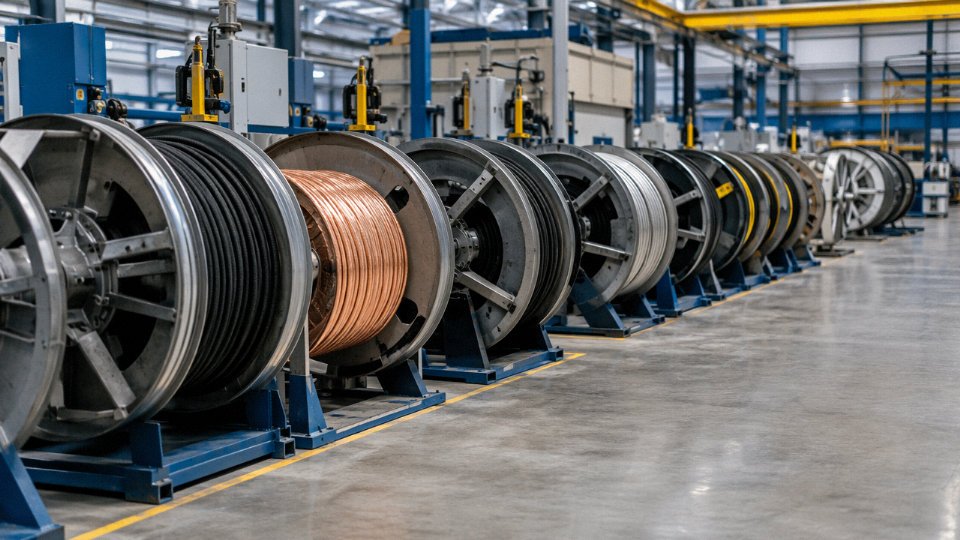
Jinda provides drum-by-drum test certificates and supports customer witness testing as standard practice across its cable product range.True
This aligns with IEC 60502 routine test requirements and Jinda's stated quality assurance process for international export orders.
Multi-Standard Capability Matters More Than You Think
An EPC contractor working across Southeast Asia, the Middle East, and West Africa in a single year cannot afford to manage four separate qualified suppliers. A manufacturer whose R&D and QA teams actively maintain production capability across IEC, BS, NFC, VDE, GB/T, and UL families — simultaneously, not sequentially — removes that coordination burden. Jinda manages multi-standard production as a routine function, which means a single purchase order can cover cables destined for different regulatory environments on the same project.
Technical Support Does Not End at the Gate
Specify this in your vendor qualification criteria: does the supplier offer cable sizing assistance, jointing and termination accessory coordination, and field support when something goes wrong on installation? A box of cable on a drum is not a solution. Experienced suppliers will flag compatibility issues between the cable and the termination hardware before the cable ships, not after a contractor has already made a bad joint 15 meters underground.
Framework Agreements and Long-Term Stability
For ongoing infrastructure programs, annual framework agreements with bonded stock arrangements and negotiated price-lock mechanisms are worth structuring properly. Material costs — copper especially — move enough to wreck a project margin if you are buying spot on every purchase order. Jinda’s 35+ years of export experience and active presence in more than 50 countries means the commercial infrastructure for long-term supply partnerships is already in place, not something you would need to build from scratch.
If you are specifying cables for an upcoming project or want to qualify a new supply source, contact Jinda’s international sales and technical team directly for project-specific specifications, sample drums, or volume pricing discussions.