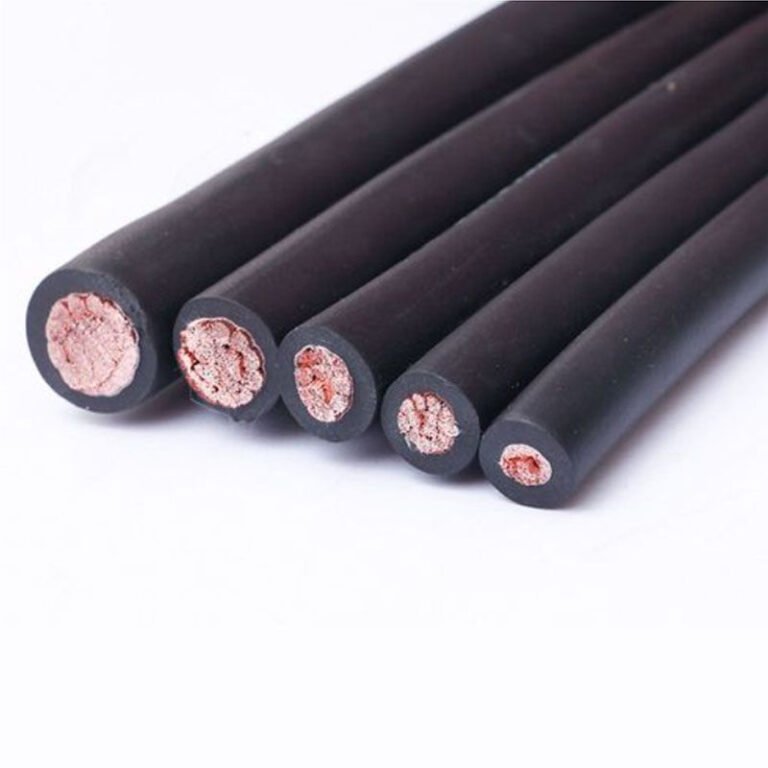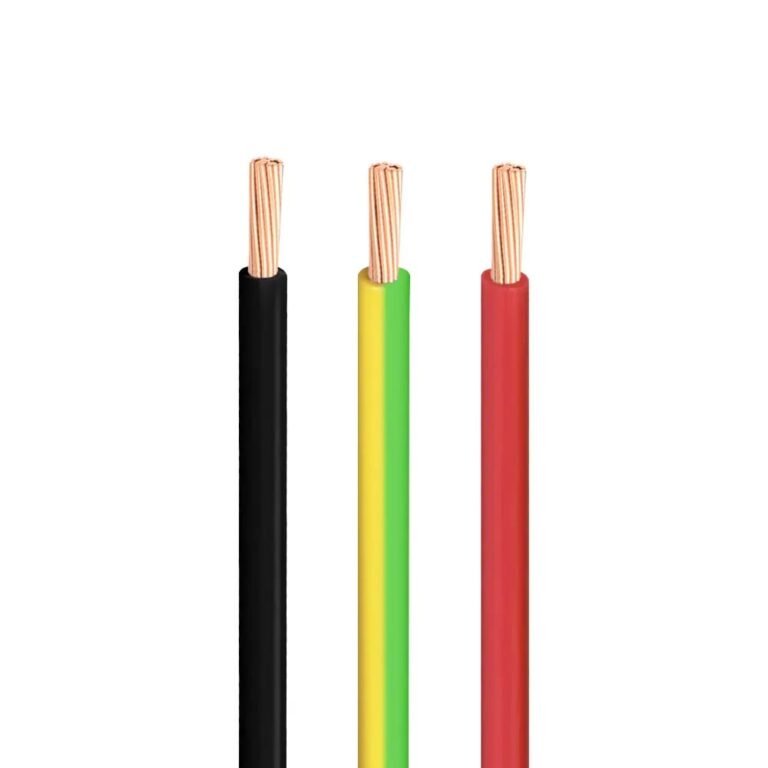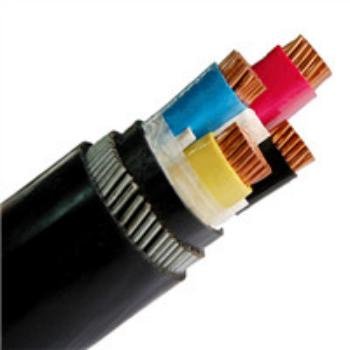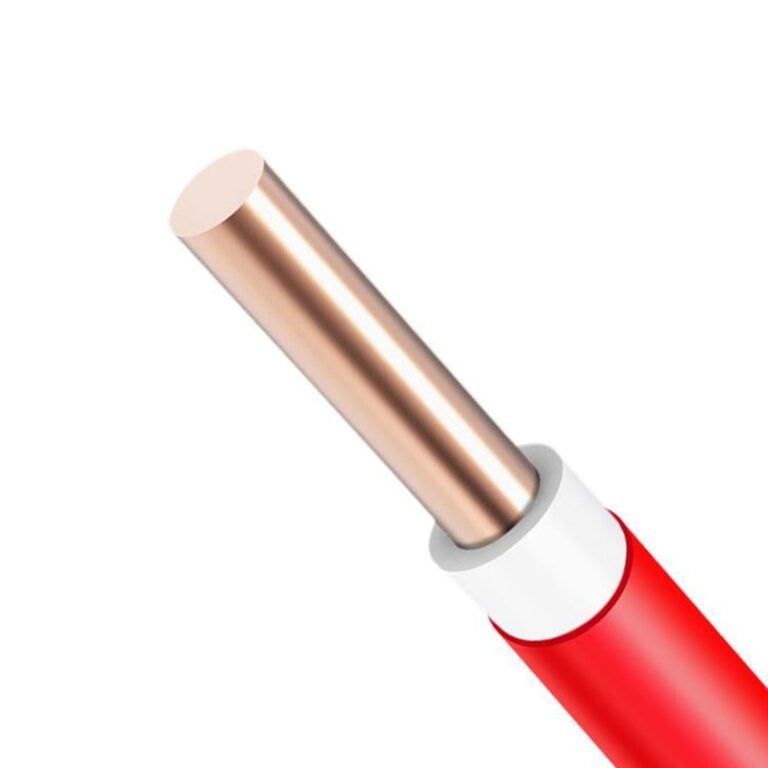
Pulling the wrong wire through underground conduit is one of those mistakes that can stay hidden until insulation starts tracking moisture, breakers nuisance-trip, or a feeder fails after the trench is already backfilled and landscaped. Then the job turns into re-pulling cable, opening pavement, arguing with inspectors, and paying labor twice. The safer direction is to treat the conduit as a wet electrical environment from the start and select conductors, conduit fill, burial depth, and markings as one package.
In underground conduit, use individual conductors rated for wet locations, most commonly THWN-2, XHHW-2, or RHW-2. USE-2 may be allowed for certain underground runs but is not automatically acceptable inside buildings. Standard indoor THHN alone is not enough unless the insulation is dual-rated for wet locations.
The tricky part is that the “right wire” is not decided by insulation letters alone. The raceway material, circuit size, number of current-carrying conductors, local burial rule, and where the conductors emerge into equipment all change the answer, and those small details are exactly where field failures and procurement errors usually start.
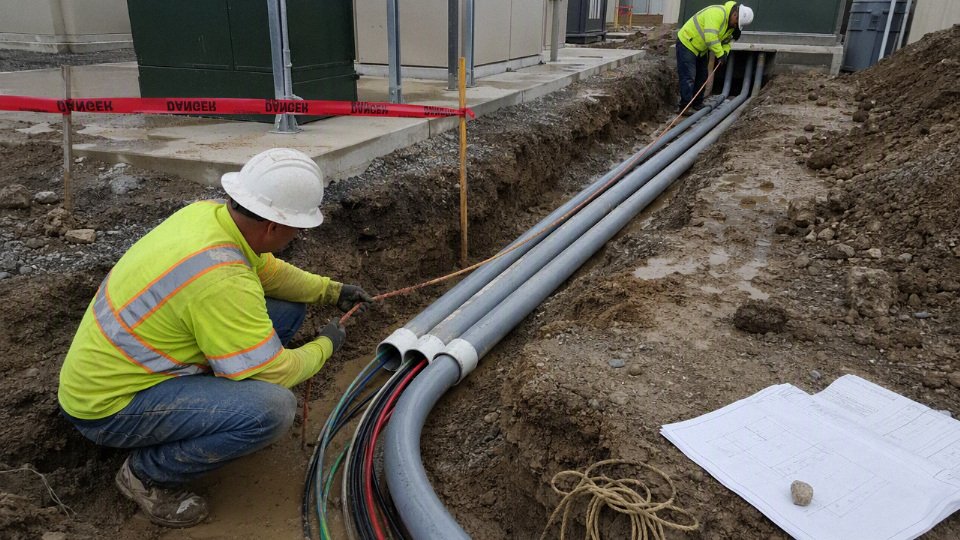
Code terms that matter
Underground conduit is not treated like a dry indoor pipe run. Under the NEC, underground raceways are normally considered wet locations, so the conductor marking has to match that environment, not just the fact that the wire is physically inside conduit. The mistake to avoid is buying “building wire” by habit and assuming the raceway makes it waterproof.
Underground conduit should be treated as a wet location for conductor selection.True
The NEC treats the interior of underground raceways as a wet location, so conductors installed there generally need insulation identified for wet locations, such as THWN-2, XHHW-2, RHW-2, or another permitted wet-location type. Always verify against the adopted code edition and the authority having jurisdiction.
Why a buried conduit is a wet location
A buried conduit can look sealed from the trench and still collect water inside. I have opened junction boxes where the installer swore every coupling was glued, and the raceway still had standing water months later. That is not unusual; it is how buried electrical systems behave.
Moisture gets into underground conduit through several paths:
- Condensation: Air inside the conduit carries moisture. Soil temperature changes more slowly than outdoor air, so the raceway becomes a long condenser during daily and seasonal cycling.
- Groundwater pressure: In wet soil, small defects at couplings, bell ends, adapters, and pull boxes let water migrate inward.
- Thermal cycling: PVC, metal conduit, fittings, and sealing materials expand and contract at different rates. A joint that looked tight in August may not behave the same way after winter movement.
- Damaged raceway joints: A nicked PVC bell, a poorly deburred conduit end, or a coupling stressed during backfill can create a leak path.
- Capillary movement: Water can travel along conductor surfaces, through stranded conductor interstices, and around small gaps in fittings. It does not need a dramatic crack.
That mechanism matters commercially because insulation failure underground is expensive to diagnose. You are not just replacing a bad wire; you may be excavating, pulling through a long run with water and grit inside it, drying or replacing conduit, and retesting insulation resistance. Saving a little on the wrong marking is a poor trade if the feeder serves a pump station, gate motor, yard lighting loop, or production outbuilding.
Wire, conductor, cable, and raceway are not the same thing
In plant-floor conversation, people say “wire” for almost everything. Procurement documents should be more precise, because a supplier cannot reliably quote the correct product if the request mixes conductor, cable, and conduit language.
- Conductor: One current-carrying path, usually copper or aluminum, with insulation over it. A black #6 THWN-2 copper phase conductor is a conductor.
- Wire: A loose everyday term. It may mean a single conductor, but it is not specific enough for a purchase order.
- Cable: An assembly of two or more insulated conductors, or conductors with an overall jacket, armor, shielding, messenger, or grounding member. UF-B is a cable assembly, not just a single insulated conductor.
- Raceway: The physical pathway, such as PVC conduit, rigid metal conduit, intermediate metal conduit, electrical metallic tubing where permitted, or other listed conduit systems. The raceway provides routing and mechanical protection; it is not a guaranteed dry enclosure.
This distinction catches a common field error: asking for “direct-burial cable in conduit” when the design actually calls for individual wet-rated conductors pulled through PVC. Those are different products, with different pulling behavior, fill calculations, heat dissipation, termination space, and sometimes different code permissions.
Common insulation markings you will see
The marking printed on the insulation or jacket is not decoration. It is the listing language that tells the inspector, installer, and buyer where the product may be used. The table below is a practical reading guide, not a substitute for the product listing or the adopted electrical code.
| Marking | Practical meaning for underground conduit selection |
|---|---|
| THWN-2 | Thermoplastic insulated, heat- and water-resistant, nylon jacketed conductor. Common choice for underground raceways when listed and properly sized. The “-2” normally indicates 90 degrees Celsius rating in wet and dry locations. |
| THWN | Wet-location thermoplastic building wire, but typically not the same wet-temperature rating as THWN-2. Often associated with 75 degrees Celsius wet rating, depending on listing. Verify the print legend. |
| THHN | Heat-resistant thermoplastic, nylon jacketed conductor, generally for dry and damp locations by itself. It is not automatically acceptable underground unless it also carries a wet-location rating, such as THWN or THWN-2. |
| THHN/THWN-2 | Very common dual-rated building wire. For underground conduit, the THWN-2 part of the marking is what matters. Do not buy based only on seeing “THHN” in the catalog title. |
| XHHW-2 | Cross-linked polyethylene insulated conductor, wet and dry rated, commonly used where better abrasion resistance, heat performance, or industrial robustness is wanted. The “-2” normally indicates 90 degrees Celsius wet and dry rating. |
| XHHW | Cross-linked polyethylene insulation with wet-location suitability, but not necessarily the same wet-temperature rating as XHHW-2. Check the listing and temperature column used for ampacity. |
| RHW-2 | Rubber or thermoset insulated conductor suitable for wet locations, with the “-2” normally indicating 90 degrees Celsius wet and dry rating. Used in some industrial and utility-style specifications. |
| RHH | Heat-resistant rubber or thermoset insulation, generally dry-location oriented unless combined with a wet rating such as RHW-2. RHH alone is not the marking you rely on for buried raceway moisture. |
| USE-2 | Underground service-entrance conductor, commonly direct-burial rated and wet-location suitable where permitted. It has restrictions, especially around use inside buildings unless it is dual-rated with an acceptable building-wire type. |
| UF-B | Underground feeder and branch-circuit cable, a cable assembly intended for direct burial where permitted. It may also be sleeved or protected by conduit in exposed or damage-prone sections, but it is not the same as pulling individual THWN-2 conductors. |
The suffix “-2” is often misunderstood. In these conductor designations, it generally indicates a 90 degrees Celsius rating in both wet and dry locations. That does not mean the circuit can always be loaded from the 90 degrees Celsius ampacity column without limitation. Breakers, lugs, disconnects, motor starters, receptacles, and equipment terminals are commonly rated 60 degrees Celsius or 75 degrees Celsius, especially on smaller equipment. The 90 degrees Celsius value is often used for adjustment and correction calculations, while the final ampacity may still be limited by the terminal temperature rating.
A small example: a buyer orders THWN-2 copper because the run is underground and wet-rated. Good start. If the feeder lands on 75 degrees Celsius-rated lugs, the final allowable ampacity must respect that termination limit after applying the applicable code rules. Conductor insulation rating is only one part of the circuit rating.
Wet-location rating is not the same as direct-burial rating
A wet-location conductor is designed to tolerate moisture inside a raceway. A direct-burial cable or conductor is designed and listed to be installed in earth under the conditions allowed by code and its listing. Those are not interchangeable permissions.
For underground conduit, individual THWN-2 or XHHW-2 conductors are common because the raceway provides the physical pathway and mechanical protection. If the conduit cracks or separates and the conductor ends up surrounded by soil and water, that does not retroactively make a non-direct-burial conductor acceptable for direct burial. The installation is damaged and should be evaluated as a failed raceway system, not justified by wishful thinking.
USE-2 causes a lot of confusion here. It is associated with underground service-entrance use and may be direct-burial rated, but it is not automatically allowed everywhere inside a building because some USE products do not have the flame characteristics required for interior building wire. In practice, many projects specify dual-rated conductors such as RHW-2/USE-2 when the route transitions between underground service portions and equipment areas, but the exact permission depends on listing, location, and code interpretation.
Other markings may matter, but they do not replace wet approval
Industrial and utility projects often add requirements beyond “wet location.” Some are sensible, some are copied from old specifications and need cleaning up before bidding.
Common extra markings include:
- Sunlight resistant: Relevant where conductors or cable jackets are exposed at risers, pole bases, rooftops, cable trays, or outdoor equipment entries.
- Oil resistant: Useful around machine tools, compressors, hydraulic units, fuel handling areas, and maintenance shops where oil mist or leaks are normal.
- Gasoline or fuel resistance: Project-specific. Do not assume ordinary building wire is suitable near fueling systems or contaminated soil.
- Low-smoke or low-halogen requirements: More common in tunnels, transit work, marine facilities, data centers, and enclosed public areas.
- Flame ratings: Critical where conductors enter buildings, cable trays, vertical shafts, or classified project environments.
- Mechanical protection: Armor, jacket toughness, conduit material, burial depth, warning tape, concrete encasement, and pull-box spacing can matter as much as insulation type.
None of these markings substitutes for wet-location approval in underground conduit. A sunlight-resistant dry-location conductor is still the wrong selection for a wet raceway. An oil-resistant jacket may solve one chemical exposure problem while leaving the moisture rating unresolved.
The authority hierarchy has to line up
The correct product is the one that satisfies all controlling requirements, not the one that satisfies the first document someone finds. On international projects, this gets messy because the purchasing team may be comparing NEC language, utility service manuals, consultant specifications, and manufacturer datasheets from different regions.
Use this order as a working checklist:
- National or model electrical code adopted for the project location
- Local amendments and inspection practices
- Utility service requirements, especially for service conductors, meter bases, transformer secondary connections, and trench details
- Project specifications and engineer-of-record drawings
- Product listing and printed conductor marking
- Equipment terminal ratings and manufacturer instructions
- Authority having jurisdiction approval
The authority having jurisdiction can reject an installation even if the catalog description sounded right. I have seen submittals fail because the quoted conductor had the right insulation family but the wrong listing for the jurisdiction, or because the utility required a specific conductor type for the service lateral. That is procurement time lost, not just an engineering footnote.
Conduit can increase stress instead of reducing it
Conduit protects conductors from physical damage and gives a replaceable pathway when the installation is designed well. It does not automatically make the conductor run cooler, easier to pull, or more forgiving.
Underground conduit can increase thermal stress because heat leaves the conductor through insulation, air or water inside the raceway, conduit wall, surrounding soil, and finally the ambient earth. Soil thermal resistivity, burial depth, conduit grouping, load diversity, and seasonal ground temperature all affect conductor temperature. A duct bank carrying several loaded feeders behaves very differently from one small branch circuit in a shallow PVC run beside a garage.
Pulling difficulty is the other practical trap. A larger individual conductor with a tougher insulation, more bends, wet conduit, long offsets, or poor pull-box placement can turn a simple material substitution into a field fight. Nylon-jacketed conductors often pull nicely in typical building work, while some thermoset insulations bring different stiffness and friction behavior. The preferred choice can flip when the run is long, the conduit fill is near its limit, or the installation crew has limited pulling equipment. For more than two conductors in a raceway, the common maximum conduit fill limit is 40 percent, and ampacity adjustment may also apply as conductor count rises.
Conduit is a protection and routing system, not a cure for marginal conductor selection. Its benefit stops holding when the raceway is undersized, overloaded thermally, poorly drained, badly jointed, or specified without regard to the actual conductor listing and termination limits.
Approved wire types
For underground conduit, the safest buying position is to specify individual conductors with a wet-location rating, most commonly THWN-2 or XHHW-2, unless the drawings or authority having jurisdiction require something else. USE-2, UF-B, tray cable, MC cable, and industrial cable assemblies can be correct in specific cases, but their markings and installation limits must be checked more carefully than ordinary building wire.
Underground conduit should be treated as a wet location for conductor selection, even when the conduit appears sealed.True
This is consistent with NEC treatment of underground raceways. Condensation, groundwater migration, and failed seals can leave conductors exposed to moisture for long periods, so dry-location-only insulation is not an acceptable basis for selection.
THWN-2: the usual branch-circuit and feeder conductor
THWN-2 is the workhorse for underground raceway branch circuits and many feeders. It is widely stocked, familiar to electricians, available in copper and sometimes aluminum depending on size and supplier, and rated for wet locations when the conductor marking actually says THWN-2.
A practical point causes plenty of mistakes: many nylon-jacketed building wires are dual-marked or multi-marked, such as THHN/THWN-2. The THHN part by itself is not what makes it suitable underground; the THWN-2 marking does. On a busy job, someone may say “use THHN” because that is what the trade calls the spool, but procurement should still require the full wet-location marking on the reel tag and printed legend.
THWN-2 is common for:
- Outdoor panel feeders in PVC or rigid metal conduit
- Garage, shed, pump, gate operator, and site lighting circuits
- Commercial branch circuits leaving a building underground
- Control power circuits where the conductor insulation is properly rated for the voltage and environment
It pulls reasonably well in clean conduit because the insulation system is compact. That smaller outside diameter helps with conduit fill, especially where several current-carrying conductors share a raceway. The trade-off is mechanical toughness. THWN-2 is not fragile, but it is not usually the first choice for long, heavy feeder pulls with large aluminum conductors, multiple bends, or rough raceway interiors left after underground work. If the conduit has mud, burrs, or a questionable sweep, no insulation type is a magic fix; clean and prove the raceway before pulling.
XHHW-2: robust insulation for feeders and industrial work
XHHW-2 is often the better conductor when the job is a feeder, service distribution run, or industrial installation where pulling stress and long-term insulation performance matter more than the smallest possible conductor diameter. Its cross-linked polyethylene insulation has good moisture and heat resistance, and it is commonly supplied in larger copper and aluminum sizes.
In plant projects, I like XHHW-2 for underground feeders feeding MCCs, process buildings, lift stations, compressor shelters, and outdoor distribution equipment. It is not because THWN-2 cannot work; often it can. XHHW-2 simply gives a more robust insulation package, and large conductors are where installation damage gets expensive. A nicked 500 kcmil aluminum feeder is not a small material issue; it can mean repulling a heavy set, rescheduling an outage, and explaining why the crew did not check the duct bank before the pull.
The mechanism is straightforward. Larger conductors see higher sidewall pressure at bends, more pulling tension, and more abrasion if the raceway has offsets or debris. A tougher thermoset insulation can tolerate demanding pulling conditions better, provided the installer still observes pulling tension, bending radius, lubricant compatibility, and manufacturer limits.
The trade-off is size and handling. XHHW-2 can have a larger outside diameter than comparable nylon-jacketed building wire, which may push conduit fill higher or force a larger raceway. That matters in existing conduit where the route is already poured under concrete. For new feeder design, upsizing the conduit is often cheaper than fighting a marginal pull with expensive conductors and a tired crew at 5 p.m. For retrofit work, the available raceway may decide whether XHHW-2 is practical.
RHW-2 and RHH/RHW-2: correct where the specification calls for it
RHW-2 is another wet-location-capable thermoset insulation type, and RHH/RHW-2 conductors appear in some power distribution and industrial cable schedules. Where the conductor is marked RHW-2, it is suitable for wet locations within its listing, voltage rating, and installation conditions.
The distinction in the marking matters. RHH relates to dry-location use at higher temperature ratings, while RHW or RHW-2 addresses wet-location suitability. A conductor marked RHH/RHW-2 gives both sets of capabilities, subject to the full product listing and code limitations. Do not shorten that to “RHH is fine underground” without reading the print on the insulation.
RHW-2 may be selected where:
- An engineering specification standardizes on thermoset building wire
- Higher-grade feeder insulation is desired
- Existing project standards already list RHH/RHW-2 for underground raceways
- Certain industrial buyers want consistency across tray, duct bank, and power distribution packages, where permitted
Availability can be more project-dependent than THWN-2 or XHHW-2. For procurement, this is where approved equal language needs care. Substituting XHHW-2 for RHW-2 may be technically acceptable in some installations, but it is not automatically acceptable to the engineer of record, owner standard, or inspector.
USE-2: useful underground, but often misunderstood
USE-2 is commonly associated with underground service entrance and direct burial applications. It may be suitable underground, including in certain raceway portions, but it is not automatically acceptable inside buildings unless it also carries a building-wire marking such as RHW-2, XHHW-2, or another permitted type.
This is one of the more expensive misunderstandings in underground work. A buyer sees “underground service entrance” and assumes the cable can run from the utility side, through conduit, into the service equipment room, and across an interior path. In many cases, plain USE-2 has restrictions once it enters the building envelope. The solution is not guesswork; specify dual-rated conductors when the route includes both underground and building interior portions.
USE-2 is most relevant for:
- Underground service entrance conductors where permitted
- Direct-burial service laterals under utility or code rules
- Solar and power distribution applications where the exact listing fits the installation
- Outdoor underground portions that transition correctly to approved building wire
The boundary is the marking and the route. If the conductor never enters a building and the installation matches the listing, USE-2 may be appropriate. If it passes into indoor raceway or equipment rooms, verify the required building-wire rating before purchase.
UF-B cable: direct burial does not mean easy conduit pulling
UF-B cable is rated for direct burial and wet locations, so it sometimes appears in residential underground circuits for sheds, landscape loads, and small outbuildings. It can be run in conduit where allowed, especially for physical protection at risers, but it is usually not the best choice for a full underground conduit run.
The reason is mechanical, not just regulatory. UF-B has a solid, flat or oval cable construction with conductors embedded in a tough jacket. That makes it durable in soil but stiff in conduit. Pulling UF-B through several bends can turn a simple small circuit into a wrestling match, and cable assemblies must still comply with conduit fill rules. The fill calculation for cable is less forgiving than many people expect because the cable’s major diameter drives the occupied area.
UF-B makes sense when:
- The design is primarily direct burial with short conduit sleeves for protection
- The circuit is small and the route is simple
- Residential or light commercial practice accepts it
- The installer can avoid long pulls and tight bends
For a complete underground raceway system, individual THWN-2 or XHHW-2 conductors are usually cleaner, easier to pull, easier to terminate, and easier to replace later.
MC cable, tray cable, and industrial cable assemblies
MC cable, tray cable, TC-ER, instrumentation cable, VFD cable, and other industrial assemblies should only be used underground in conduit when their listing and markings support the exact environment. Many assemblies carry very specific permissions and restrictions: wet location, direct burial, sunlight resistance, tray use, exposed run, crush resistance, oil resistance, or conduit use.
This matters in factories because the cable schedule may be written around tray systems, then a section of the route drops underground to reach a remote skid or outdoor equipment pad. A tray cable that is fine in ladder tray may not be listed for direct burial. A cable suitable for wet locations may still need a raceway for mechanical protection. Some VFD cables have shield grounding and termination requirements that are just as important as the insulation rating.
Check these items before accepting an industrial cable assembly for underground conduit:
- Full printed cable legend, not only the catalog title
- Wet-location rating
- Direct-burial rating, if the cable will contact soil
- Sunlight resistance for exposed risers
- Voltage rating and temperature rating
- Oil, chemical, or sunlight exposure requirements at the equipment end
- Minimum bend radius and pulling tension
- Shield, armor, drain wire, and grounding termination instructions
- Whether the cable is permitted in the selected raceway type
Equipment grounding conductors underground
Equipment grounding conductors may be insulated or bare depending on the raceway type, wiring method, and code conditions, but underground work often favors an insulated green conductor. Bare copper can be acceptable in some installations, yet corrosion conditions, dissimilar metals, water in the conduit, identification, and maintenance clarity can push the decision toward insulation.
In rigid metal conduit, the raceway itself may serve as an equipment grounding path if installed correctly and permitted. In PVC conduit, a separate grounding conductor is normally required for equipment grounding. Local inspectors and owner standards may be stricter than the minimum code, especially on industrial sites where fault clearing, bonding continuity, and maintenance visibility are taken seriously.
From a maintenance standpoint, an insulated green grounding conductor is easier to identify after years in a pull box with dirt, water staining, and three generations of handwritten panel labels. It also reduces nuisance arguments during inspections. The added cost is usually small compared with the labor cost of the underground raceway.
Copper versus aluminum conductors
Copper is compact, mechanically forgiving at terminations, and easier to use in smaller branch circuits. Aluminum is often the economical choice for larger feeders, especially where conductor runs are long and the project has many parallel sets.
The choice affects more than material price:
- Conduit size: aluminum usually requires a larger conductor size for the same ampacity, increasing fill and possibly raceway size.
- Pulling weight: aluminum is lighter, which helps on long feeder pulls.
- Terminations: lugs must be rated for the conductor material, and aluminum terminations need careful surface preparation and torque control.
- Maintenance: torque marks, correct antioxidant compound where required by the connector manufacturer, and clean landing practices matter.
- Procurement: aluminum can reduce project cost on large feeders, but only if gear lugs, conduit sizing, and labor practices are aligned from the start.
I would not buy aluminum feeder cable without confirming the equipment lug ratings and torque procedure. A correct aluminum installation is routine work for a competent electrical contractor; a casual one becomes a hot-connection problem waiting for peak load season.
Wire types generally not acceptable by themselves underground in conduit
Some products should raise an immediate hold point before purchasing or installing underground conduit conductors:
- NM-B cable: indoor nonmetallic sheathed cable is not intended for wet underground raceways.
- Dry-location-only conductors: any insulation type lacking a wet-location rating should be rejected for underground conduit.
- Communications or control cable not listed for wet underground raceways: low voltage does not remove the wet-location requirement.
- Indoor flexible cords or temporary cable: extension-cord logic does not belong in permanent underground wiring.
- Unmarked or poorly marked imported wire: if the voltage, temperature, wet-location rating, conductor size, listing, and manufacturer identification cannot be verified, it does not belong in the trench.
- Cable with damaged or unreadable jacket printing: even if the reel tag looks right, inspectors and maintenance teams rely on conductor and jacket markings later.
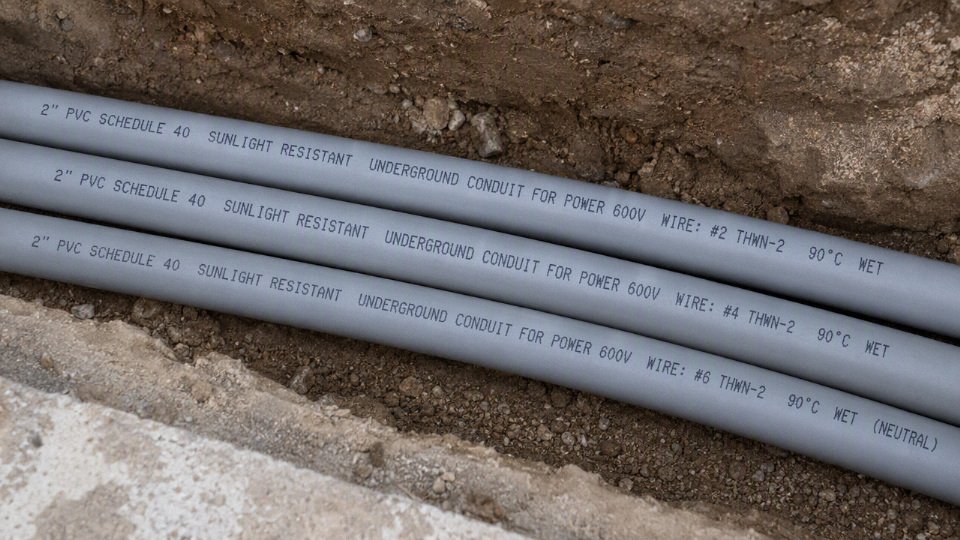
Comparison table for underground conduit wire selection
| Product marking or cable type | Wet-location suitability | Direct-burial suitability | Typical use | Pulling difficulty | Key limitation |
|---|---|---|---|---|---|
| THWN-2, often dual-marked THHN/THWN-2 | Yes, when marked THWN-2 | No, unless another marking permits it | Branch circuits, small and medium feeders in conduit | Low to moderate | Do not rely on “THHN” wording alone; verify full wet-location marking |
| XHHW-2 | Yes | Not by default; depends on listing | Larger feeders, industrial runs, service distribution in conduit | Moderate; larger diameter but robust insulation | May increase conduit fill compared with compact nylon-jacketed wire |
| RHW-2 or RHH/RHW-2 | Yes, when RHW-2 is included | Not by default; depends on listing | Specified power distribution and industrial feeders | Moderate | RHH alone should not be assumed suitable for wet underground raceway |
| USE-2 | Underground wet use commonly applicable within listing | Often yes for service entrance/direct burial use | Underground service entrance and similar outdoor applications | Moderate | Not automatically permitted inside buildings unless also building-wire rated |
| UF-B cable | Yes | Yes | Small direct-burial circuits, short protective conduit sections | High in conduit, especially with bends | Stiff cable assembly; conduit fill and pulling damage become concerns |
| Listed tray cable or industrial cable assembly | Only if marked/listed for wet locations | Only if marked/listed for direct burial | Industrial equipment, controls, VFDs, instrumentation, tray-to-conduit transitions | Varies widely | Must match wet, burial, sunlight, tray, conduit, and termination requirements |
| Insulated green equipment grounding conductor | Yes if insulation is properly rated | In conduit, not normally a direct-burial question | Equipment grounding in PVC or other raceways | Low | Size, identification, and bonding must match the circuit and code |
| Bare equipment grounding conductor | May be allowed in some raceways | Depends on installation | Grounding where permitted and accepted by local practice | Low | Corrosion, identification, and owner standards often favor insulated green |
The correct selection usually comes down to the route, not just the trench. A straight underground PVC run to an outdoor disconnect is one problem; a duct bank that enters a production building, rises through a wet washdown area, and lands in switchgear is another. Before issuing a purchase order, match the conductor marking to every environment the wire will pass through, then check conduit fill, ampacity adjustment, termination ratings, and any owner or local inspection requirements.
Conduit and burial variables
A wet-location conductor rating is only the starting point; the raceway, soil, route geometry, and thermal environment decide whether that conductor is practical, pullable, durable, and code-compliant. Underground conduit is a mechanical and environmental system, not just a sleeve around wire. The same THWN-2 or XHHW-2 conductor that works cleanly in a short PVC run to a gate motor may be a poor choice in a long industrial duct bank with heat, chemicals, and tight bends.
Common underground raceways differ less by “can it be buried?” and more by where they fail, how they pull, and what abuse they tolerate.
| Raceway type | Where it is commonly used | Practical selection issues |
|---|---|---|
| Schedule 40 PVC | Typical underground branch circuits, feeders, site lighting, irrigation controls, outbuildings | Economical and corrosion-resistant, but vulnerable where it emerges from grade or is exposed to impact. Needs proper solvent joints, expansion planning, and careful bedding so rocks do not point-load the conduit. |
| Schedule 80 PVC | Risers, exposed transitions, areas subject to physical damage | Thicker wall improves impact resistance but reduces inside diameter compared with the same nominal Schedule 40 size, so pulling and fill can get worse unless the conduit is upsized. |
| Rigid metal conduit | Heavy-duty industrial, traffic areas, hazardous or high-abuse locations where permitted and properly protected | Strong and often accepted at shallower cover in some code tables, but corrosion protection, threaded joints, bonding, and coating repair matter. Bare damaged threads in wet soil are where trouble often starts. |
| Intermediate metal conduit | Similar uses to rigid metal where a lighter metal raceway is acceptable | Easier to handle than rigid in some installations, but still needs corrosion evaluation, bonding continuity, and compatible fittings. |
| High-density polyethylene conduit | Long utility-style pulls, directional boring, communications or power ducts where allowed by code and listing | Flexible and well-suited to long sweeps, but not automatically approved for every premises wiring use. Termination, transition fittings, marking, and local acceptance need to be checked before procurement. |
| Corrosion-resistant systems | Chemical plants, fertilizer storage, wastewater areas, coastal sites, mines, washdown zones | May involve PVC-coated rigid steel, fiberglass conduit, stainless fittings, coated supports, or nonmetallic raceways. The right answer depends on the chemical exposure, mechanical risk, grounding method, and temperature. |
Burial depth is a design variable, not a number to memorize. In NEC-based work, common cover requirements can fall roughly in the 6 to 24 inch range depending on raceway type, circuit voltage, residential versus commercial use, GFCI protection, whether the run passes under a driveway, slab, road, or building, and what the local authority has amended. A 120 V residential GFCI-protected branch circuit in PVC does not live under the same assumptions as a 480 V feeder crossing a forklift yard.
That depth affects more than inspection approval. Deeper trenching changes excavation cost, spoil handling, dewatering, and the chance of hitting other utilities. Shallow cover may reduce labor but usually increases the need for stronger raceway, warning tape, concrete encasement, or route protection. In a plant, I would rather spend a little time confirming the cover rule before trenching than watch a crew re-open 80 meters of compacted driveway because the installation was designed from a memory of a different table.
Conduit fill is the next place where “the wire is approved” stops being enough. For more than two conductors in one raceway, the common maximum fill limit is 40 percent, and conductor count can trigger ampacity adjustment as well. That sounds simple until someone tries to pull a multi-conductor cable assembly through the same route. Individual conductors often behave much better in conduit than a large jacketed cable because they can lay, slide, and lubricate as a group; a stiff cable assembly may technically fit on paper and still be miserable in the trench.
The mechanism is straightforward: as fill rises, the conductors have less room to move, lubricant is wiped away faster, and the cable bears harder against bends. Heat also has less pathway out of the conductor bundle. Upsizing the conduit usually lowers pulling stress and leaves space for replacement, but it is not free. Larger raceway costs more, needs wider sweeps and larger boxes, can hold more water, and may require better duct plugs, bell ends, and support details to keep the installation clean and maintainable.
Pulling tension and sidewall pressure deserve serious attention on underground runs. Damage is often installed before the circuit is ever energized. The worst cases combine:
- Long straight pulls that accumulate friction.
- Multiple bends, especially back-to-back bends near the end of the run.
- Small conduit with high fill.
- Stiff insulation or jacket systems in cold weather.
- Poorly glued PVC joints with internal lips.
- Field-cut conduit without proper reaming or bell ends.
- Too little pulling lubricant, or the wrong lubricant for the insulation.
Sidewall pressure is the force of the conductor package pressing into the outside wall of a bend. A pull may feel acceptable at the rope, yet the insulation is being crushed or scraped around a sweep. This is one reason long underground feeders usually need generous sweeps, intermediate pull points, and a pull plan rather than “just have the backhoe crew leave us a pipe.”
The 360-degree bend rule between pull points is not paperwork trivia. Once the total bends between accessible pull points exceed 360 degrees, pulling becomes harder to predict and usually violates standard raceway installation rules. Even below that limit, a route with four 90-degree bends is not automatically a good design. Underground handholes, pull boxes, or larger-radius sweeps may be needed so maintenance can replace conductors years later without excavating the whole run.
A practical underground route review should check:
- Total run length between pull points.
- Total degrees of bend, including offsets and sweeps.
- Bend radius relative to conductor or cable diameter.
- Conduit size after accounting for Schedule 80 wall thickness where used.
- Pull direction and whether the heavy end of the pull is avoidable.
- Access to handholes after landscaping, paving, guards, or machinery are installed.
- Drainage around boxes so they do not become permanent sumps.
Water management is where many otherwise neat installations disappoint. Underground conduit will collect water through condensation, small joint leakage, damaged fittings, and temperature cycling. Sealing helps reduce vapor, gas, insects, and water movement between spaces, but it does not turn an underground raceway into a dry location. Wet-rated conductors are still required where the code treats the raceway as wet.
Good detailing reduces the damage water can do:
- Slope conduit where practical so water does not sit against building entries.
- Use drainage fittings or suitable handhole bedding where allowed and appropriate.
- Seal building penetrations to limit vapor, gas, and pest migration.
- Install duct plugs in spare conduits instead of leaving open pipes as air paths.
- Use bell ends or bushings to protect insulation at conduit entrances.
- Provide expansion fittings on PVC where temperature movement across long runs or risers can stress joints.
- Avoid low spots that sit below the water table unless the system is designed for it.
Corrosion and chemical exposure can flip the raceway decision. Fertilizer areas attack some metals aggressively. Deicing salt and coastal soil punish exposed threads and damaged coatings. Hydrocarbons can affect some jacket or seal materials. Acids, caustics, industrial wastewater, and unusual soil chemistry may require coated metallic conduit, fiberglass systems, stainless hardware, compatible gaskets, or a different cable insulation family. Manufacturer chemical-resistance charts are useful, but I do not treat them as a substitute for knowing the actual exposure. “Occasional washdown” and “buried beside a leaking process drain” are not the same service.
Temperature and ampacity are the quiet constraints. Underground conductors shed heat into the raceway, then into the surrounding soil or encasement. Usable ampacity can be reduced by:
- More current-carrying conductors in the same raceway.
- Multiple conduits grouped closely together.
- Poor soil thermal resistivity, dry backfill, or concrete encasement assumptions.
- High load factor circuits that run near rating for long periods.
- Termination temperature limits, often 60°C or 75°C depending on equipment and conductor size.
- Ambient conditions at above-grade risers, rooftops, or sun-exposed transitions.
Oversizing underground conduit always improves the installation.False
Larger conduit usually reduces pulling difficulty and supports future replacement, but it can increase water volume, require larger boxes and sweeps, raise material cost, and demand better sealing and support details. It is a design trade-off, not an automatic rule.
For a short, lightly loaded branch circuit in clean soil, standard PVC with wet-rated individual conductors may be entirely sensible. For a long feeder serving production equipment, especially in a chemical, food, wastewater, marine, or heavy-traffic site, raceway selection belongs in the same conversation as conductor insulation, ampacity, pulling method, and maintenance access. The conclusion stops being reliable when the route, soil exposure, conductor count, load profile, or local inspection requirement is unknown; those are the inputs that decide whether the wire that is “allowed” is also the wire you should buy.
Sizing and circuit design
Underground conductor choice is only half the job; the circuit must be sized for load, protection, voltage performance, grounding, and fault duty as one package. A wet-rated conductor that is legal in conduit can still be a poor design if it is too small for motor starting, too many current-carrying conductors share the raceway, or the far-end voltage is marginal.
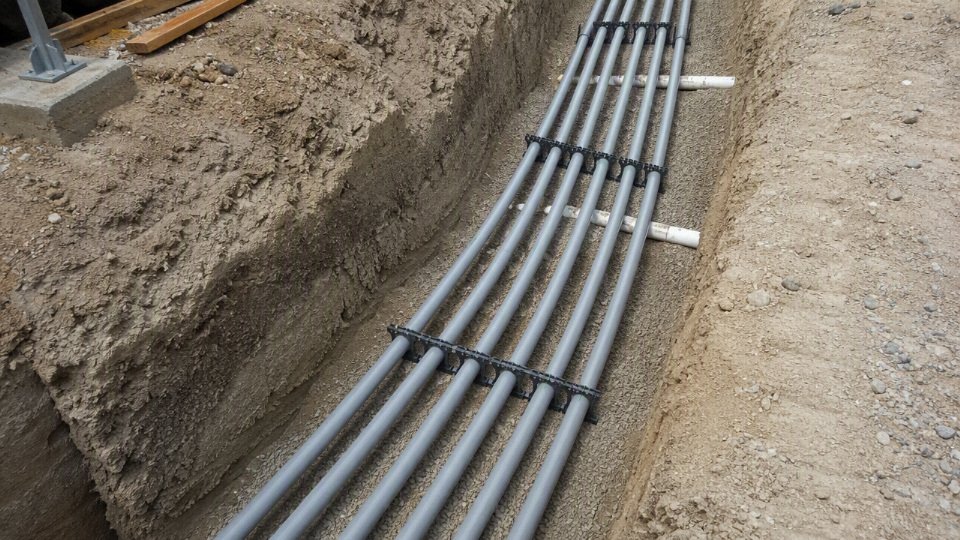
Start with the load and the circuit type
The first sizing question is not “What wire fits in the conduit?” It is “What circuit am I actually building?” In practice, that classification drives the overcurrent device, conductor count, neutral treatment, grounding method, and inspection expectations.
Common underground conduit circuits include:
- Branch circuits for receptacles, lighting, small buildings, signs, gate operators, or outdoor equipment.
- Feeders supplying a subpanel at a detached garage, shop, pump house, parking lot cabinet, or process skid.
- Service laterals from a utility source to service equipment, where utility and service-entrance rules may control the conductor type and installation.
- Motor and pump circuits, including well pumps, lift stations, irrigation pumps, compressors, and fan motors, where starting current and overload protection matter as much as running amps.
- Lighting circuits for poles, bollards, perimeter lighting, or area lighting, often with long distances and relatively small loads.
- Electric vehicle supply equipment circuits, usually continuous loads with strict nameplate and equipment instructions.
- Control, instrumentation, and low-voltage systems, where voltage drop, shielding, separation from power conductors, and wet-location jacket ratings become the trouble spots.
That sounds basic, but many bad underground jobs start with a verbal load description: “just power for a gate,” “a small pump,” “future receptacles.” A gate motor with a heater, keypad, photocells, battery charger, and long run back to a panel is not the same design as a dry contact control cable in a spare sleeve.
Size conductors by ampacity first, then check the rest
Ampacity sizing begins with the calculated load and the circuit rules that apply to it. Conductor material, insulation rating, terminal temperature rating, ambient conditions, conductor count, and continuous-load requirements all have to line up before anyone buys a reel.
Key checks include:
- Copper or aluminum: Copper carries more current at a given size and is easier to terminate in small equipment. Aluminum can be commercially attractive on larger feeders, but it needs proper lugs, oxide inhibitor where specified, torque control, and more space in enclosures.
- Insulation temperature rating: Conductors such as THWN-2 and XHHW-2 may carry ratings associated with higher insulation temperatures, but the usable ampacity is often limited by the temperature rating of the equipment terminals.
- Terminal rating: Many smaller devices are evaluated around 60°C terminations, while larger equipment may allow 75°C ampacity. The equipment label and applicable code rule decide this, not the cable jacket printing alone.
- Ambient correction: Underground runs are often thought of as “cool,” but portions rising on walls, crossing roofs, entering hot cabinets, or running through sun-exposed sweeps can create higher ambient conditions.
- Continuous loads: Loads expected to run for three hours or more are commonly treated with a 125 percent sizing basis under NEC practice, though the exact requirement depends on the equipment and circuit.
- Bundling and raceway conductor count: More current-carrying conductors in one conduit trap more heat and require ampacity adjustment.
Upsizing a conductor for voltage drop does not automatically increase the allowable overcurrent device size.True
The overcurrent device is normally selected from the load calculation, conductor ampacity after corrections and adjustments, terminal limitations, and equipment rules. Larger conductors may be installed simply to reduce voltage drop or improve starting performance.
The mechanism is heat. Current through conductor resistance produces heat; insulation and raceway conditions determine how well that heat escapes. Put six or nine loaded conductors in the same PVC run and the conductor that looked fine on a simple ampacity table may no longer be acceptable after adjustment.
Treat voltage drop as a performance requirement, not just a code afterthought
For long underground runs, voltage drop is often the issue that changes the wire size. Gates chatter, pump contactors pull in weakly, LED drivers fail early, and motors run hotter when the voltage at the load is too low. The breaker may never trip, yet the installation is still unreliable.
Common design guidance is to keep voltage drop around 3 percent on a branch circuit and around 5 percent total for feeder plus branch circuit, where that approach matches the governing code, specification, or owner standard. Those figures are design targets, not a universal legal limit. Some industrial specifications are tighter, especially for motors, controls, and process equipment; some small residential outdoor circuits may tolerate more if the load is light and noncritical.
Voltage drop depends on:
- Load current
- One-way circuit length
- Conductor size and material
- System voltage
- Single-phase or three-phase arrangement
- Power factor, especially for motors
- Starting current or inrush current
- Acceptable voltage at the actual equipment terminals
A 120 V gate operator 250 ft from the panel is a different animal from a 480 V three-phase pump at the same distance. Higher distribution voltage reduces current for the same power, which reduces voltage drop and conductor heating. That is why industrial sites often push power at 480 V to remote equipment and transform down near the load when needed.
The trade-off is physical and commercial: larger conductors reduce voltage drop, but they increase cable cost, pulling tension, conduit fill, sweep size, termination difficulty, and enclosure space. Past a certain point, the better design may be a larger raceway, parallel conductors where permitted, a local transformer, or a different distribution voltage rather than forcing oversized conductors into a conduit that was planned too small.
Do not treat the neutral as an automatic same-size afterthought
Neutral sizing depends on the circuit arrangement and load type. In a simple 120 V two-wire branch circuit, the neutral carries the return current and is normally sized with the ungrounded conductor. In a multiwire branch circuit, the neutral carries the imbalance between ungrounded conductors, provided the circuit is correctly arranged on opposite phases or legs and uses the required handle ties or common trip devices.
Three-phase systems need closer attention. Linear balanced three-phase loads may have little neutral current, but office areas, LED lighting, variable-speed drives, UPS inputs, computers, and other nonlinear loads can produce harmonic currents. Triplen harmonics can add in the neutral rather than cancel. In those cases, a reduced neutral that looked attractive on paper can become a heating problem. I have seen shared neutrals become the “mystery hot conductor” in crowded pull boxes because someone treated every lighting load as if it were an old magnetic ballast.
For feeders, neutral reduction should be engineered, documented, and accepted by the authority having jurisdiction or project engineer. It is not a procurement shortcut.
Grounding and bonding must be designed with the raceway
The equipment grounding conductor is sized from the overcurrent protective device, not from the load current in the same way phase conductors are. It must provide a low-impedance fault path so the breaker or fuse opens quickly during a fault. If that path is weak, a metal enclosure can sit energized long enough to hurt someone.
Raceway material changes the details:
- PVC conduit: Requires a separate equipment grounding conductor. PVC provides mechanical protection only; it is not a fault-current path.
- Rigid metal conduit or intermediate metal conduit: May serve as an equipment grounding path where installed and maintained correctly, but continuity through couplings, locknuts, corrosion points, and expansion fittings must be verified.
- Metal raceway with separate grounding conductor: Often preferred on industrial sites because it gives redundancy and makes future troubleshooting less painful.
- Detached structures: A feeder to a detached building usually brings equipment grounding and grounded conductors under specific rules, and the building may require a grounding electrode system bonded in the correct manner. Do not confuse earth with an effective fault-clearing path; soil is not a substitute for an equipment grounding conductor.
Bonding jumpers, listed fittings, corrosion protection, and torque matter. A beautiful cable schedule does not fix a loose locknut buried behind a weatherproof disconnect.
Watch derating, conduit fill, and future conductors
Multiple circuits in one underground conduit can look efficient during trenching, then become expensive during plan review or commissioning. For more than two conductors in a raceway, a common maximum conduit fill limit is 40 percent, and conductor ampacity adjustment applies as current-carrying conductor count increases. The exact fill and adjustment rules depend on conductor type, raceway type, and applicable code tables.
Problems show up when:
- Spare conductors are pulled “while the trench is open” without checking fill.
- Several lighting circuits share one conduit to a parking lot.
- Control and power conductors are mixed without checking separation and noise requirements.
- Oversized conductors for voltage drop no longer fit the original conduit.
- Pull boxes are too small for conductor bending radius.
- Future EV chargers, pumps, or outbuilding loads are assumed but not actually designed.
A spare conduit is often cleaner than a crowded conduit. It costs more during trenching, but it can save a shutdown and a second excavation later.
Industrial feeders need fault-current and coordination checks
On industrial feeders, ampacity and voltage drop are still not enough. The conductors and equipment must handle available short-circuit current until the protective device clears. That means checking panel ratings, disconnect ratings, conductor withstand, fuse or breaker let-through energy, and protective device coordination.
Required documentation commonly includes:
- Available fault current at service equipment and downstream panels
- Short-circuit current ratings for panels, disconnects, drives, starters, and control cabinets
- Protective device settings or fuse classes
- Coordination requirements between upstream and downstream devices
- Ground-fault protection requirements where applicable
- Arc-flash study inputs for larger systems
This is where procurement can accidentally buy the wrong “equivalent” equipment. A disconnect with the right amp rating but inadequate short-circuit rating is not equivalent. A feeder conductor that is thermally acceptable under normal load may still need review for fault withstand based on clearing time.
The main sizing rule holds only after the installation assumptions hold: correct load data, correct conductor count, verified terminal ratings, accepted voltage-drop target, and documented fault levels. Change one of those, and the conductor schedule may need to move with it.
Installation quality controls
Treat underground conduit pulls as a controlled installation job, not just a wiring task. Most early failures I have seen come from ordinary workmanship defects: nicked insulation, water left in conductor ends, crushed PVC, wrong lugs on aluminum, or a route that nobody documented before the trench disappeared.
Verify the conductors before they leave the reel area
Do this before pulling, not after the conductors are halfway through 180 feet of conduit. The jacket or insulation print should match the approved submittal and the circuit schedule.
Check and record:
- Insulation type: THWN-2, XHHW-2, RHW-2, USE-2 where permitted, or the exact cable assembly specified.
- Voltage rating: commonly 600 V for many building wire applications, but verify against the project documents and equipment served.
- Conductor size: AWG or kcmil, including neutral and equipment grounding conductor sizes.
- Conductor material: copper or aluminum; do not let the termination package get decided later by whoever is on shift.
- Listing or certification mark: verify against the jurisdiction and project requirement.
- Production batch or reel number: useful if a defect, shipping damage, or documentation dispute appears later.
- Remaining length and pull length: confirm there is enough conductor for routing, termination, drip loops where used, and rework allowance.
- Specification match: insulation color, stranding class, flame or sunlight resistance markings where required, and any owner-specific approval.
A simple photo of the print legend on each reel, taken before installation, has saved more arguments than any meeting minutes. Store it with the inspection package.
Inspect the conduit system before pulling
A raceway that looks acceptable from the trench edge can still be a cable grinder inside. Before conductors are installed, the supervisor should verify:
- Clean bore, with mud, gravel, concrete slurry, and duct plugs removed.
- No sharp cut edges at conduit ends, adapters, sweeps, boxes, and stub-ups.
- Correct sweep radius for the conductor size and pulling direction.
- No crushed, flattened, separated, or poorly glued sections.
- Burial support under the conduit, especially at transitions and elbows.
- Expansion allowance where PVC rises outdoors into panels, pedestals, or equipment.
- Pull boxes installed where the route exceeds practical pulling limits.
- Conduit dewatered and clean enough for pulling work.
“Dry enough” does not mean permanently dry; underground raceways should be expected to see moisture. It means no standing water, grit, or sludge that turns the pull into a sanding operation. I like a mandrel or foam piston pass on longer runs, followed by a pull tape inspection. If the mouse comes out with clay stuck to it, the conduit is not ready.
Control pulling force, lubrication, and bend damage
Insulation damage often starts during installation and fails months later, after moisture and load cycling find the weak spot. Long underground runs, multiple bends, and heavily filled conduits need more than a strong crew and a tugger.
For demanding pulls, calculate or at least estimate:
- Pulling tension at the feed end.
- Sidewall pressure through sweeps.
- Conduit fill and conductor count.
- Lubricant compatibility with the insulation.
- Pull direction that gives the lowest stress.
- Communication method between puller and feeder.
Use pulling lubricant approved for the conductor insulation. Do not substitute dish soap, oil, grease, or whatever is sitting in the maintenance cage. Some lubricants dry hard, attract grit, or attack jacket compounds; the effect is not always visible on day one.
There is a trade-off here. Bigger conduit, more pull boxes, and wider sweeps cost more in material and trench time, but they reduce pulling stress and make future conductor replacement possible. Tight conduit may pass bid review because the raceway fill is technically acceptable, then punish the installer with high tension, damaged insulation, and a feeder nobody wants to troubleshoot later. The low-cost choice flips only when the run is short, straight, accessible, and the conductor size is modest enough that installation stress is clearly low.
Protect conductor ends from moisture
Large reels stored outside need end protection. This is not paperwork fussiness; capillary action can move moisture along strands, especially in stranded conductors, and wet conductor ends can cause ugly termination problems.
Good practice includes:
- Keep factory end caps or reseal cut ends with suitable heat-shrink caps or approved tape methods.
- Store reels off the ground where possible, not sitting in trench water or snowmelt.
- Cover reels without trapping condensation against the conductor ends.
- Do not leave pulled conductors open in handholes overnight during rain.
- Cut back exposed ends before termination if water entry is suspected.
- Inspect aluminum conductor ends for oxidation and prepare them as required by the connector manufacturer.
On industrial feeders, I would rather lose a foot of conductor than energize a suspicious wet end in a main switchboard.
Bend, identify, and terminate correctly
Follow the cable manufacturer’s minimum bending radius for cable assemblies. Individual conductors in raceway are more forgiving than armored or jacketed assemblies, but sharp bends at sweeps, cabinet entries, and tight gutter space still damage insulation and make terminations unstable. A conductor forced into a lug under side pressure tends to relax later, especially with larger aluminum conductors.
Identification should be permanent and understandable:
- Phase conductors identified by approved colors or durable marking.
- Neutral conductors identified correctly.
- Equipment grounding conductors identified correctly.
- Parallel conductors grouped and labeled consistently at both ends.
- Spare conduits and spare conductors tagged before covers go on.
Terminations deserve their own discipline. Use listed lugs and connectors rated for the conductor material: copper-only, aluminum-only, or dual-rated as marked. Follow the equipment and connector torque values, using a calibrated torque wrench or torque screwdriver. “Feels tight” is not a torque method. Anti-oxidant compound on aluminum should follow the lug manufacturer’s instructions, not habit; some connectors require it, some are prefilled, and some do not want excess compound packed into the barrel.
Inspection, testing, backfill, and turnover checklist
Test before backfill where the installation sequence allows it, and always before energization. The exact test program depends on voltage class, owner standards, and equipment served, but the field package should normally include continuity, phase identification, equipment grounding verification, and insulation resistance testing where appropriate. Insulation resistance values must be interpreted against conductor type, length, temperature, moisture exposure, and the project test procedure; a single universal pass number is not responsible engineering.
Before energizing the underground circuit, procurement and site supervision can use this checklist:
| Checkpoint | What to confirm | Evidence to keep |
|---|---|---|
| Conductor markings | Type, size, voltage, material, listing mark, batch, length | Reel photos, delivery documents, submittal match |
| Conduit condition | Clean bore, no crushed sections, proper sweeps, supported trench route | Inspection photos, mandrel or pull record |
| Pulling control | Compatible lubricant, acceptable pulling method, no observed jacket damage | Pull plan, crew sign-off, tension record if used |
| Moisture protection | Ends capped during storage and staging, exposed ends cut back if needed | Storage photos, supervisor note |
| Bending and routing | No sharp bends, adequate gutter space, no forced lug alignment | Panel and handhole photos |
| Identification | Phases, neutral, grounding conductor, parallels, spares labeled | As-built labels, termination photos |
| Terminations | Correct lug rating, conductor prep, torque to manufacturer value | Torque log, tool calibration record |
| Electrical tests | Continuity, insulation resistance where specified, grounding verification, phase rotation if applicable | Test sheets with instrument ID |
| Backfill | Sharp rock removed, cover maintained, warning tape used where required or specified | Trench photos before cover, depth notes |
| Route documentation | Handholes, bends, stub-ups, crossings, spare conduits located | As-built drawing, GPS or measured offsets |
Backfill is part of electrical reliability. Remove sharp rock and construction debris around the raceway, maintain the required cover, and place warning tape where the code, owner, or utility practice requires it. Photograph the open trench with recognizable reference points before it is covered. Six months later, when someone is cutting a slab drain or installing a bollard, those photos may be the difference between a safe locate and a very expensive outage.
Procurement red flags
A compliant underground conduit purchase is not defined by the words “outdoor,” “waterproof,” or “underground” on a quotation. It is defined by the conductor marking, applicable standard, wet-location rating, construction details, and traceable documentation that match the project specification. If the supplier cannot prove those points before shipment, the risk has already moved from procurement into the trench.
Vague descriptions are the first warning sign. I have seen purchase orders that say “600 V underground cable for PVC conduit” and nothing else; that leaves too much room for a supplier to offer whatever is locally common, cheap, or in stock. For underground raceways under NEC-based design, the buyer should verify the exact product marking, such as THWN-2, XHHW-2, RHW-2, or another permitted wet-location conductor type. If USE-2 is proposed, confirm where it is allowed and whether the installation needs a building-wire rating after entering the structure.
A wire described only as 'waterproof wire' is not enough to confirm NEC suitability for underground conduit.True
NEC underground raceways are treated as wet locations, so the relevant issue is the conductor's marked wet-location rating and permitted use, not a marketing description.
A serious RFQ should require full conductor data, not only size and color. At minimum, ask for:
- Conductor size in AWG, kcmil, or approved metric equivalent
- Copper or aluminum material, including grade or referenced conductor standard
- Stranding class and construction, especially for larger feeders and pulling tension
- Insulation compound, such as PVC/nylon, XLPE, EPR, or other specified material
- Voltage rating
- Temperature rating in wet and dry conditions
- Wet-location marking
- Flame rating where the installation or local code requires it
- Applicable product standard and certification scheme
- Color coding or phase identification method
- Reel length tolerance and length marking method
The mechanism behind this is simple but expensive when missed: insulation thickness and compound affect outside diameter; outside diameter affects conduit fill and pulling friction; pulling friction affects jacket or insulation damage; damaged insulation becomes a fault path in the one location where repair is slow, muddy, and disruptive. A cheap substitute can look acceptable on a pallet and still create a jobsite problem when the pulling crew discovers the conductors will not fit through the planned bends without exceeding reasonable pulling force.
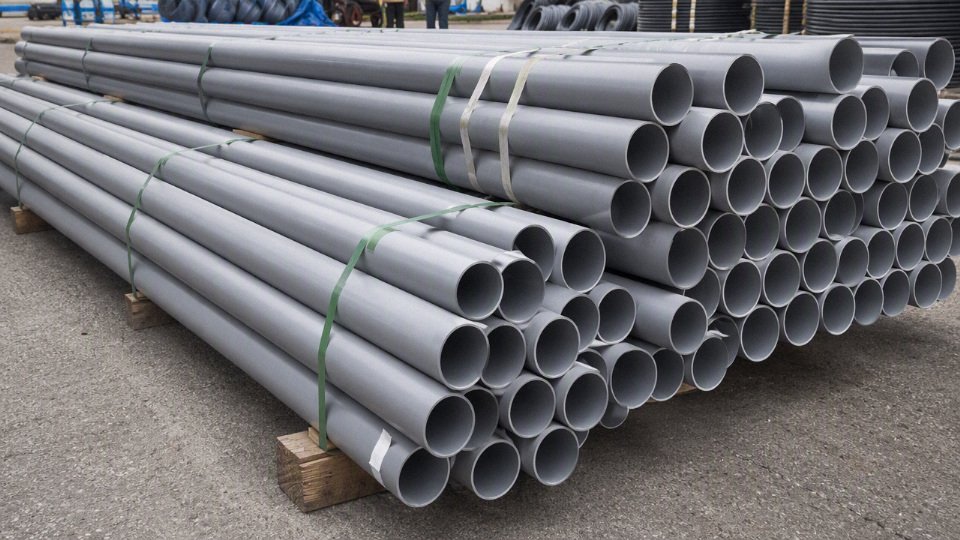
Documentation needs to be treated as part of the product. For bulk or international procurement, request the document pack before production release, not after the vessel sails. Useful records include:
- Certificate of conformity tied to the exact product and batch
- Type test or routine test reports relevant to the quoted standard
- Listing or certification records where applicable to the market
- Factory quality inspection records
- Packaging labels showing size, rating, length, batch, and manufacturer
- Traceable reel or drum numbers
- Export documents and country-specific compliance paperwork
- Technical datasheet with dimensional and electrical values
Dimensional consistency deserves its own check because it is one of the quiet failure points in conduit jobs. Conductor diameter, insulation thickness, and finished outside diameter should be compared with the conduit fill calculation and termination hardware. For more than two conductors in a raceway, the common maximum conduit fill limit is 40 percent, but that number is only useful if the cable dimensions are accurate. Oversized insulation may be safer in one sense, yet it can make a planned conduit layout impractical; thinner-than-specified insulation may pull easily but fail the standard or reduce mechanical margin.
Substitution risk is common when schedules get tight. Watch for these swaps:
- THHN supplied where THWN-2 was specified
- USE-2 supplied for a route that also requires building-wire suitability
- Aluminum supplied where copper was required by design or by termination constraints
- Compact stranded conductor supplied where standard stranding was assumed, or the reverse
- Metric conductor sizes offered as “equivalent” without engineering approval
- A lower temperature rating used because the supplier assumes the load is light
- Missing sunlight resistance for exposed risers before the conduit enters the ground
- Different insulation compound supplied under the same informal product name
The trade-off is not always “highest specification wins.” XHHW-2, for example, may offer useful toughness and wet-location performance, while THWN-2 may be easier to source and terminate in many branch-circuit applications. Aluminum can reduce material cost on large feeders, but it changes termination practices, bend behavior, pulling setup, and connector compatibility. The preferred choice flips when labor risk, inspection risk, available conduit space, or long-term maintenance access costs more than the conductor price difference.
Project-specific environments can push the specification beyond standard building wire. Ask about:
- Sunlight resistance for exposed sections
- Oil resistance near pumps, service yards, or industrial equipment
- Low-smoke zero-halogen requirements in tunnels, transit, or enclosed public areas
- Termite resistance in regions where polymer damage is a known issue
- Rodent protection where ducts are accessible or poorly sealed
- Chemical resistance near process drains, fuel storage, fertilizers, or wastewater areas
- Cold-weather handling if reels will be stored or pulled in winter conditions
Supplier capacity matters just as much as the datasheet on large orders. Confirm production scheduling, maximum continuous reel lengths, drum construction, packing for sea freight, moisture protection, marking language, inspection hold points, and response time when the site asks a technical question. A project can lose days because a reel label does not match the packing list, or because nobody can quickly confirm whether a printed marking satisfies the inspector.
For buyers managing international supply, this is where an integrated manufacturer such as Jinda can be useful: conductor construction, markings, packaging, batch traceability, and technical documents can be aligned against the project specification before production rather than corrected after delivery. The boundary is still the governing code and approval authority for the installation location; no manufacturer quote should replace the engineer’s specification, the applicable standard, or the inspector’s requirements.
Frequently asked questions
Can I run THHN underground in conduit?
Only if the conductor is also marked for wet locations. Plain THHN is a dry or damp-location building wire, and underground conduit is not treated as dry just because it is pipe.
In practice, many current single conductors are dual-marked or multi-marked, such as THHN/THWN-2. If the jacket print includes THWN-2, XHHW-2, RHW-2, or another rating accepted for wet locations, it may be suitable for underground conduit when the rest of the installation also complies. Do not rely on the catalog title alone; check the actual print legend on the insulation or the manufacturer’s datasheet.
THHN can always be installed underground if it is inside conduit.False
Underground raceways are considered wet locations, so the conductor needs a wet-location rating such as THWN-2, not only a dry-location THHN marking.
Is underground conduit waterproof?
No underground conduit system should be assumed waterproof for the life of the installation. Good workmanship reduces water entry, but soil moisture, condensation, imperfect joints, temperature cycling, and handhole or junction box exposure mean water is expected sooner or later.
That is why the conductor rating matters. PVC joints may be solvent-welded well, threaded metal conduit may be tight, and duct seals may be installed neatly, but none of that changes the wet-location classification. I have opened underground pull boxes that looked dry in summer and found standing water in spring after freeze-thaw movement shifted the grade slightly.
Can I run NM-B cable underground in conduit?
NM-B is generally the wrong product for underground conduit. It is intended for dry indoor building locations, not wet underground raceways.
Putting NM-B inside PVC does not make the cable suitable for wet service. The outer jacket and conductor insulation system are not selected for that duty, and inspectors commonly reject it. For branch circuits, individual wet-rated conductors in conduit or a cable type listed for the location are the normal direction.
Can UF-B be placed in conduit?
UF-B can be placed in conduit where permitted, often for short sleeves used as physical protection, such as where the cable rises from grade to an exterior box. A full conduit run is a different matter.
UF-B is flat, stiff, and unpleasant to pull compared with individual conductors. Conduit fill still applies, and the cable’s largest overall dimension drives the fill calculation in a way that can force a much larger raceway than expected. Long runs with multiple bends can turn into a damaged-cable job quickly; if a full raceway is planned, wet-rated individual conductors are usually cleaner to install and easier to replace later.
Is USE-2 allowed inside a building?
USE-2 by itself is generally for underground service-entrance use and is limited once it enters a building. If the same conductor must continue indoors beyond the permitted service-entrance portion, it normally needs an additional building-wire rating, such as RHW-2 or XHHW-2, depending on the product and the applicable code use.
This is one of those markings buyers should verify before ordering a large reel. “USE-2” alone and “USE-2/RHH/RHW-2” are not the same thing from an installation-permission standpoint.
Should I use copper or aluminum underground?
Both copper and aluminum can be correct underground when they are properly sized, protected, and terminated with compatible lugs. Copper gives a smaller conductor for the same ampacity, which helps with conduit fill, voltage drop, and tight equipment gutters.
Aluminum usually wins on material cost for larger feeders, especially long site runs to detached buildings, pumps, gates, or distribution panels. The trade-off is size and termination discipline: larger conduit, correct antioxidant practice where specified, lugs rated for aluminum, and torque values followed with a calibrated tool rather than “good and tight” by feel.
Do I need a ground wire in underground PVC conduit?
Usually, yes. PVC conduit is nonmetallic and does not provide an equipment grounding path.
That means a properly sized equipment grounding conductor normally has to be pulled with the circuit conductors. It may be bare or insulated where allowed, but in wet underground conduit I prefer insulation when the design and code permit it, especially on long runs with pull boxes, because it gives one more layer of corrosion and handling protection.
What size conduit should I use?
Conduit size depends on conductor count, conductor outside diameter, allowed fill, pull length, number of bends, and whether future replacement matters. For more than two conductors, the common maximum fill limit is 40 percent, but passing fill does not automatically mean the pull will be reasonable.
A practical sizing check should include:
- Number of current-carrying conductors, neutrals, and equipment grounding conductors
- Actual conductor outside diameters from the selected manufacturer
- Bend count between pull points, not just straight-line distance
- Pulling tension and sidewall pressure on larger feeders
- Spare capacity or future circuit plans
- Box, sweep, and fitting sizes, not only the buried conduit
A conduit that is barely legal on paper can waste hours in the trench if the pull is long, cold, or muddy.
How deep must underground conduit be buried?
Burial depth depends on the wiring method, circuit rating, GFCI protection, traffic exposure, location, and local amendments. Common NEC cover requirements can range roughly from 6 to 24 inches, but the exact answer must come from the applicable burial table and the local authority having jurisdiction.
Do not guess from a neighbor’s project or a social media trench photo. Driveways, residential branch circuits, service laterals, metal raceway, PVC raceway, and low-voltage systems may land in different rows of the code table.
Can low-voltage landscape wire share conduit with power conductors?
Generally, power conductors should not share the same conduit with low-voltage landscape, control, data, or communications wiring unless the specific wiring methods, insulation ratings, and code rules allow it. Most small landscape cable is not built or listed to occupy the same raceway as 120 V or 240 V power conductors.
The cleaner design is separate raceways with physical separation maintained at boxes and handholes. It costs a little more in trench planning, but it avoids noise issues, insulation-rating problems, and an ugly inspection argument after the conduit is already buried.
Verify your circuit specification
Use this final check before issuing a purchase order, especially if the project has been estimated from a panel schedule or a contractor’s sketch rather than a released electrical design.
- Confirm the code jurisdiction and approval basis.
Start with the adopted electrical code, local amendments, utility rules, and inspection authority. NEC-based projects generally treat underground raceways as wet locations, but the exact acceptable markings, burial cover, service-entrance requirements, and inspection paperwork can vary by jurisdiction. - Define the circuit, not just the wire size.
Record:- System voltage and phase
- Continuous and non-continuous load
- Breaker or fuse rating
- Feeder, branch circuit, control circuit, or service entrance use
- Expected load growth
- Ambient temperature and grouping conditions
- Choose conductor material deliberately.
Copper is compact, forgiving at terminations, and often preferred for smaller circuits or tight raceways. Aluminum can be commercially attractive on long feeders and larger sizes, but it needs compatible lugs, proper oxide-inhibiting practice where specified, torque control, and more attention to bend radius and pulling setup. Select the insulation marking for the installation.
The right underground conduit wire is a wet-location rated conductor or cable assembly that is also suitable for the exact circuit, raceway, environment, and authority requirements. Look for markings such as THWN-2, XHHW-2, RHW-2, or USE-2 only where that type is actually permitted for the installation. Do not assume that “PVC insulated,” “outdoor,” or “direct burial” automatically means acceptable inside an underground raceway.Size for ampacity and voltage drop.
Ampacity comes first: conductor material, insulation temperature rating, terminal temperature limits, ambient correction, and conductor count all matter. Voltage drop is a performance calculation, especially on long pump, gate, lighting, EV charging, and outbuilding feeders. A cable that is legally protected by the breaker may still give poor motor starting or nuisance equipment faults if the run is long enough.Check conduit fill and pulling practicality.
For more than two conductors in a raceway, the common maximum fill limit is 40 percent, but fill is only the starting point. Long sweeps, LB fittings packed with old pulling compound, multiple 90-degree bends, and a winter pull through stiff insulation can turn a “legal” design into a damaged conductor. Pulling tension and sidewall pressure should be reviewed on larger or longer runs.
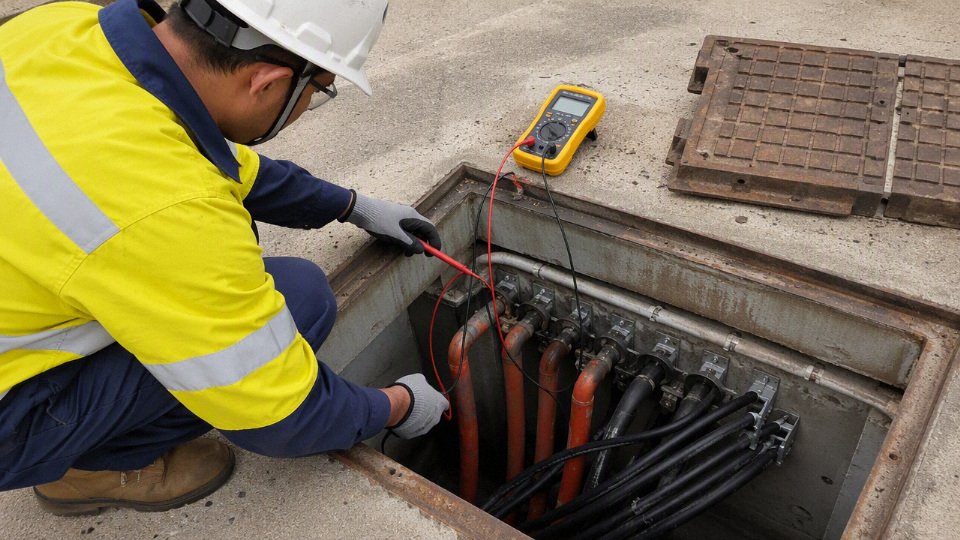
- Verify burial, grounding, and test documentation.
Confirm cover depth, warning tape, equipment grounding conductor sizing, bonding bushings where required, separation from other services, and what tests must be recorded before energizing. At minimum, many projects benefit from continuity checks, insulation resistance testing where appropriate, and photo documentation before backfill.
Do not buy underground conduit wire by gauge alone. Two products marked with the same AWG or kcmil size can differ in wet-location rating, insulation system, approvals, jacket toughness, pulling behavior, temperature rating, and long-term reliability in a damp raceway.
Bring in an engineer, authority representative, utility contact, or manufacturer’s technical team when the project includes long feeder runs, large aluminum conductors, industrial chemicals, utility service entrances, multiple conduits in one trench, high available fault current, export compliance, or bulk procurement across several sites.
For project review, buyers, contractors, and engineering teams can share the circuit voltage, load, conductor material preference, insulation marking required, standards or code basis, quantities, raceway type, burial environment, route length, installation photos, and any inspection requirements. Jinda’s technical team can help review the cable specification and support supply of a compliant underground wiring solution for qualified project and bulk procurement needs.