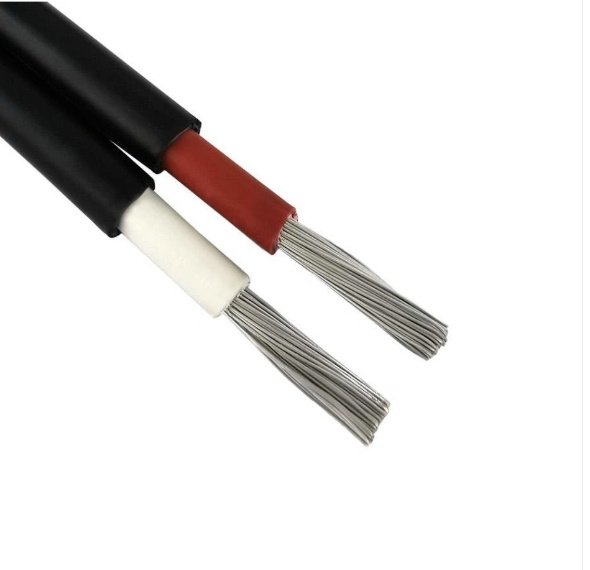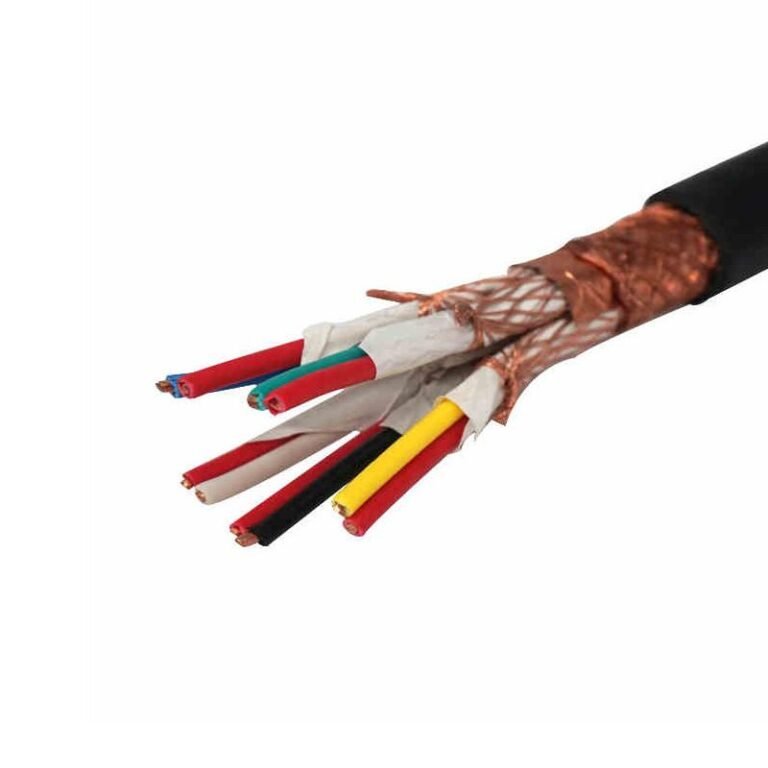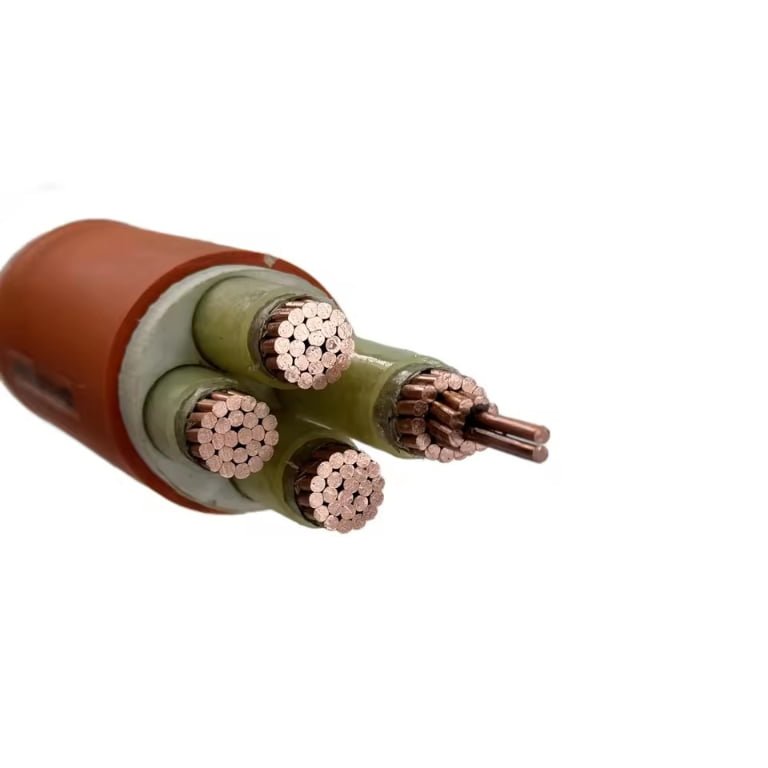
Buried electrical work looks simple until a trench fails inspection, a feeder has to be dug back up, or a cable jacket not rated for wet locations starts giving trouble years later. The operational hit is usually schedule disruption, rework, and finger-pointing between the electrician, civil crew, and buyer. The financial hit is worse: extra excavation, replacement cable, delayed energization, and sometimes AHJ-mandated redesign. The practical path is to match the NEC burial-depth rule, wiring method, conductor rating, and local approval requirements before cable is ordered or trenching starts.
NEC rules for buried electrical wires mainly come from NEC Table 300.5, which sets minimum cover from about 6 inches to 24 inches depending on circuit voltage, wiring method, location, and mechanical protection. Common residential 120 V or 240 V branch circuits often fall at 12, 18, or 24 inches, but the AHJ has final authority.
The tricky part is that “burial depth” is only one piece of compliance. A direct-burial cable, individual wet-location conductors in conduit, a PVC raceway under a driveway, and a GFCI-protected residential branch circuit can all have different requirements even when they serve the same load. That is where many purchase specs go thin: they state the voltage and cable size, but miss the markings, insulation rating, jacket suitability, ampacity basis, and local inspection assumptions that decide whether the installation passes the first time.

NEC burial depth rules
NEC burial depth is not one fixed number; it is selected from NEC Table 300.5 based on the wiring method, location, circuit voltage, and degree of physical protection. In common residential work, the often-cited cover depths are 6, 12, 18, and 24 inches, but each applies only when the installation matches the exact table condition.
NEC Table 300.5 uses minimum cover, not trench depth. Cover means the distance from finished grade, or the finished surface above the wiring, down to the top of the cable, conduit, or raceway. That distinction matters on site because a 24-inch trench with 3 inches of bedding material under the raceway may leave less than 24 inches of cover after the conduit is placed. Inspectors, utility coordinators, and good foremen usually talk in cover because that is what remains after bedding, conduit diameter, warning tape, sand, and final grading are accounted for.
The table is structured around several variables:
- Wiring method: direct-buried cable, rigid metal conduit, intermediate metal conduit, PVC conduit, residential branch-circuit cable, or other permitted raceway systems.
- Location: residential yard, driveway, parking area, commercial area, road crossing, agricultural land, or area subject to heavier traffic.
- Voltage: circuits at 120 V or less to ground, 240 V or less to ground, and higher-voltage underground distribution are treated differently.
- Protection: GFCI protection, overcurrent protection size, conduit type, concrete encasement, and physical protection where the wiring emerges from grade.
- Occupancy and use: a backyard shed feeder is not reviewed the same way as a commercial parking-lot feeder, irrigation pump supply, or farm installation.
The practical mistake I see is someone saying “electrical has to be 18 inches deep” or “UF cable is always 24 inches.” Those statements may be close for one job, but they are not code logic. The code logic is: identify the installation condition, match it to the table row, then verify any notes and local amendments.
NEC Table 300.5 minimum cover requirements commonly range from 6 inches to 24 inches for many low-voltage residential underground wiring methods, depending on cable or raceway type, GFCI protection, overcurrent protection, and location.True
This is a useful practical range, but it is not a substitute for selecting the exact row in the current NEC edition and confirming local amendments with the authority having jurisdiction.
Common NEC burial depths in plain English
The following depths are the ones most buyers, contractors, and owners ask about first. Treat them as commonly encountered NEC Table 300.5 applications, not as universal approvals.
| Common minimum cover | Typical condition where it may apply | What to verify before relying on it |
|---|---|---|
| 6 inches | Certain residential branch circuits with GFCI protection installed in rigid metal conduit or intermediate metal conduit | Raceway type, residential limitation, GFCI protection, circuit voltage, and overcurrent protection |
| 12 inches | Certain residential branch circuits rated 120 V or less with GFCI protection and limited overcurrent protection | Voltage to ground, GFCI device location, breaker/fuse rating, and whether the wiring method is permitted for that depth |
| 18 inches | Many residential branch circuits installed in PVC conduit | PVC raceway schedule, residential condition, circuit rating, and whether vehicle traffic or other modifiers apply |
| 24 inches | Direct-buried cable such as UF cable in many ordinary yard conditions | Cable listing for direct burial, wet-location suitability, circuit type, soil exposure, and inspection requirements |
A 6-inch cover installation is a narrow case, not a general trenching shortcut. It typically depends on using rigid metal conduit or intermediate metal conduit, plus the required residential branch-circuit conditions and GFCI protection. In practice, this is most attractive where digging is difficult: rocky soil, existing landscaping, or a short run to a post light. The trade-off is material and labor. Rigid metal raceway costs more than PVC, needs threaded fittings or proper listed connectors, and is less forgiving when the trench wanders around roots or old drain tile.
Twelve inches is another commonly quoted depth, but it is tied to specific residential branch-circuit conditions, including voltage and protection limits. The phrase “120 V or less with GFCI protection” should make the installer stop and check the actual circuit, not guess from the load. A small outbuilding may start as one 120 V circuit for lights and a receptacle, then become a 240 V feeder later when someone wants a compressor, EV charger, welder, or mini-split. Once that happens, the original depth assumption may no longer fit the installation.
Eighteen inches is common for residential circuits in PVC conduit. This is why many electricians default to PVC for yard runs: it is cheaper than rigid metal, easier to cut, and quick to assemble with solvent cement if the crew is trained and the joints are clean. The weak point is not the buried straight run. It is usually the transition at the building, the sweep coming out of grade, or the area where a lawn crew, shovel, or trailer tongue can hit it. Schedule 40 PVC may be fine below grade, while exposed portions may require Schedule 80 or other physical protection depending on the installation and local inspector interpretation.
Twenty-four inches is often associated with direct-buried cable, including UF cable in ordinary residential yard conditions. Direct burial avoids continuous conduit cost, but it gives up mechanical protection and can be harder to replace. If the cable fails, you are usually digging again. For owners and procurement teams, this is where installed cost and life-cycle cost separate: the cheapest cable-and-trench job may be acceptable for a simple branch circuit across a lawn, but it is a poor choice for a production site driveway, a future expansion corridor, or any place where loads may change.
Direct burial versus conduit
Direct-buried cable and cable installed in conduit are different code and reliability decisions. Conduit may reduce required cover in some NEC Table 300.5 conditions, but only when the raceway type, voltage, GFCI protection, overcurrent protection, and location match the table entry.
Direct-buried cable must be listed and marked for direct burial. It also needs insulation and jacket construction suitable for the wet environment underground. Underground raceways are considered wet locations, and water will get in; anyone who has opened an old handhole knows this is not theoretical. Condensation, groundwater, and failed seals eventually show up. Pulling ordinary indoor cable through underground PVC does not become acceptable because the pipe is underground or because the trench is deep.
Conduit changes the mechanical protection picture. PVC, rigid metal conduit, and intermediate metal conduit do not all earn the same cover depth under the table. A metallic raceway provides better physical protection against shallow damage, which is why certain shallow-cover allowances exist. PVC is corrosion-resistant and economical, but it does not resist shovel strikes, auger contact, or vehicle-loaded soil movement the same way.
The main trade-off is replacement versus initial cost. Conduit costs more at installation, especially if bends are poorly planned or trench routing is congested, but it may allow conductor replacement without reopening the entire route. Direct burial is faster and cheaper for simple runs, but it should be selected with a clear understanding of future access, fault location, and damage exposure.
Location changes the required cover
Residential yards are usually the easiest case because loads are modest and vehicle traffic may be limited. Even there, the route matters. A run crossing a future patio, fence line, sprinkler main, or landscape lighting zone is more likely to be disturbed than a run along an open side yard.
Driveways, parking areas, and areas subject to vehicle traffic deserve more conservative planning. The code table addresses location categories, but plant-floor experience adds a practical warning: what starts as “no traffic” often becomes traffic after occupancy. A homeowner parks a trailer beside the garage. A small shop adds a forklift charging station. A farm lane gets widened after harvest. Soil compaction and rutting can change the effective protection above the wiring.
Commercial premises need tighter documentation because there are usually more people touching the job: electrical contractor, civil contractor, site owner, inspector, utility, and sometimes a general contractor pushing schedule. Underground feeders may cross under paving, loading docks, bollards, stormwater lines, process drains, or future slab areas. The burial-depth decision should be coordinated on the site utility plan, not left to the trench crew with a tape measure and a verbal instruction.
Agricultural locations bring their own risk profile. Equipment is heavier, grade changes are common, and digging for posts, irrigation, drainage, and fencing is routine. Corrosive soils, fertilizers, manure exposure, and seasonal saturation may affect raceway and cable selection. The NEC contains agricultural rules beyond ordinary residential assumptions, so the burial depth cannot be selected from a backyard example and pasted onto a farm installation.
Road crossings and public vehicle areas may also involve requirements outside the NEC: utility standards, municipal details, traffic-rated encasement, local right-of-way permits, or engineering specifications. The NEC is not the only authority once the installation touches public infrastructure or utility-controlled space.
Transitions, slabs, buildings, and points where damage actually happens
The required depth can change along the same circuit. A buried run may start in a panel, pass down an exterior wall, enter the ground, cross a yard, pass under a driveway, rise at a pedestal, then sleeve under a slab. Each segment can have different protection needs.
Pay close attention to:
- Risers from grade: Conductors or cables emerging from the ground must be protected from physical damage. This is a common inspection failure.
- Sleeves through foundations or under slabs: Sleeves may be for protection, routing, or future replacement, but they do not automatically change the wiring method unless installed as part of a compliant raceway system.
- Under buildings: Wiring below buildings, slabs, or foundations may trigger different routing and protection requirements. Do not assume a yard-depth rule applies under a structure.
- Pool, spa, and fountain areas: These installations have additional NEC rules. Depth is only one part of the compliance problem.
- Changes in grade: Final landscaping can steal cover. If the civil contractor cuts grade after electrical inspection, the installed cover may no longer be compliant.
- Stub-ups at equipment pads: Generator pads, HVAC units, lighting bases, and pump stations see vibration, service tools, and occasional impacts. The above-grade protection is often more important than another few inches of burial.
Deeper cover is not a cure-all. A deeper trench does not compensate for cable that is not listed for direct burial, conductors not rated for wet locations, missing GFCI protection where required, or unprotected risers at grade. It may reduce the chance of shovel damage, but it does not repair the code basis of the installation.
Voltage thresholds and why higher-voltage distribution gets treated differently
NEC Table 300.5 uses voltage thresholds because shock risk, insulation stress, fault energy, and system purpose change as voltage increases. The common residential discussion often centers on circuits not exceeding 120 V or 240 V to ground. Once the installation moves into higher-voltage site distribution, industrial feeders, campus distribution, or utility-adjacent work, the design should become more conservative and more formal.
For example, a 120 V GFCI-protected branch circuit to a yard receptacle is not the same design problem as a 480Y/277 V feeder to a pump station or a medium-voltage loop across an industrial site. The latter may need engineered duct banks, concrete encasement, warning tape, tracer systems, separation from other utilities, manholes, cable pulling calculations, and written owner standards. Procurement also changes: cable voltage rating, insulation type, shielding, jacket material, pulling tension limits, minimum bend radius, and test requirements become part of the purchase, not afterthoughts.
The boundary is straightforward: the simplified 6-, 12-, 18-, and 24-inch conversation is most useful for ordinary low-voltage branch-circuit work. It stops being enough when the installation involves feeders serving critical equipment, higher voltage, heavy traffic, corrosive soil, public areas, or a site where future excavation is likely.
Document the table row before the trench is backfilled
Inspectors often verify the claimed burial depth against the actual wiring method and circuit details. If the installer says “this is allowed at 12 inches,” the next questions are usually predictable: What cable or raceway is installed? What is the circuit voltage? Is it GFCI protected? What size breaker protects it? Is this residential only? Does this portion pass under a driveway or traffic area?
Good documentation prevents arguments and rework. Before backfill, keep evidence that ties the installation to the selected NEC Table 300.5 row:
- Photograph the trench with a tape measure showing cover depth from finished-grade reference, not just trench bottom.
- Photograph the cable jacket or conduit markings before they disappear.
- Keep cable reel labels, packing slips, and manufacturer data sheets showing direct-burial or wet-location ratings where applicable.
- Mark drawings with the selected wiring method, circuit rating, GFCI status, overcurrent protection, and intended cover depth.
- Photograph warning tape placement and separation above the wiring.
- Record changes at driveways, slabs, risers, equipment pads, and building entries.
- Keep the conduit schedule, including raceway type, size, and any change from Schedule 40 to Schedule 80 or metal raceway at exposed locations.
On a clean job, this takes a few minutes with a phone and a marked-up drawing. On a disputed job, it can save a day of digging, a failed inspection, or an ugly argument between the owner, contractor, and buyer over who approved the installation.
Approved underground wiring methods
Approved underground wiring is not one product family; it is a matched combination of listed cable or conductors, a permitted raceway or direct-burial method, and the actual site exposure. In practice, the safest procurement rule is simple: do not buy “outdoor cable” for burial unless the marking or datasheet specifically supports underground wet-location use and the installation method named in the design.
For residential and light commercial branch circuits, Type UF cable is one of the most familiar direct-burial methods. UF, or underground feeder cable, is built with moisture-resistant insulation and jacket construction intended for underground use when installed according to NEC requirements and protected where subject to physical damage. It still has to be the right cable for the circuit: conductor size, copper or aluminum if permitted, equipment grounding conductor, voltage rating, temperature rating, and listing markings all need to match the installation.
UF is convenient because it avoids a full raceway run, but it is not magic. Rocky backfill, shallow landscaping areas, future fence posts, and rodents can turn a compliant installation into a maintenance problem. I have seen small direct-burial branch circuits fail not because the cable was wrong, but because someone backfilled with broken concrete and then ran a skid steer over the trench line for two weeks. Sand bedding, warning tape, route documentation, and protection at risers matter.
Service-entrance work is a different category. Type USE and USE-2 conductors are underground service-entrance conductors, commonly used between utility equipment, service points, and service disconnect arrangements where allowed by the governing installation rules. The critical buyer trap is that USE is not automatically suitable inside buildings. Many USE conductors have restrictions once they pass into a structure unless they also carry another recognized building-wire insulation rating, such as RHW-2 or XHHW-2, where applicable and listed.
That dual rating is not a paperwork detail. It changes where the conductor can legally and safely be routed. A cable marked only for underground service entrance may be acceptable in the ground but rejected at inspection when it continues through an interior raceway farther than allowed. Before purchasing service conductors, buyers should confirm the exact printed legend on the insulation, not just the catalog heading.
For most commercial and industrial underground feeders, individual wet-rated conductors inside a raceway are the normal engineered choice. Typical conductor insulation types include:
- THWN-2
- XHHW-2
- RHW-2
- Other listed wet-location conductors suitable for the circuit voltage and temperature conditions
These conductors are pulled into an approved underground raceway system. The raceway provides routing, mechanical protection, replacement access, and sometimes grounding continuity, depending on the material and design. The conductor insulation provides electrical isolation in a wet environment. Those are two different jobs.
Pulling standard NM cable through underground PVC makes it acceptable for burial.False
Underground raceways are treated as wet locations under NEC rules because condensation and water entry are expected over time. NM cable is not listed for wet locations, so PVC conduit does not convert it into an approved underground wiring method.
This point causes arguments on small jobs: “It is inside conduit, so it is dry.” No, not underground. A buried conduit run almost always breathes with temperature swings. Warm humid air enters, cools, condenses, and collects at low points. Add a nicked fitting, poor glue joint, damaged coupling, or a box with a missing gasket, and the conduit can hold standing water. Conduit is not a substitute for water-rated insulation.
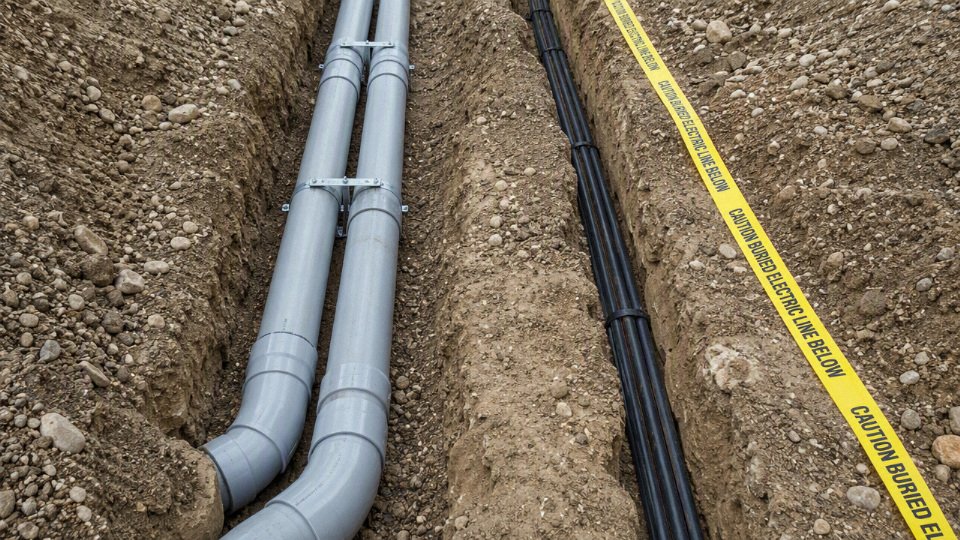
Raceway selection depends on mechanical risk, corrosion exposure, pulling layout, installation method, and cost. The common choices behave very differently in the field.
| Underground wiring method | Strengths | Watch points | Common fit |
|---|---|---|---|
| Rigid metal conduit, often galvanized steel | Excellent mechanical protection; can serve as an equipment grounding path when properly installed; good for risers and exposed transitions | Corrosion in aggressive soil; heavy; threaded joints take labor; coating damage during installation matters | Industrial yards, traffic areas, risers, locations with high damage exposure |
| Intermediate metal conduit | Stronger than many nonmetallic raceways and lighter than rigid metal conduit | Still needs corrosion evaluation; threading and handling skill required | Commercial and industrial underground-to-aboveground transitions |
| Rigid PVC conduit, Schedule 40 or Schedule 80 | Corrosion-resistant, relatively low cost, easy to cut and glue; common for underground duct banks and branch circuits | Lower mechanical strength than metal; thermal expansion; Schedule 80 often needed where subject to physical damage; pulling friction can be noticeable on long runs | Residential feeders, commercial site lighting, general underground distribution |
| Reinforced thermosetting resin conduit | Good corrosion resistance; lighter than steel; useful in certain corrosive or industrial environments | Higher material cost; installer familiarity and fitting availability vary by region | Chemical plants, wastewater sites, corrosive soil or atmosphere zones |
| High-density polyethylene conduit, where permitted | Flexible; good for long pulls, plowing, trenching, and directional boring; corrosion-resistant | Terminations and transitions require compatible listed fittings; not every installation condition allows it; cable pulling tension and ovality need control | Utility-style underground runs, long site distribution paths, directional drilling |
| Other listed raceway systems | Can solve special routing, flexibility, or corrosion problems | Must be specifically permitted for the environment, burial condition, and wiring method | Short transitions, equipment connections, special industrial layouts |
Rigid metal conduit buys mechanical protection, but it costs more in material, labor, and corrosion management. PVC lowers installed cost and resists soil corrosion, but it needs correct burial depth, warning tape, expansion planning, and physical protection where it emerges from grade. The preferred choice flips when the route moves from a quiet landscaped trench to a forklift yard, loading apron, or utility corridor that gets excavated every shutdown.
Direct-burial armored or metal-clad cable can be appropriate, but only when the exact cable construction is listed and marked for that exposure. Armor by itself does not mean the cable is suitable for soil. The armor material, corrosion protection, outer jacket, moisture barrier, conductor insulation, grounding arrangement, and termination hardware all need to be evaluated together. In wet clay, coastal soil, fertilizer areas, or industrial sites with stray chemicals, a cable that looks rugged on a pallet can age badly underground if the jacket system was not designed for that environment.
Industrial and commercial projects widen the menu. Low-voltage power cable, control cable, instrumentation cable, tray cable, and medium-voltage cable systems may all appear in underground work, but they belong under the correct NEC articles, engineering specifications, and termination practices. Medium-voltage cable, for example, is not just “larger wire.” Shielding, concentric neutrals or grounds, jacket type, bend radius, pulling tension, splicing, stress cones, testing, and fault-duty coordination become part of the installation package.
Tray cable deserves special caution. A cable tray rating, sunlight-resistant jacket, oil-resistant jacket, flame rating, or general outdoor designation does not automatically approve direct burial. Some tray cables are marked for direct burial; some are not. Some are suitable in raceway under defined conditions; others are intended only for tray or supported exposed routing. The jacket legend and listing file decide, not the sales description.
For procurement, I would ask for the evidence before issuing the purchase order, especially on imported, private-label, or project-substitution cables. At minimum, request:
- UL, ETL, CSA, or other applicable listing/certification information accepted for the project jurisdiction
- Exact conductor insulation type, such as THWN-2, XHHW-2, RHW-2, USE-2, UF, Type TC, or Type MV, as applicable
- Jacket material and construction, including whether it is overall-jacketed, armored, shielded, or moisture-blocked
- A clear direct-burial statement if the cable will be placed directly in earth
- Wet-location rating for conductors installed in underground raceway
- Voltage rating, including whether the circuit is 600 V, 1 kV, 2 kV, 5 kV, 15 kV, or another class
- Temperature rating and the conditions under which that rating applies
- Conductor material, copper or aluminum, and stranding class
- Sunlight resistance, oil resistance, flame rating, and low-smoke or halogen requirements where the project actually needs them
- Relevant NEC article references or manufacturer installation instructions
- Minimum bend radius, pulling tension, sidewall pressure limits, and compatible termination accessories for larger or shielded cables
The boundary is straightforward: NEC-recognized wiring methods still have to be accepted by the authority having jurisdiction and matched to site conditions. A cable can be listed, correctly marked, and still be the wrong commercial choice if the plant has corrosive soil, repeated excavation, high groundwater, heavy vehicle loading, or maintenance crews that need future pull-and-replace access.
Raceways and mechanical protection
Raceway design is not just a burial-depth shortcut; it determines how well the installation survives pulling, settlement, water, traffic loads, corrosion, and the next repair crew. A heavier raceway can reduce required cover in some NEC Table 300.5 conditions, but it does not fix poor conductor sizing, bad routing, unsupported risers, or a cable that was never listed for the installation.
The practical choice is usually between lower installed cost now and better serviceability later. Direct burial may be acceptable where the route is simple and disturbance risk is low, but a raceway gives you a controlled path for replacement, better mechanical shielding, and cleaner transitions into panels, pedestals, motors, lighting poles, or equipment pads. On the other hand, a raceway also adds pulling friction, condensation paths, expansion issues, and fill limitations that the installer has to manage.
Where underground wiring comes out of the ground
The most abused part of a buried circuit is often the first two feet above grade. That is where shovels hit it, landscaping crews lean tools against it, forklifts clip it, snow removal blades scrape it, and maintenance staff strap other things to it because “it was already there.”
NEC protection requirements for conductors emerging from underground generally require physical protection from the minimum cover depth below grade up to the required height above grade where subject to damage; in common NEC language this is often treated as protection to at least 8 ft above finished grade, but the exact application should be checked against the adopted NEC edition and the authority having jurisdiction.
Good riser design usually includes:
- Rigid metal conduit, intermediate metal conduit, Schedule 80 PVC, or another wiring method suitable for the exposure and approved for physical damage areas.
- Proper transition fittings between underground PVC and above-grade metallic raceway, where corrosion, bonding, and thermal movement are addressed.
- Straps and supports at code-compliant intervals, not one loose strap near the panel and a long unsupported riser waving in the wind.
- Bushings or smooth fittings where conductors enter equipment, especially with larger aluminum conductors or cable assemblies.
- Protection where the raceway passes through concrete, asphalt, bollard bases, housekeeping pads, or metal siding.
In plants, I like to see risers kept out of traffic whenever layout allows it. A short offset behind a bollard or along a column line is cheaper than replacing a crushed conduit after a pallet jack or small loader finds it.
Expansion, settlement, and moving structures
Soil does not stay put. Frost heave, wet clay expansion, poorly compacted trench backfill, vibration from compressors, and settling around new equipment pads can all impose movement on underground raceways. PVC expands and contracts with temperature more than steel, while rigid steel resists impact better but can corrode if coatings and fittings are wrong for the soil and drainage conditions.
Expansion fittings, expansion-deflection fittings, flexible transitions, or sweep arrangements may be needed where raceways:
- Enter buildings from underground.
- Rise into outdoor switchgear, transformers, generators, pumps, or lighting poles.
- Cross from native soil into a concrete equipment pad.
- Run through areas with frost movement or unstable fill.
- Connect to vibrating equipment or skid-mounted machinery.
- Pass across structural joints.
The mechanism is simple: the raceway moves, but the equipment enclosure or slab does not move the same way. That movement transfers stress into couplings, locknuts, hubs, elbows, or the conductor insulation itself. The usual symptom is not immediate failure; it is a cracked PVC adapter, a pulled hub gasket, water inside the cabinet, or insulation damage that shows up months later during a ground-fault event.
Bends, pulling tension, and future replacement
The NEC limit of 360 degrees of bend between pull points is a legal maximum, not a good design target for every job. Four 90-degree bends in a small conduit full of stiff conductors may be code-compliant on paper and miserable in the trench.
Excessive bends increase pulling tension because every bend adds sidewall pressure and friction. That pressure can scrape jackets, stretch conductors, deform insulation, or make future replacement nearly impossible. With long feeders, large conductors, aluminum conductors, or high fill ratios, the route should be planned before the trench is open, not argued over while the excavator idles.
Use pull boxes, handholes, or engineered pulling calculations when you have:
- Long straight runs with large conductors.
- Multiple directional changes around footings, roads, tanks, or utilities.
- Conductors with insulation types that have specific pulling tension limits.
- Service or feeder circuits where replacement would shut down production.
- Spare conduits intended for future use, because a spare that cannot be pulled through is just buried plastic.
Wide-radius sweeps cost more than tight elbows, but they reduce pulling force and make replacement realistic. The trade-off flips on very short residential or light-commercial runs where accessibility is good and conductor size is modest; there, extra boxes can create more water-entry points and installation labor than they save.
Sealing, drainage, and wet-location reality
Underground raceways should be installed to limit water entry where required, especially at building entries, hazardous or classified areas, and equipment terminations that cannot tolerate moisture. Duct seal, listed sealing fittings, proper hubs, gaskets, and sloped routing all have their place.
Still, underground raceways must be treated as wet locations. Water will get in through condensation, minor fitting leakage, damaged glue joints, or a box lid that was not seated after inspection. Conductors in underground raceways need insulation rated for wet locations, and equipment terminations should be selected and installed with that expectation. A perfectly dry underground conduit is not something I would base a procurement specification on.
Marking, mapping, and excavation protection
Warning ribbon, detectable tape, tracer wire, marker posts, and accurate as-built drawings may not always be explicitly required by the base NEC rule for every private installation, but they are cheap insurance in any facility that excavates, landscapes, expands, or relocates utilities.
They become especially important around:
- Industrial yards and loading zones.
- Driveways, parking lots, and road crossings.
- Outdoor lighting circuits spread across a large site.
- Irrigation, drainage, and landscape renovation areas.
- Buried feeds to pumps, gates, signs, docks, tanks, or remote panels.
- Sites with mixed utility corridors and poor legacy drawings.
Detectable tape or tracer wire matters when the raceway is nonmetallic and cannot be located easily. As-built mapping should show route, depth range, pull boxes, spare conduits, crossings, and reference points from fixed structures. A sketch stored only in one contractor’s phone is not a maintenance record.
Extra protection in hard-use areas
Driveways, roadways, forklift aisles, loading docks, container yards, and equipment laydown areas put different loads on buried wiring than a lawn or flower bed. The risk is not only vertical traffic load. Damage often comes later from anchor bolts, sign posts, fence posts, bollard installation, saw cutting, pavement repair, trenching, or a landscaper driving a stake through an unmarked circuit.
Protection may involve:
- Greater cover where required by the installation condition.
- Rigid metal conduit, intermediate metal conduit, concrete encasement, or Schedule 80 PVC where subject to damage.
- Sleeves under paved crossings to allow future replacement.
- Handholes placed outside wheel paths where practical.
- Route offsets away from curbs, bollards, guard posts, and future anchor locations.
- Separate spare conduits for controls, communications, or future feeders instead of overfilling the first raceway.
Local conditions matter. In corrosive soil or coastal sites, metallic raceway may need corrosion protection or a different material selection. In rocky backfill, even direct-burial-rated cable can suffer jacket damage unless bedding and shading are handled properly.
Separation from other buried utilities
Electrical raceways should be coordinated with gas, water, sewer, storm drainage, communications, fire lines, fuel piping, and process piping before trenching. The NEC is only one part of that coordination. Utility owners, plumbing codes, fuel gas codes, telecom standards, civil specifications, and local authorities may impose minimum horizontal or vertical separation, crossing angles, bedding, warning tape colors, and encasement rules.
At crossings, the usual practice is to keep the crossing as close to perpendicular as practical, maintain required clearance, protect against settlement, and document the depth of both utilities. Do not assume a gas line, fiber duct, or drainage pipe is where the old drawing says it is. Potholing or utility locating is tedious, but it is better than shutting down a site because an unverified route was treated as empty dirt.
Heavy PVC or rigid metal conduit lets you use smaller conductors underground.False
Raceway selection changes mechanical protection, routing, pulling conditions, corrosion exposure, and sometimes burial cover requirements. Conductor size is still governed by load, ampacity, voltage drop, termination ratings, ambient conditions, adjustment factors, and overcurrent protection.
Wet locations and cable ratings
Underground wiring has to be specified as wet-location wiring, not just “outdoor” wiring. Under NEC practice, the inside of a buried raceway is treated as a wet location because condensation and groundwater eventually get in, even when every coupling looks tight on installation day. That single point drives conductor insulation selection, cable construction, labeling, and inspection acceptance.
A common field mistake is assuming PVC conduit makes the wire dry. It does not. Buried conduit breathes with temperature swings, pulls in moisture through imperfect joints, and can hold water for years if the run has low spots. I have opened handholes where the conduit was effectively a small drain pipe; the conductors survived only because the insulation system was rated for it.
What the common markings actually mean
Buyers should read the jacket or conductor print line before approving a reel, not after the trench is open. The markings are not decorative; they tell the inspector and the installer what environment the product is listed or designed for.
| Marking or term | What it normally indicates | Procurement caution |
|---|---|---|
| THWN-2 | Thermoplastic insulated conductor suitable for wet locations, typically 90°C rated in wet and dry locations where permitted | Often used inside raceway; not the same as a direct-burial cable assembly |
| XHHW-2 | Cross-linked polyethylene insulation, wet-location rated, commonly used for feeders and industrial circuits | Better insulation robustness than basic thermoplastic in many applications, but still usually installed in raceway unless part of an approved cable assembly |
| RHW-2 | Rubber or thermoset insulation, wet-location rated | Useful in some heavier-duty applications; verify listing, voltage class, and availability |
| USE-2 | Underground service-entrance conductor, wet-rated and sunlight-resistant in many constructions | Not automatically permitted for all interior wiring beyond service equipment; verify NEC use restrictions |
| UF | Underground feeder cable assembly intended for direct burial where listed | Practical for some residential and light-duty runs; less attractive for many industrial pulling and replacement scenarios |
| Direct burial | Cable construction evaluated for soil contact without raceway, subject to listing and installation rules | Requires the complete cable assembly to be suitable, not just the individual conductors |
| Sunlight-resistant | Jacket or insulation can tolerate UV exposure where marked | Needed for exposed risers, tray exits, or storage before installation |
| Water-resistant | Indicates resistance to moisture penetration or insulation degradation, depending on product standard | Ask what test basis supports the claim; wording alone is not enough |
| Oil-resistant | Insulation or jacket has resistance to specified oil exposure, often marked by grade or standard | Relevant around fuel areas, machine pits, substations, and industrial yards |
| Flame-retardant | Designed to limit flame spread under a specified test | Useful for above-ground or building sections; it does not prove direct-burial suitability |
Conductors installed in underground raceways must be suitable for wet locations because the raceway interior is considered a wet location.True
This reflects the NEC treatment of underground raceways and is why wet-rated conductor types such as THWN-2, XHHW-2, and RHW-2 are commonly specified for buried conduit systems. The exact acceptable wiring method still depends on the installation article, voltage, location, and AHJ interpretation.
Insulation is not the same as a burial-rated jacket
A wet-rated conductor can survive moisture electrically, but that does not mean it can be thrown directly into soil. Individual THWN-2 or XHHW-2 conductors are typically protected by raceway because their insulation is not necessarily evaluated as the outer mechanical barrier against rocks, soil pressure, rodents, and shovel damage. The raceway provides a replaceable pathway and mechanical protection; the insulation provides electrical separation in a wet environment.
A direct-burial cable is different. Its total construction—conductors, insulation, fillers if present, shield or armor where used, and outer jacket—is selected and evaluated as a cable assembly for underground exposure. That is why the reel marking, manufacturer datasheet, and listing matter. A cable can have excellent wet-rated insulation and still be the wrong product if its jacket is not suitable for direct soil contact.
Soil is not a neutral storage medium. It attacks cable by several paths:
- Moisture and salts: drive ionic contamination and long-term leakage risk, especially at damaged jackets or poor splices.
- Fertilizers and chemicals: common around farms, greenhouses, landscaped campuses, and food plants; they can be surprisingly aggressive.
- Hydrocarbons: fuel, lubricants, and solvent residues around maintenance yards and generator pads can soften or embrittle unsuitable jackets.
- pH extremes: acidic or alkaline soils change corrosion behavior for metallic components and can age polymer jackets faster.
- Rodents and insects: not a code table issue, but very much a maintenance issue in rural and utility-edge installations.
- Thermal cycling: expands and contracts conduit and cable; weak jackets crack first at bends, risers, and stressed pulls.
- Rocks, compaction, and abrasion: damage jackets during backfill, especially when crews use excavated spoil instead of clean bedding.
The preferred construction changes with the exposure. Raceway plus wet-rated conductors is usually better where future replacement matters. Direct-burial cable can reduce conduit material and installation labor, but it sacrifices easy pull-out replacement and depends more heavily on bedding, routing records, and damage avoidance.
Temperature, ampacity, and conductor metal still matter underground
Wet rating does not settle ampacity. Underground circuits run inside a heat-management system made of insulation, conduit, soil, duct banks, load profile, and terminations. If the soil holds heat, if several conduits are grouped together, or if the load is continuous near nameplate current, conductor temperature rises even when the trench looks generous.
The mechanism is simple: current produces I²R heat in the conductor; insulation and jacket slow heat transfer; conduit and surrounding soil must carry that heat away. Dry sandy soil, concrete encasement, tightly packed ducts, and multiple loaded circuits can all reduce cooling. The conductor may be marked 90°C, but equipment lugs are often applied using 75°C or 60°C termination limits depending on equipment and conductor size, so the usable ampacity may be governed by the weakest permitted temperature point, not the highest number on the cable.
Copper and aluminum both have a place:
- Copper is compact, easier to terminate in crowded equipment, and often preferred where voltage drop, vibration, or corrosion concerns are severe.
- Aluminum can reduce material cost on larger feeders, but requires larger conductor size for equivalent resistance, compatible lugs, correct antioxidant practice where specified, and disciplined torque control.
- Voltage drop may push either material larger than ampacity alone would suggest, especially on long site-lighting, pump, gate, irrigation, or remote equipment runs.
- Pulling practice changes with size and metal; sidewall pressure, lubricant compatibility, bend radius, and reel handling can make the cheapest conductor a poor installed choice.
The boundary here is that no catalog marking can replace a site ampacity calculation for heavily loaded duct banks or industrial feeders. For a lightly loaded residential branch circuit, code tables and standard wiring methods may be enough. For a plant feeder running near continuous load in a shared underground corridor, soil conditions and grouping deserve engineering review.
Why low-cost substitutions become expensive
The failures I distrust most are not dramatic on day one. They start with a reel that says “outdoor” but not wet-location, a cable sold as “burial type” without a recognized listing basis, or a jacket that looks acceptable until a rocky pull shaves it thin. Six months later the megger readings drift. Two years later a nuisance trip appears after heavy rain. Then the trench is reopened next to production traffic, and the original savings disappear before lunch.
Watch for these procurement red flags:
- Indoor-rated building wire proposed for underground conduit.
- Non-listed imports with vague English markings or no destination-market documentation.
- Jacket thickness or concentricity that varies along the reel.
- Missing wet-location, direct-burial, sunlight-resistant, or oil-resistant markings where the application needs them.
- Reel tags that do not match packing lists, test certificates, or purchase specifications.
- No clear statement of conductor material, insulation type, voltage rating, standard, production batch, and length.
For international projects, the cable order should be tied to the code basis of the destination market, not just a voltage and conductor size. A manufacturer such as Jinda, with integrated production, technical support, export packing, reel identification, and project supply experience, should be used in that role only when the submitted product design, markings, test documentation, and packaging match the NEC-driven application requirements. The practical request to the supplier is straightforward: prove that the cable delivered on the reel is the same cable the engineer approved on paper.
Grounding, bonding, and GFCI protection
Burial depth is only one part of a compliant underground installation; the fault path and shock protection have to work after the trench is backfilled and forgotten. A buried circuit still needs the correct equipment grounding conductor, bonded metal parts, suitable overcurrent protection, and GFCI or ground-fault protection where the NEC and the local authority require it.
The practical reason is simple: a shovel nick, flooded handhole, failed pump seal, crushed raceway, or loose locknut can turn the enclosure or equipment frame into the easiest path back to the source. If the grounding and bonding path has low enough impedance, the breaker or fuse has a chance to clear the fault quickly. If that path is broken by a corroded coupling, non-bonded metal box, or missing equipment grounding conductor, the installation may sit energized without tripping anything.
Equipment grounding conductors for underground feeders and branch circuits
Feeders and branch circuits supplying outdoor loads normally need an equipment grounding conductor run with the circuit conductors. That applies to many common underground runs:
- Detached garages, shops, barns, gatehouses, pump houses, and accessory buildings
- Outdoor HVAC equipment, well pumps, sewage pumps, irrigation pumps, and fountain equipment
- Parking-lot lighting, bollards, landscape lighting transformers, and pole bases
- Signs, kiosks, vending areas, and site receptacle pedestals
- Pool, spa, and water-feature equipment, where the rules become much more specific
The equipment grounding conductor may be copper, aluminum where permitted, or a qualifying metal raceway system, depending on the wiring method and NEC article involved. In plant work, I prefer a dedicated wire-type equipment grounding conductor in underground raceway even where metal conduit sections exist above grade, because couplings, threaded adapters, and PVC-to-metal transitions are exactly where continuity gets lost after a few freeze-thaw cycles or a forklift repair.
Sizing is not guessed from the trench depth. It is based on the rating of the overcurrent protective device and the applicable NEC grounding table, with upsizing considered where phase conductors are increased for voltage drop. That last part catches projects: a long lighting feeder may be upsized to control voltage drop, but the grounding conductor cannot be treated as an afterthought.
Bonding metal raceways, boxes, fittings, and transitions
Metal parts in an underground wiring system must be bonded into an effective fault-current path. This includes rigid metal conduit, intermediate metal conduit, metal boxes, handhole hardware where applicable, enclosures, locknuts, grounding bushings, expansion fittings, and transitions between PVC and metal raceway.
The weak points are usually mechanical, not theoretical:
- Loose locknuts on outdoor panels and junction boxes
- Set-screw fittings used where compression or threaded fittings should have been selected
- Corrosion at galvanized-to-soil or dissimilar-metal contact points
- Expansion joints across building separations with no bonding jumper
- Painted, powder-coated, or gasketed enclosures where the bonding path depends on clean metal contact
- PVC underground raceway emerging into metal elbows or rigid risers without proper bonding at the enclosure
Corrosion-resistant fittings matter. A bonding path that passes inspection on day one can become unreliable if the installation sits in wet soil, fertilizer runoff, coastal air, or a washdown area. In industrial yards, I have seen bonding failures show up after a maintenance crew replaces a damaged riser with whatever fittings were on the truck. The circuit still works, so nobody notices until testing or a fault event exposes the problem.

Grounding electrodes at detached structures
A detached structure supplied by a feeder may require a grounding electrode system, such as ground rods, a concrete-encased electrode, building steel, or another electrode type recognized by the NEC. The exact electrode arrangement depends on the structure and site conditions, and it should be verified against the current code edition and the local inspector’s interpretation.
The grounding electrode system does not replace the equipment grounding conductor run with the feeder. The electrode helps reference the building electrical system to earth and dissipate certain surges, but it is not a dependable low-impedance fault return path. Soil resistance is too variable. Dry sand, rocky fill, frozen ground, and compacted clay all behave differently, and none should be relied on to trip a breaker during a line-to-case fault.
At detached buildings, neutrals and equipment grounding conductors also need to be handled correctly. In normal modern practice, the neutral is isolated from the equipment grounding conductor at the detached structure, while the grounding electrode system is bonded to the equipment grounding conductor. Existing installations and special cases need careful review rather than rule-of-thumb repairs.
GFCI protection and burial-depth allowances
GFCI protection can affect some NEC burial-depth allowances, but only when the exact table conditions are satisfied. A commonly misunderstood residential allowance applies to certain branch circuits rated 120 V or less, GFCI protected, and protected by a maximum 20 A overcurrent device; under the relevant NEC Table 300.5 condition, the required cover may be less than for other wiring methods. The wiring method, voltage, circuit rating, location, and protection all have to match.
A GFCI-protected circuit is automatically allowed to be buried shallow.False
GFCI protection may qualify only specific circuits for specific NEC cover allowances. The cable or raceway method, voltage limit, overcurrent protection limit, location, and current NEC table condition must all be verified.
Common GFCI applications include:
- Outdoor receptacles around dwellings and commercial buildings
- Garages, accessory buildings, basements, and similar damp or utility areas
- Pool, spa, fountain, and hydromassage equipment under the applicable NEC article
- Well pumps, sump pumps, sewage pumps, and irrigation controls where required by code or manufacturer instructions
- Temporary construction power, where GFCI rules are often stricter and closely inspected
- Maintenance receptacles near HVAC and rooftop equipment, depending on location and edition adopted
The trade-off is nuisance versus protection. Personnel GFCI devices are designed to respond to small leakage currents, so long underground runs, wet fittings, VFD-driven equipment, heating cable, or aging motors can cause unwanted trips if the system has high leakage or poor insulation. That does not justify removing required GFCI protection; it means the circuit design, conductor insulation, enclosure sealing, and load type need to be reviewed before the trench is closed.
Industrial ground-fault protection is a separate conversation from personnel GFCI. Large services, feeders, and specialized equipment may use ground-fault protection of equipment, ground-fault relays, residual-current monitoring, or coordinated protective schemes intended to reduce equipment damage and arc-flash energy. Those systems do not necessarily provide 4–6 mA personnel shock protection, and they should not be treated as substitutes unless the applicable code section and listed equipment say so.
This is where procurement and installation have to meet. Buying “underground cable” without confirming grounding conductor configuration, wet-location conductor rating, raceway compatibility, and GFCI or ground-fault requirements leaves the field crew to solve design problems in the trench. Once concrete, asphalt, or landscaping goes back over the run, fixing a missing grounding conductor or wrong wiring method becomes expensive fast.
Inspection failures and field risks
Most buried electrical failures I see are not caused by obscure code arguments; they come from ordinary misses that become expensive once the trench is closed. The inspection risk is immediate, but the larger business risk is a cable or raceway that looked acceptable on installation day and starts tripping, leaking current, or overheating after water, soil movement, and load cycles get involved.
Common inspection failures usually fall into a few repeatable categories:
- Insufficient cover: The trench is measured after bedding, conduit, warning tape, or site grading changes are complete, not from the “best day” trench depth. A shallow sweep near a building wall or a driveway edge can fail even if the straight run is deep enough.
- Wrong wiring method: A cable suitable for one underground condition is not automatically accepted for every direct-burial, raceway, residential, commercial, or traffic-area installation. The selected NEC Table 300.5 row needs to match the actual wiring method and location.
- Non-wet-rated conductors: Underground raceways are treated as wet locations. Dry-location conductors inside buried conduit are a classic fail and a poor reliability choice.
- NM cable installed in underground conduit: Nonmetallic sheathed cable used for indoor branch wiring is not made legal just because it is pulled through PVC underground.
- Missing equipment grounding conductor: Depending on the wiring method, metallic raceway alone may not be enough or may not be the intended fault-current path. Inspectors will look for the equipment grounding arrangement, not just the phase conductors.
- Unprotected risers: The vertical transition out of the ground is where mower impact, forklift forks, sunlight, and hand tools do damage. PVC, rigid metal conduit, guards, or other approved protection must suit the exposure.
- Missing expansion fittings: Long PVC runs between fixed points can move more than installers expect. Sun-exposed risers and seasonal ground temperature swings make this worse.
- Overfilled conduit: Conduit fill, bend count, and pull length are not paperwork details. Overfill raises pulling tension, damages insulation, and makes later replacement nearly impossible.
- Improper burial under driveways or traffic areas: Vehicle load changes the required installation protection. A residential sidewalk, a commercial yard, and a truck driveway are not the same condition.
- Inadequate transition fittings: Underground-to-aboveground changes need fittings listed and suitable for the raceway and environment. The cheap box-of-fittings approach is where water entry often starts.
Documentation is where good work can still lose time. Buried work that is backfilled before inspection may have to be reopened, especially when the authority having jurisdiction cannot verify depth, raceway type, or cable marking. I like to see trench photos with a tape measure in the frame, route photos before backfill, product datasheets, reel tags, and a short note identifying the NEC table row used for the cover decision. If cable markings are unreadable because the jacket is dirty, abraded, or facing down in the trench, the inspector is not obligated to guess.
Workmanship problems are just as damaging, and they do not always show up during the inspection walk. Watch for:
- Sharp rocks or demolition debris in backfill that point-load the jacket or raceway.
- Poor compaction that lets the trench settle and pull on sweeps, boxes, or equipment pads.
- Unsupported conduit across voids or soft soil, especially near foundation entries.
- Excessive pulling tension from too many bends, dry pulling, undersized conduit, or using a pickup truck instead of a puller with control.
- Damaged insulation from nicked conductors, scorched pulling lubricant contamination, or burrs inside metallic raceways.
- Water-filled boxes where drains, hubs, or gasket choices were treated casually.
- Improper conductor splices made with ordinary wire nuts or tape in a wet underground box.
- Unlisted underground splice kits that may look sealed but are not approved for the application.
The mechanism is straightforward: water migrates into the weakest point, then voltage stress, contamination, and time lower insulation resistance. Once leakage current finds a path through wet soil, metallic raceway, or a damaged jacket, the installation may show ground faults, nuisance GFCI trips, intermittent breaker operation, or corrosion at terminations. If the cable is heavily loaded, poor heat dissipation in soil or conduit can push conductor temperature higher than expected; voltage drop and overheating then become operating problems, not just design calculations. Rodents and soil movement add a nastier failure mode: faults that appear only after rain, freeze-thaw cycles, or vibration from nearby traffic.
Passing a basic visual inspection does not prove a buried electrical installation will be reliable for years in service.True
A visual inspection can confirm many code-visible items, but it may not reveal soil chemistry, pulling damage, thermal loading errors, water migration paths, or product substitutions unless those are tested or documented.
Before energizing, the test package should match the installation size and voltage, but the basics are consistent:
- Continuity testing for each conductor and equipment grounding path.
- Insulation resistance testing with a test voltage appropriate for the cable and equipment; verify limits against project specifications, cable data, and applicable standards.
- Conductor identification checks at both ends, especially on multiwire branch circuits and feeders.
- Torque verification on lugs, terminals, and splices using the listed values, not “good and tight.”
- Polarity checks for receptacle and utilization circuits.
- Grounding and bonding checks across raceways, boxes, equipment, and detached structures.
- Functional GFCI testing where GFCI protection is installed or required.
The commercial lesson is blunt: a small substitution before backfill can become a large repair after asphalt, landscaping, concrete slabs, equipment foundations, or finished production areas cover the route. Saving a little on cable rating, conduit size, listed fittings, or splice materials is rarely visible in the purchase order total, but it becomes very visible when a crew has to saw-cut a driveway or shut down a loading area to find an underground fault. The trade-off is not “premium everything”; it is selecting enough protection, rating, and documentation for the actual soil, load, route, and maintenance access. That conclusion stops holding only when the installation is temporary, exposed for inspection and retrieval, and specifically designed under the rules that apply to temporary wiring.
Procurement specifications for compliant cable
A compliant underground cable purchase starts with the installation basis, not the catalog name. The buying specification should tie the cable to the applicable NEC edition, project location, AHJ interpretation, wiring method, raceway plan, required cover depth, and any owner or utility requirements before price comparisons begin.
For procurement, I like to separate the specification into four blocks: code basis, electrical construction, environmental construction, and delivery documentation. That keeps the purchasing team from buying a cable that looks right on a quote but fails at inspection, pulling, termination, or long-term service.

Code and installation basis to put on the RFQ
The RFQ should state the installation conditions clearly enough that the cable supplier is not guessing. At minimum, include:
- Applicable NEC edition and project jurisdiction
- AHJ-specific notes, if already known
- Installation type:
- Direct burial
- Cable in PVC conduit
- Cable in rigid metal conduit
- Conductors in duct bank
- Feeder to detached structure
- Branch circuit to outdoor equipment
- Wiring method and raceway type
- Required minimum cover from the project design
- Operating voltage and system type
- Utility, EPC, or owner specifications
- Whether the cable will be inspected under UL, CSA, IEC, or another certification basis
NEC compliance is not proven by a cable trade name alone; the installed wiring method, product marking, listing, environmental rating, and local AHJ acceptance all matter.True
NEC rules apply to the complete installation. Similar-looking cables can have different listings, insulation systems, jacket constructions, and permitted uses.
This is where many purchasing mistakes start. “UF cable,” “USE cable,” or “600 V underground cable” may be used casually in emails, but those names do not replace the listing, marking, and installation conditions. The quote must identify the actual construction and certification, not just a familiar shorthand.
Electrical requirements that affect performance and inspection
The electrical specification should cover more than voltage and conductor size. Include:
- Rated voltage, such as 600 V, 1 kV, or project-specific medium-voltage class
- Conductor size and ampacity basis
- Copper or aluminum conductor material
- Solid, stranded, compact stranded, or flexible stranding
- Number of phase, neutral, control, and grounding conductors
- Equipment grounding conductor size and material
- Insulation type and temperature rating
- Wet-location temperature rating, where applicable
- Voltage drop allowance over the actual route length
- Short-circuit withstand requirement, mainly for larger feeders and utility-style installations
- Shielding, concentric neutral, or armor requirements where the system design calls for them
The mechanism is simple but often ignored: conductor resistance drives voltage drop and heat, while insulation temperature rating and installation conditions determine how much current the cable can safely carry. A feeder that is technically large enough by nameplate ampacity may still be wrong if the route is long, the conduit is crowded, the soil is hot, or the owner has a tight voltage-drop limit for motors and pumps.
There is a trade-off here. Oversizing conductors can reduce voltage drop and operating losses, but it increases reel weight, pulling tension, termination difficulty, and copper or aluminum cost. The preferred choice flips when installation labor, conduit fill, or bend radius becomes the limiting factor rather than pure electrical loss.
Environmental and construction requirements
Underground does not mean merely “outdoor.” A buried cable specification should say exactly what the cable must survive:
- Direct-burial approval or raceway-only installation
- Wet-location rating
- Sunlight resistance for exposed risers or storage before installation
- Oil, fuel, fertilizer, salt, or chemical exposure
- Low-temperature handling and minimum installation temperature
- Flame rating where cable enters buildings, tunnels, or equipment rooms
- Abrasion resistance for pulling through conduit
- Jacket thickness and compound type
- Rodent concerns, if the site has a history of damage
- Soil conditions:
- Rocky backfill
- High moisture
- Corrosive soil
- Freeze-thaw movement
- Areas with future excavation risk
Do not accept “suitable for outdoor use” as a substitute for a wet-location or direct-burial marking when the installation requires it. Water migrates through joints, conduit ends, handholes, and soil. Once moisture reaches an unsuitable insulation system, failures may show up as nuisance trips first, then insulation resistance decline, then a fault that is expensive to locate after paving or landscaping is finished.
Documentation and traceability for serious projects
For a multi-site project, the paperwork is part of the product. Require:
- Product listing or certification documents
- Manufacturer datasheets
- Type test or routine test reports, as applicable
- Construction drawings or cable cross-section data
- Reel tags matching purchase order and cable description
- Batch or lot traceability
- Conductor resistance and dimensional inspection records where available
- Packing lists with reel numbers and lengths
- English-language cable markings and documents for international projects
Small retail purchases often tolerate variation because the installer buys a few coils and uses them immediately. Bulk procurement is different. Consistent production batches, stable conductor resistance, repeatable jacket quality, inspection sampling, delivery scheduling, and long-term replacement availability matter when the same cable design is being installed across plants, warehouses, farms, solar sites, or housing developments.
Logistics details that prevent field delays
The cable should arrive in a form the site can actually use. Specify:
- Reel lengths by circuit or pull section
- Pulling direction, if the cable has directional markings or staged installation needs
- Reel flange diameter, width, and gross weight limits
- Forklift and container loading constraints
- Export packing and moisture protection
- End caps or sealed cable ends
- Drum markings in English
- Shipping documents needed for customs clearance
- Access to after-sales technical support for installation questions
Manufacturers serving global projects, such as Jinda, should be able to support buyers with cable selection, technical documentation, custom construction review, and coordination between procurement language and field installation requirements. That support is valuable because the person writing the purchase order is often not the same person pulling the cable through a muddy trench six months later.
Buying underground cable solely by trade name or lowest price is a poor control point. Similar-looking products can differ in listing status, insulation compound, jacket thickness, wet rating, temperature rating, conductor tolerance, and direct-burial approval, and those differences only become visible when the inspector rejects the installation or the cable fails after backfill.
Frequently asked questions
How deep must electrical wire be buried?
For many residential underground branch circuits and feeders, minimum cover commonly falls somewhere between 6 inches and 24 inches, but there is no single depth that applies to every job. NEC Table 300.5 changes the requirement based on:
- Wiring method: direct-burial cable, PVC conduit, rigid metal conduit, intermediate metal conduit, or other approved raceway
- Circuit voltage and overcurrent protection
- Whether GFCI protection is installed where the table permits a reduced cover
- Location: residential yard, driveway, parking area, building entrance, or area subject to vehicle traffic
- Local amendments and the inspector’s interpretation
Cover is measured from finished grade to the top of the cable or raceway, not to the trench bottom. That catches crews out after landscaping, gravel topping, or slab work changes the final surface elevation. If the design says 18 inches of cover, a trench cut to 18 inches before adding 3 inches of stone is already short.
Can I bury electrical wire without conduit?
Yes, but only when the cable is listed and marked for direct burial and the installation conditions allow it. UF cable is a familiar residential example; larger projects may use other direct-burial cable constructions selected for voltage, insulation system, jacket, and environment.
Direct burial does not mean “no protection anywhere.” Typical protection points include:
- Riser sections coming out of the ground
- Building entries
- Areas exposed to physical damage
- Road, driveway, or equipment crossing zones
- Transitions near panels, junction boxes, and pull points
In practice, I still like conduit sleeves at vulnerable transitions even when the buried run itself is direct burial. A string trimmer, shovel, or settling backfill can damage the section where the cable leaves the soil long before the buried mid-span gives trouble.
Is PVC conduit waterproof underground?
No raceway system should be treated as permanently dry just because it is glued PVC. Underground raceways are considered wet locations because groundwater, condensation, and temperature cycling can put moisture inside the conduit over time.
That means the conductors inside must be rated for wet locations. Common building-wire markings need to be checked carefully; for example, a conductor may be suitable when it carries a wet-location rating, while another product used indoors may not be acceptable underground. Watertight-looking joints do not change the electrical classification of the location.
Underground conduit is a wet location under NEC logic, even when installed with solvent-welded PVC fittings.True
Moisture can enter through condensation, groundwater exposure, and raceway openings over the life of the installation, so conductor insulation must be selected for wet-location use.
Can I run indoor Romex underground in conduit?
No. NM cable, often called Romex in the field, is not approved for underground wet locations, even if someone pulls it through PVC conduit. The conduit does not convert the cable into a wet-rated underground wiring method.
Use a wiring method that matches the installation:
- UF cable where direct burial is allowed and properly protected
- Wet-rated individual conductors in an approved raceway
- A feeder or cable assembly specifically listed for the application
- Project-specified cable for larger commercial, industrial, or utility-adjacent work
This is one of those substitutions that may look harmless at purchase time and become expensive at inspection. Once the trench is backfilled, correcting the wrong cable can mean digging twice.
Does GFCI protection reduce burial depth?
It can, but only under specific conditions shown in NEC Table 300.5. GFCI protection does not create a universal shallow-burial allowance.
Before relying on a reduced cover depth, verify:
- Circuit voltage
- Maximum overcurrent protection
- Wiring method
- Residential versus nonresidential location
- Whether the GFCI device protects the entire buried portion
- Adopted NEC edition and local amendments
- Inspector acceptance before backfill
The trade-off is simple: a shallower trench can save labor, rock excavation, and landscape repair, but it narrows the compliance path. If one condition changes later — for example, the circuit is upsized or repurposed — the original shallow installation may no longer fit the rule basis.
Do underground wires need warning tape?
Warning tape, detectable tape, or other marking is often required by project specifications, utility coordination rules, or local practice. Even when the NEC language does not require tape for every small residential circuit in the same way a civil specification might, it is cheap protection against future excavation damage.
Good marking practice usually means:
- Tape placed above the cable or raceway, not directly on it
- Detectable tape or tracer wire where nonmetallic raceway is used and locating may be needed
- Clear identification for electrical service or power circuits
- As-built notes showing route, depth, and landmarks
A few dollars of tape looks trivial until someone trenching irrigation, fiber, gas, or drainage finds the circuit with a bucket tooth.
What cable is best for a detached garage?
The right cable or raceway choice depends on the load and the way the garage will be used. A small lighting-and-receptacle circuit is a different job from a feeder serving tools, compressor loads, HVAC, EV charging, or a subpanel.
Check these before buying cable:
- Calculated load and future expansion allowance
- Branch circuit versus feeder
- Copper or aluminum conductor choice
- Voltage and ampacity requirements
- Equipment grounding conductor requirements
- Detached-structure grounding electrode requirements
- Direct burial versus raceway installation
- Panel type, disconnecting means, and neutral-ground separation
- Local inspection preference
For a detached garage feeder, I would not buy cable from a verbal “about this size” request. The conductor count, grounding arrangement, and insulation rating have to match the panel design and the approved wiring method.
Who decides if the installation is legal?
Final acceptance belongs to the authority having jurisdiction, usually through the permit and inspection process. The applicable NEC edition, local amendments, utility service rules, stamped drawings, and product listing all matter.
A practical approval chain looks like this:
- Confirm the adopted code edition and local amendments.
- Select a NEC-recognized wiring method.
- Match cable and conductor ratings to wet underground conditions.
- Verify burial depth using NEC Table 300.5 and project conditions.
- Install before inspection with trench depth visible.
- Keep product markings, cut sheets, and layout notes available for the inspector.
For commercial and industrial work, the engineer of record and project specifications may be stricter than the NEC minimum. The inspector is not there to redesign the installation; the cleanest jobs are the ones where the wiring method, cable markings, trench depth, and drawings already tell the same story.
Verify the installation basis
Make the final decision in this order, before the purchase order is released and before anyone rents a trencher:
- Identify the circuit and load. Confirm voltage, phase, load type, continuous-load factor, starting current if motors are involved, and whether the circuit is feeder, branch circuit, control, lighting, pump, sign, or site distribution.
- Confirm the adopted NEC edition and local amendments. NEC rules are adopted by jurisdiction, and the inspector will enforce the edition and amendments in force at that site, not the edition someone quoted from an old detail sheet.
- Select the approved wiring method. Decide whether the installation is direct-burial cable, individual wet-rated conductors in raceway, rigid metal conduit, PVC conduit, intermediate metal conduit, or another accepted method for the location.
- Determine the required cover from the correct NEC Table 300.5 condition. Match voltage, wiring method, location, GFCI protection, residential or nonresidential condition, vehicle traffic exposure, and any special physical protection.
- Verify wet-location or direct-burial ratings. Underground raceways are treated as wet locations. Direct burial requires cable specifically listed and marked for that use.
- Confirm grounding, bonding, and GFCI requirements. This includes equipment grounding conductors, bonded metallic raceways, detached-structure requirements, and any GFCI condition being used to justify a reduced cover depth.
- Buy cable with documentation matching the installation. The reel tag, print legend, datasheet, certification, and purchase specification should all tell the same story.
NEC compliance is not achieved by trench depth alone; it depends on the right listed cable or conductor, the right raceway or direct-burial method, the right protection system, and traceable product documentation. I have seen projects pass the depth check and still get stopped because the conductors in the underground conduit were not wet-rated, or because the buyer ordered a cable that looked suitable outdoors but was not marked for direct burial.
Use this pre-purchase checklist as a minimum commercial and technical gate:
- System voltage and circuit designation
- Load type and expected current
- Conductor size and ampacity basis
- Number of conductors, including equipment grounding conductor where required
- Copper or aluminum conductor material
- Insulation type and voltage rating
- Jacket construction or raceway installation method
- Direct-burial marking, if the cable will be placed directly in earth
- Wet-location rating for conductors installed in underground raceway
- Temperature rating and termination compatibility
- Required listing, certification, or project approval documents
- Reel marking, cable print legend, and batch traceability
- Installation environment: soil, water exposure, chemicals, sunlight at risers, vehicle areas, road crossings, concrete encasement, or corrosive conditions

For small residential work, the contractor may confirm the burial-depth row directly with the local inspector. For commercial yards, industrial plants, road crossings, detached buildings, irrigation pumps, signs, lighting poles, utility interfaces, and multi-country projects, get the AHJ or project engineer to confirm the basis in writing before bulk cable is ordered. A few inches of trench depth is cheap to correct on paper; the wrong cable construction on twenty reels is not.
If you are specifying or purchasing underground electrical cable, send the drawings, load data, installation location, raceway plan, required certification, and procurement quantity to Jinda’s technical team. Jinda can help match the cable construction and supporting documentation to the confirmed underground installation basis before production, shipment, and site installation.