Burying the wrong wire is one of those mistakes that stays quiet until the first wet season, frost movement, or maintenance shutdown exposes it. A cable that was never built for soil moisture can trip breakers, corrode conductors, or fail insulation tests, and the repair usually means trenching twice, paying labor again, and explaining avoidable downtime. The practical answer is to choose a cable specifically listed for direct burial and match the burial depth, protection, and termination method to the job.
You can run direct-burial-rated cable underground without conduit, commonly UF-B for residential branch circuits or USE-2 and dual-rated USE-2/RHH/RHW-2 conductors for service and feeder work. Burial cover is not universal; NEC Table 300.5 commonly ranges from 6 to 24 inches depending on wiring method, voltage, GFCI protection, and traffic exposure.
That sounds simple until the trench crosses a driveway, enters a building, feeds a pump, or becomes part of an industrial feeder package with sunlight exposure, wet-location terminations, corrosion risk, and documentation requirements. The cable jacket gets the attention, but the installation details usually decide whether the job passes inspection and survives ten years underground.
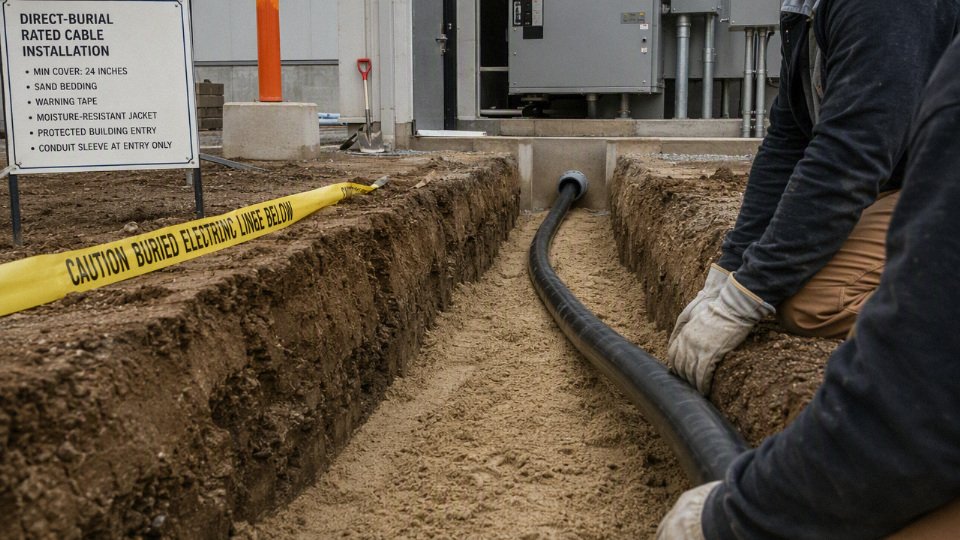
Cable types allowed underground
The cable you can run underground without full conduit is not one product family; it is any cable or conductor assembly specifically marked and listed for direct burial, wet locations, and the intended voltage/use. In practice, the common choices split into residential UF-B, service and feeder conductors such as USE-2 or USE-2/RHH/RHW-2, direct-burial tray or armored industrial cables, listed communication cables, and engineered medium-voltage cables.
UF-B cable for residential branch circuits
UF-B is the everyday direct-burial cable most electricians think of for residential branch circuits. Typical jobs include:
- Outdoor lighting circuits
- Detached shed receptacles
- Small pump circuits
- Garage or outbuilding branch circuits
- Gate operators and similar light loads, where allowed by code and load calculation
The reason UF-B survives underground better than indoor NM-B is construction. NM-B has individual insulated conductors wrapped in a nonmetallic sheath intended for dry, protected building cavities. UF-B has conductors embedded in a tougher, moisture-resistant thermoplastic jacket. That solid jacket slows water migration and gives the cable some resistance to soil contact and minor abrasion during backfill.
It is still not magic rope. UF-B is stiff, unpleasant to strip in cold weather, and easy to nick if somebody attacks it with a utility knife instead of using the right stripping method. At building entries, panel connections, riser sections, and areas exposed to physical damage, conduit sleeves or other mechanical protection are normally required even if the underground portion itself is direct burial.
Where UF-B gets misapplied is on larger feeders or semi-commercial work because it looks simple. Voltage drop, load diversity, burial depth, GFCI rules, and termination temperature ratings can make a “simple” run to a detached garage less simple than it first looked on the back of an envelope.
USE-2 conductors for underground service entrance
USE-2 conductors are commonly used for underground service-entrance work and some feeder applications where the conductors are installed in earth or underground raceway systems recognized by the applicable code. The insulation is intended for wet locations, and many products are marked sunlight resistant, which matters where the conductors emerge at service equipment, pedestals, or utility structures.
The frequent trap is assuming USE-2 can continue freely inside a building. Standard USE-2 is generally not intended for extended interior building wiring unless it also carries another rating accepted for that location. This matters at the transition from the meter base, service lateral, pull section, or underground conduit into indoor switchgear. Inspectors are not being picky for sport here; interior building wire rules deal with flame spread, smoke, mechanical routing, and installation methods that plain underground service wire may not satisfy.
In procurement terms, “USE-2” alone is too thin as a purchase description. A useful specification should call out:
- Conductor material: copper, aluminum, or compact aluminum
- Conductor class and stranding
- Insulation type and temperature rating
- Sunlight resistance marking, if exposed above grade
- Wet-location suitability
- Applicable UL, CSA, IEC, or local standard
- Whether the conductor must also be rated RHH, RHW-2, or another building-wire designation
That last line is often the difference between a clean installation and a pallet of cable that is legal underground but awkward, or unusable, at the equipment end.
Dual-rated USE-2/RHH/RHW-2 conductors
Dual-rated USE-2/RHH/RHW-2 conductors are often the more practical choice where an underground service or feeder run transitions into raceways, cabinets, switchboards, or other equipment spaces. The USE-2 marking addresses underground service use, while RHH/RHW-2 ratings can support wet-location and building-wire applications when installed under the rules that accept those ratings.
The commercial advantage of dual-rated conductors is fewer transition splices and fewer “wrong wire in the right trench” surprises. On a plant expansion, that can matter more than the small unit-price difference, because splicing large conductors in a handhole or changing cable types at a wall penetration adds labor, inspection points, and future failure locations.
The trade-off is that dual-rated conductors are not a license to ignore the wiring method. Ampacity adjustment, raceway fill, pulling tension, conductor bending radius, termination compatibility, and local code acceptance still control the installation. Some jurisdictions or utilities have their own service lateral rules, and those rules can be stricter than the general product marking.
Direct-burial rated tray cable
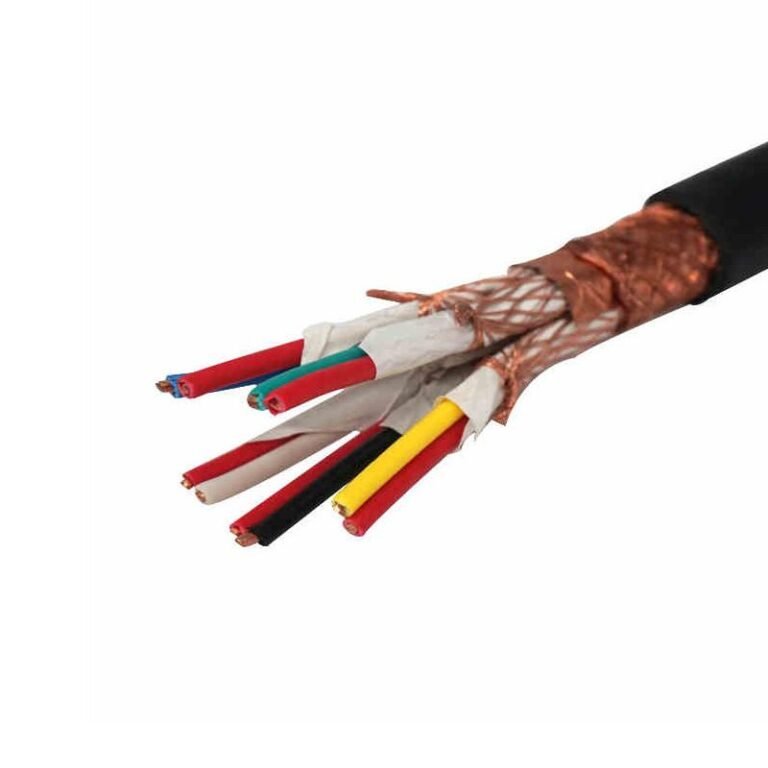
Tray cable is common in industrial and commercial facilities because it can combine multiple power, control, or instrumentation conductors in one rugged assembly. Some tray cables are listed and marked for direct burial. Those are used for:
- Motor control circuits between field devices and control panels
- Power feeds to skids, pumps, and packaged equipment
- Instrumentation and signal circuits in process areas
- Outdoor cable tray transitions into underground runs
- Utility or plant auxiliary systems where the cable specification allows direct burial
The key word is “some.” Not all TC, TC-ER, instrumentation tray cable, or control cable is suitable for direct burial. A tray cable intended for protected tray use may have a jacket that is fine in sunlight and plant air but not rated for long-term soil contact. Soil creates different damage mechanisms: point pressure from stones, jacket abrasion during thermal movement, chemical exposure from contaminated ground, and moisture trying to travel along conductor interstices.
For technical buyers, the purchase order should require the exact direct-burial marking and the governing standard, not just “tray cable.” If the run carries analog instrumentation or low-level signals, shielding, drain wire design, armor, and grounding method matter as much as burial suitability.
Any cable rated for wet locations can be directly buried.False
Wet-location rating addresses exposure to moisture, but direct burial also requires suitability for soil contact, mechanical compression, abrasion, long-term water migration, and often chemical or sunlight exposure. Product marking and listing must confirm direct-burial use.
Armored direct-burial cable
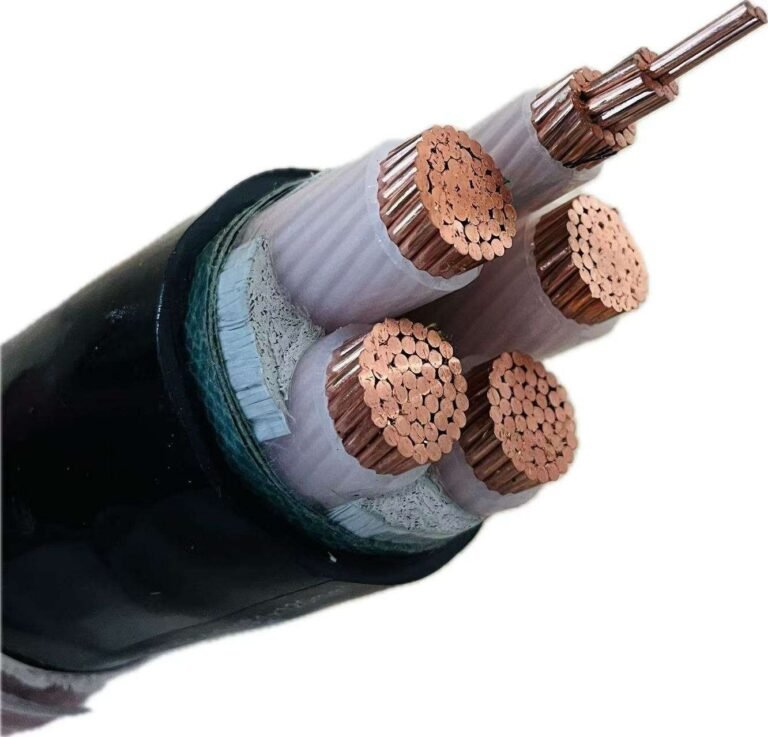
Armored direct-burial cable is selected when the soil, routing, or failure consequence justifies mechanical protection beyond a polymer jacket. You see it in industrial plants, utilities, mining sites, ports, wastewater facilities, road crossings, and areas where excavation control is less than perfect. Depending on the cable design and local standard, the armor may be steel wire, aluminum armor, interlocked armor, corrugated metallic sheath, or another construction intended to protect the conductors and preserve grounding or shielding functions.
Armor helps with crushing, rodent attack, rock contact, and accidental shovel or tool impact. It does not remove the need for correct burial depth, warning tape, sand bedding where specified, corrosion assessment, or proper termination kits. In fact, armored cable can create its own problems if the armor is not compatible with the soil chemistry or if the glands are poorly installed. I have seen good cable defeated by a cheap gland, crossed threads, and no one willing to admit the compression seal was never seated.
The trade-off is cost and handling. Armored cable is heavier, has larger bending radius, takes more effort to pull, and needs trained termination work. It earns its keep where downtime, safety exposure, or repair access is expensive. It may be overkill for a short residential lighting circuit through clean soil.
Metal-clad cable listed for direct burial
Some metal-clad cable products are listed for direct burial, but ordinary indoor MC cable is not enough. The underground version needs a suitable outer jacket, corrosion protection for the metallic sheath or armor, wet-location conductors, and a listing or marking that specifically supports the installation environment.
This is a common purchasing mistake because the words “metal clad” sound rugged. Indoor MC cable installed in soil can corrode, wick moisture, or fail at fittings never designed for buried service. If MC is being considered underground, verify:
- Direct-burial listing on the cable
- Wet-location conductor insulation
- Jacket material suitable for soil exposure
- Fitting and gland ratings for buried or wet service
- Grounding and bonding method
- Corrosion compatibility with site conditions
- Acceptance by the authority having jurisdiction
For a commercial building site, direct-burial MC can be attractive where the route is short, mechanically exposed, or difficult to sleeve continuously. For a long feeder across an industrial yard, a purpose-specified armored power cable or duct-bank method may be cleaner.
Low-voltage landscape wire
Low-voltage landscape lighting wire is not the same thing as premises power wiring. Listed outdoor low-voltage cable may be permitted for direct burial in landscape lighting systems, irrigation-adjacent controls, or Class 2/Class 3 style circuits where the power source and system design match the listing.
The misuse is predictable: someone sees thick black low-voltage cable at a supply house and treats it like a substitute for 120 V or 240 V distribution cable. It is not. Insulation thickness, voltage rating, fault current behavior, overcurrent protection, burial depth, and code rules are different. Landscape cable belongs behind the correct transformer or power supply, within its listed voltage and use.
Irrigation, pump, and control cable
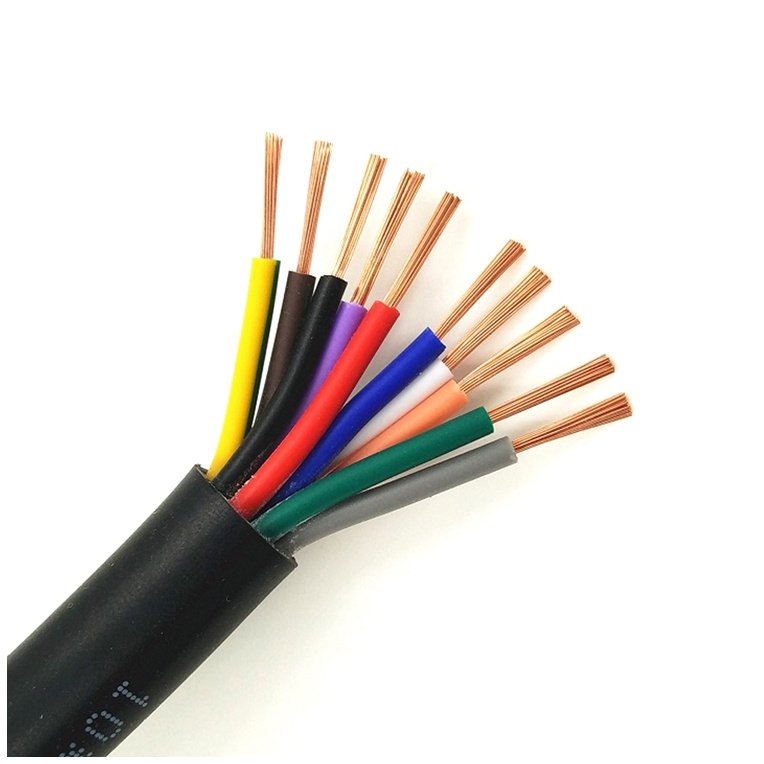
Irrigation, pump, and control cables can be directly buried only when the product is listed or specified for wet-location and direct-burial service. The cable must match the voltage, conductor count, insulation, jacket, and control system requirements.
Common examples include:
- Sprinkler valve control cable
- Pump control cable
- Float switch cable
- Low-voltage irrigation cable
- Submersible pump cable, where the cable is specifically designed for wet or submerged service
- Multi-conductor control cable for field devices
The design concern is not just water outside the jacket. Pump and irrigation systems often see cycling loads, inductive switching, wet boxes, rodents, fertilizer exposure, and maintenance splices made in mud with the wrong connector. Underground splice kits, gel-filled connectors, heat-shrink systems, or molded splices need to be chosen for the actual voltage and environment. A wire nut wrapped in vinyl tape is not an underground splice, no matter how many times someone says it worked at his house.
Communication and data cables
Direct-burial communication cable includes fiber optic cable, coaxial cable, copper telephone cable, Ethernet-style outside plant cable, and specialty signal cable. These products may use gel filling, water-blocking tape, corrugated armor, messenger support, rodent protection, or UV-resistant jackets depending on the application.
Power and communication cables have different rules. Separation from power, grounding and bonding of shields or armor, surge protection, lightning exposure, and entry protection at the building all need review. A fiber cable may be electrically nonconductive in the glass, but its armor or tracer wire may still create a grounding issue. Copper data cable has its own limits for distance, surge exposure, and electromagnetic interference.
For plants, I prefer to treat underground communication routes as infrastructure, not as an afterthought thrown into a trench with whatever feeder is open that day. The wrong shortcut can show up later as nuisance drives faulting, network dropouts during storms, or a safety PLC cabinet with shield currents that nobody can explain.
Medium-voltage direct-burial cable
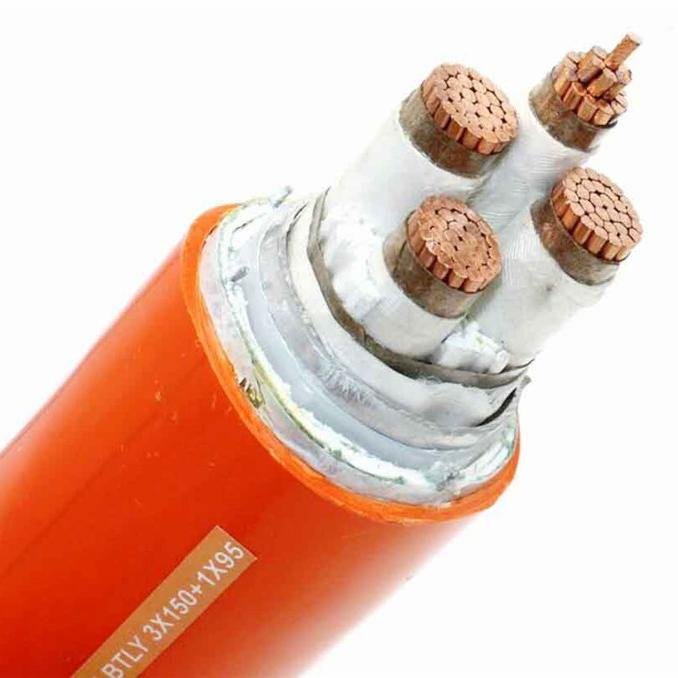
Medium-voltage direct-burial cable is an engineered system, not a casual wiring choice. Utility and industrial feeders may use shielded MV cable with insulation screens, metallic shields, concentric neutrals, water-blocking systems, jacket constructions selected for soil exposure, and terminations designed for stress control. These cables are used for distribution feeders, plant substations, wind and solar collection systems, mining feeders, and utility laterals.
The physics are less forgiving than at low voltage. At medium voltage, electric stress concentration at a damaged insulation shield, poorly prepared termination, or contaminated splice interface can initiate partial discharge. Water migration can contribute to insulation aging, especially where the cable construction and installation environment are mismatched. Pulling damage during installation may not fail immediately; it may become a feeder outage after thermal cycling and moisture have done their work.
Installation usually involves engineered trench profiles, thermal backfill assumptions, pulling calculations, shield grounding design, test requirements, and documented accessories. Ampacity is heavily dependent on soil thermal resistivity, burial depth, cable spacing, load factor, and ambient soil temperature. There is no honest universal ampacity number for “direct-buried MV cable” without those inputs.
Wet-location rated is not the same as direct-burial rated
A cable can be suitable for wet locations and still be wrong for direct burial. Wet-location ratings deal with moisture exposure; direct burial adds soil pressure, abrasion from backfill, root contact, insects or rodents in some locations, chemicals, freeze-thaw movement, and long-term moisture migration along the cable structure.
The boundary is simple: if the marking, listing, or manufacturer documentation does not say direct burial for that cable construction, do not treat wet-location wording as an equivalent. This is especially important in procurement, where one missing phrase on a datasheet can shift risk from the supplier to the installer. For critical service, ask for the current datasheet, certificate or listing reference, installation instructions, and confirmation that the cable is suitable for the site’s voltage, burial method, soil exposure, and transition details.
Code rules that change the answer
A cable can be suitable for direct burial and still be illegal in a particular trench if the adopted code, burial cover, GFCI condition, location, or approval authority says otherwise. In the United States, the National Electrical Code is the common reference point, but the enforceable answer is the local adopted edition plus the interpretation of the authority having jurisdiction.
That last phrase sounds bureaucratic until a job is held up over it. One county may be on a newer NEC cycle, a city may amend burial rules near alleys or outbuildings, and an industrial campus may have its own electrical standard layered on top. For procurement, this means “direct burial rated” is only the starting filter, not the purchase specification.
NEC Table 300.5 is the depth table most buyers trip over
NEC Table 300.5 does not give one universal burial depth for all underground wiring. It sets minimum cover requirements based on several variables that change the risk of shock, crushing, digging damage, and insulation failure.
The main variables are:
- Wiring method: direct-burial cable, individual conductors in raceway, rigid metal conduit, intermediate metal conduit, rigid PVC, and other approved systems are treated differently.
- Circuit voltage: lower-voltage residential branch circuits may qualify for allowances that do not apply to higher-voltage feeders or commercial work.
- Location: residential yards, driveways, parking areas, farms, industrial yards, public rights-of-way, and under-building areas are not the same exposure.
- Traffic loading: a flower bed and a truck route deserve different mechanical assumptions, even if the cable marking is identical.
- Protection method: raceway type, GFCI protection, concrete encasement, and physical guarding can change the required cover.
- Local amendments: some authorities tighten the table for frost, rocky soil, utility corridors, or known excavation risk.
Common NEC Table 300.5 burial cover values are often in the rough range of 6 to 24 inches, depending on those conditions. That range should not be used as a design number by itself. The actual value must be read from the applicable table row and column for the exact wiring method and installation condition.
A cable marked for direct burial may still require a deeper trench than conductors installed in an approved raceway.True
Burial cover is determined by the code installation method and site condition, not only by whether the cable jacket is wet-location or direct-burial rated.
Burial cover is not the same as trench depth
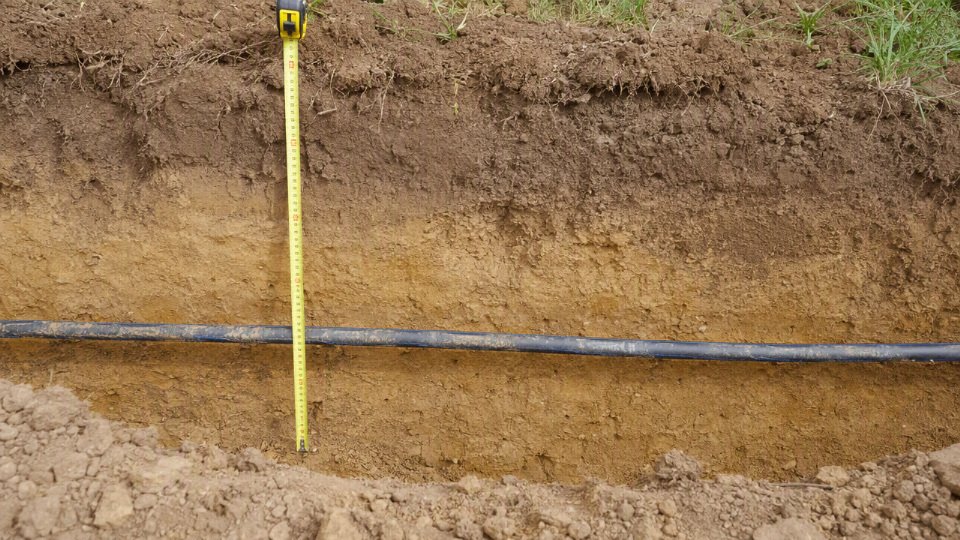
Burial cover is measured from finished grade to the top of the cable or raceway, not from the original ground surface to the bottom of the trench. That difference catches crews when the trench is uneven, bedding is added, or landscaping changes final grade after electrical inspection.
In practice, the trench must be deeper than the required cover because it may include:
- sand or screened soil bedding below the cable;
- the outside diameter of the cable, duct, or raceway;
- spacing between multiple circuits;
- warning tape placed above the wiring;
- slope correction after grading;
- settlement allowance in soft backfill.
A trench that started at 18 inches can easily become a 14-inch cover installation after 2 inches of bedding, a large raceway, and final grading. Inspectors measure cover, not the operator’s memory of the excavator bucket depth.
Why conduit sometimes allows less cover than direct burial
Rigid metal conduit is often permitted with less cover because it gives high mechanical protection and creates a recognized equipment grounding path when installed correctly. PVC raceway usually lands in an intermediate position: good corrosion resistance and a replaceable path, but less crush and impact resistance than steel. Direct-burial cable depends heavily on jacket integrity, bedding quality, and avoidance of later excavation, so it often requires more cover unless a special exception applies.
The mechanism is straightforward. Greater cover reduces the probability that a shovel, aerator, fence-post auger, skid-steer blade, or landscape stake reaches the energized wiring. Raceway adds a second barrier before the insulation is contacted. GFCI adds electrical fault clearing, but it does not stop a backhoe tooth from tearing the cable apart.
That creates the commercial trade-off. Direct-burial cable can reduce material and installation labor, especially on long residential or light-duty runs. Raceway costs more up front, but it can improve damage resistance, make replacement easier, and simplify future modifications. The preferred choice flips when the route crosses high-maintenance ground, paved areas, plant roads, or any zone where someone will eventually dig without asking maintenance.
GFCI protection can reduce cover, but it cannot fix the wrong cable
For certain residential branch circuits, GFCI protection may allow reduced burial cover under NEC rules when the installation meets the exact conditions in the table. This is usually relevant to lower-voltage residential circuits, such as a short run to yard equipment or an outbuilding branch circuit, subject to the adopted code edition and local approval.
Do not stretch that allowance. GFCI protection does not make indoor NM cable suitable for soil. It does not make an unlisted cable direct-burial rated. It does not remove the need for wet-location insulation where required. It simply changes the shock-protection assumption for a specific circuit type.
A useful way to check the logic is this:
- Is the cable or conductor type listed for the environment? Soil and underground raceways are wet locations under NEC treatment.
- Is the wiring method permitted for the circuit and location?
- Does GFCI protection meet the exact code condition being claimed?
- Does the burial cover match the table after final grade is known?
- Has the authority having jurisdiction accepted the installation method?
Miss one of those, and the installation may fail even though the reel label looked right.
Direct burial still needs physical protection at exposed points
Direct-burial cable is designed for underground installation, not for being stapled up a wall, strapped unguarded to a pole, or left exposed where pallet forks can hit it. The vulnerable areas are usually not the middle of the trench. They are the transitions.
Typical protection points include:
- where the cable emerges from grade;
- where it enters a building wall or foundation;
- where it runs up a pole or pedestal;
- where it enters switchgear, a meter base, pump controller, or junction box;
- where it crosses an exposed surface before disappearing underground;
- where landscaping crews, livestock, forklifts, or vehicles can contact it.
Conduit sleeves, rigid risers, guards, approved fittings, and sealed entries are not optional decoration in those spots. I have seen good underground cable installations fail early because the riser was treated as an afterthought: no bushing, a sharp PVC edge, water running into the enclosure, and the cable jacket slowly cut by movement.
USE conductors create a building-entry trap
USE and USE-2 conductors are common for underground service and feeder work, but they are not automatically acceptable for long runs inside a structure. The issue is flame and building-wire listing, not whether the insulation survives underground moisture.
Many projects solve this by using conductors with dual ratings, such as USE-2/RHH/RHW-2 where acceptable, or by transitioning at service equipment or an approved enclosure to conductors permitted inside the building. The details depend on the listing printed on the conductor, the equipment terminals, the service arrangement, and the adopted code.
For buyers, the purchase order should not just say “USE cable.” It should state the complete rating needed, conductor material, insulation type, temperature rating, sunlight resistance if exposed, standard of compliance, and whether the cable must enter equipment or a building before termination.
Separation from other utilities is not just neat trench work
Power cables, communication lines, gas pipe, water service, sewer, drainage, irrigation, and process piping all compete for underground space. Electrical code is only one piece; utility standards, plumbing rules, gas regulations, telecom requirements, and local right-of-way permits may all impose separation or protective measures.
The risks differ by service:
| Nearby service | Main concern | Common control method |
|---|---|---|
| Communication cable | electrical interference, accidental damage during repair | horizontal or vertical separation, separate duct, identification tape |
| Gas line | ignition risk during excavation or fault damage | mandated clearance, utility marking, sleeve or barrier where required |
| Water or irrigation | water migration into electrical path, repair conflicts | separation, sealed entries, route coordination |
| Sewer or drain line | settlement, corrosive soil, difficult maintenance access | route offset, bedding control, warning tape |
| Other power circuits | heat buildup, derating, fault exposure | spacing, duct bank design, ampacity calculation |
On industrial sites, this coordination belongs on the underground composite drawing, not in a field argument between the electrical foreman and the pipe crew after both trenches are open.
International and industrial projects need the governing standard named before ordering
Outside the United States, the NEC may be irrelevant or used only as a reference. Projects may follow IEC-based national rules, BS requirements, CSA rules, utility specifications, mining regulations, railway standards, port authority requirements, or a plant owner’s engineering standard.
For industrial and utility procurement, direct-burial cable specifications often need to define:
- moisture-blocking construction, if required;
- metallic armor, screen, or sheath requirements;
- conductor corrosion control, especially for aluminum or aggressive soils;
- sunlight resistance for exposed risers or storage;
- termite, rodent, or hydrocarbon resistance where relevant;
- flame rating for any building entry;
- short-circuit rating and grounding method;
- documented compliance with the applicable UL, CSA, IEC, BS, or local standard.
Minimum code compliance is not always the engineering optimum. A plant may choose deeper burial, sand bedding, red warning tape, concrete cable tiles, spare ducts, or a full duct bank because the cost of one accidental outage is higher than the extra civil work. That logic stops holding where soil conditions, heat dissipation, voltage drop, pulling tension, or maintainability make the proposed protection scheme create a new problem; those cases need an engineered route review before cable is ordered.
Underground exposure and soil risks
Underground cable is not just indoor cable with a tougher jacket. It has to survive water, soil chemistry, crushing, abrasion, biological attack, heat retention, and corrosion paths for years without anyone seeing the damage develop. That is why direct-burial approval depends on the complete cable design and marking, not only on conductor size or insulation color.
Underground raceways are not automatically dry locations.True
Underground conduit commonly accumulates water from condensation, joint leakage, grade changes, and damaged fittings, so conductors installed in underground raceways still need insulation rated for wet locations under the applicable electrical code.
Moisture is the normal condition, not the exception
Most buried wiring should be treated as operating in a wet location. Even a trench that looks dry during installation can see:
- Standing water after rain or irrigation
- Seasonal groundwater rise
- Capillary water migration through compacted soil
- Freeze-thaw movement that pumps water along the cable path
- Condensation inside conduit, handholes, and junction boxes
The failure mechanism is slow but familiar: water finds a jacket nick, migrates along fillers or strands, lowers insulation resistance, and eventually shows up as nuisance GFCI trips, leakage current, corrosion, or a fault under load. In colder regions, freeze-thaw cycling can also move the cable slightly each season, rubbing it against stones or sharp aggregate.
Moisture-blocked constructions, filled interstices, water-resistant insulation systems, and jackets rated for direct burial are used to slow or stop that migration. For larger feeders and utility-style work, longitudinal water blocking is often worth specifying, especially where repairs would mean cutting pavement or shutting down production.
Soil chemistry can be harder on cable than water
Soil is not a neutral packaging material. Acidic clay, alkaline fill, coastal salts, deicing salts, fertilizers, manure runoff, hydrocarbons, solvents, and industrial contaminants can all change the jacket requirement. A cable jacket that performs well in ordinary residential soil may not be the right choice beside a fuel island, plating area, wastewater plant, battery room drain route, or fertilizer storage yard.
Typical specification questions include:
- Is the soil acidic or alkaline?
- Are chlorides, sulfates, fertilizers, or animal waste present?
- Could oil, diesel, hydraulic fluid, or solvents reach the trench?
- Is the route through reclaimed fill of unknown composition?
- Will the cable pass near industrial process drains or contaminated soil?
Jacket compounds need to be matched to exposure. PVC, PE, XLPE-based systems, LSZH compounds, and specialty jackets each have different strengths. The trade-off is cost and handling: the tougher or more chemically resistant jacket may be stiffer, more expensive, or less friendly in cold-weather pulls. The preferred choice flips when chemical exposure is confirmed or repair access is poor.
Mechanical stress is not limited to the day of installation
A buried cable sees load long after the trench is closed. Rocks in the bedding, aggressive backfill compaction, settlement, tree roots, soil movement, frost heave, and vehicle loading can all concentrate pressure on the jacket. A landscaped yard is one condition; a driveway, forklift route, truck apron, or industrial laydown area is another.
For traffic areas, the design may need one or more of the following:
- Greater burial cover as required by code and site conditions
- Sand bedding or screened backfill around the cable
- Warning tape above the cable route
- Protective boards, slabs, or listed mechanical protection
- Armored or metal-clad direct-burial cable where permitted
- Conduit or duct for road crossings, even if the rest of the run is direct buried
Abrasion deserves its own mention. Dragging cable across crushed stone, pulling it through a rough trench, or letting it scrape over a concrete edge can create small jacket cuts that are nearly invisible at backfill. Those cuts become water entry points. In practice, good crews use rollers, padded edges, clean trench bottoms, and bedding material because one careless pull can ruin an otherwise correct cable selection.
Rodents, roots, and biological activity
Rodent damage is site-dependent. It is usually not the first concern in clean residential work, but it becomes more relevant near farms, grain facilities, landfills, food plants, rail corridors, and vacant lots. Roots are slower but can still create pressure and movement over time, especially where shallow cables are routed near mature trees or landscaped areas that are later modified.
Where biological damage is credible, buyers may specify:
- Rodent-resistant jacket designs
- Armored constructions suitable for direct burial
- Supplemental conduit, duct, or physical shielding in vulnerable zones
- Route changes away from burrows, hedges, compost areas, or root systems
No jacket should be treated as animal-proof without supplier documentation and local experience. This is one of those areas where the maintenance supervisor often knows more than the drawing package.
Thermal conditions affect ampacity
Buried cable does not shed heat like cable in free air. Ampacity depends on conductor size and insulation rating, but also on soil thermal resistivity, earth temperature, burial depth, grouping, load profile, and whether the soil stays free-draining or saturated. Several loaded cables in one trench can heat each other, especially on continuous industrial loads.
The mechanism is simple: conductor losses create heat, the insulation and jacket pass that heat into the surrounding soil, and the soil either carries it away or holds it. Dry sandy soil can be a poor heat sink; wet compact soil may conduct heat better, although saturated conditions bring their own moisture and corrosion problems. Design software, utility standards, or engineering calculations may be needed for medium-voltage feeders, large services, long industrial runs, or heavily grouped circuits.
Corrosion paths need a complete design view
Bare concentrics, metallic shields, armor, grounding conductors, neutral components, and metallic raceway sections can corrode if moisture and soil chemistry reach them. Jacket integrity is the first defense, but material selection matters too. Copper, aluminum, galvanized steel, stainless components, lead sheaths, and coated armor systems behave differently depending on soil and stray-current conditions.
The boundary is this: ordinary direct-burial cable selection guidance holds only for ordinary soil and ordinary loading. Once the route includes contaminated soil, heavy traffic, grouped high-load feeders, metallic shielding, or hard-to-access repairs, the cable schedule should be checked against supplier data, the applicable code, and preferably a site-specific installation review. Underground conduit may still be useful for mechanical protection and replacement access, but it should not be used as an excuse to install dry-location conductors below grade.
Cable specification checklist
Use this checklist before issuing an RFQ, approving a submittal, or accepting an “equivalent” cable proposal. Underground cable mistakes are expensive because the defect is usually buried before anyone discovers the mismatch between the drawing, the product marking, and the actual trench conditions.

- Direct-burial marking
- Require the cable or individual conductor to be explicitly marked for direct burial or for the exact underground wiring method being used.
- Do not accept wording such as:
- “Outdoor”
- “Water-resistant”
- “Sunlight-resistant”
- “Wet location”
- “UV-resistant”
- Those markings may be relevant, but they do not prove the cable is approved for soil contact, burial cover, mechanical exposure, or the installation method required by the local code.
A cable marked sunlight-resistant is automatically acceptable for direct burial.False
Sunlight resistance addresses UV exposure, usually at above-ground transitions or outdoor runs. Direct burial requires the cable construction and marking to be suitable for underground installation and soil contact under the applicable standard and code.
- Voltage rating
- Match the cable voltage class to the system and standard: common project categories include 300 V branch-circuit cable, 600 V building wire or feeder cable, 1 kV industrial cable, and medium-voltage classes for utility or plant distribution.
- Do not buy voltage rating as a guess. Confirm:
- Phase-to-phase and phase-to-ground voltage
- Grounding system
- Overvoltage exposure
- Protective device clearing behavior
- Applicable UL, CSA, IEC, BS, or local project standard
- Higher voltage rating is not automatically better if it changes cable diameter, bending radius, termination kit availability, or tray and gland fit.
- Conductor material
- Copper gives better conductivity in a smaller cross-section, lower voltage drop for the same size, and simpler termination practice in many panels and equipment lugs.
- Aluminum reduces weight and often lowers material cost, which matters on long feeders, utility laterals, and export projects where drum weight affects handling and freight.
- The trade-off is at the termination and corrosion interface. Aluminum normally needs compatible lugs, correct torque, anti-oxidation compound where specified, and disciplined re-torque or inspection practice if the equipment manufacturer calls for it. A loose aluminum termination in a damp service pedestal is not a cable saving; it is a future heat source.
- Conductor size and ampacity
- Size the conductor from the actual load, not just the breaker rating. Check:
- Full-load current
- Continuous load factor where required
- Starting current or inrush
- Ambient temperature
- Soil thermal resistivity
- Burial grouping
- Number of current-carrying conductors
- Future expansion margin
- Voltage drop over the installed route length
- Underground ampacity is a heat-rejection problem. Current heats the conductor, insulation slows heat transfer, soil carries heat away, and dry compacted soil usually performs worse than moist stable soil. A cable that looks conservative in open air can run hot underground if several circuits share a trench with poor backfill.
- Size the conductor from the actual load, not just the breaker rating. Check:
- Insulation system
- Specify the insulation compound by application, not by habit:
- PVC for many lower-voltage building and control applications where permitted by the standard
- XLPE where higher thermal rating, dielectric strength, and aging resistance are needed
- EPR where flexibility, wet electrical performance, and certain medium-voltage designs are preferred
- Other compounds only when the project standard and supplier documentation support the use
- The insulation choice affects conductor operating temperature, short-circuit withstand, bend behavior in cold weather, and long-term moisture performance. For medium-voltage work, insulation cleanliness and manufacturing control become much more important than the jacket color or catalog description.
- Specify the insulation compound by application, not by habit:
- Jacket material
- Require a jacket suitable for soil contact, wet exposure, abrasion during pulling or laying, sunlight at risers, and any chemical exposure expected on site.
- Ask specifically about:
- Oil or hydrocarbon exposure near fuel systems
- Fertilizer, salt, or corrosive soils
- Cold-bend performance for winter installation
- Sunlight resistance for above-grade sections before entering equipment
- Expected service life under the stated installation conditions
- A jacket is not just a cosmetic outer layer. Once it is cut by a sharp stone, loader bucket, or careless shovel, the rest of the cable design determines how far moisture travels and how quickly the failure becomes electrical.
- Armor, shielding, and mechanical protection
- Decide whether the route needs extra protection because of vehicle traffic, plant maintenance, rodent activity, future excavation risk, or industrial debris in the trench.
- Depending on cable type and voltage class, this may involve:
- Metallic armor
- Interlocked armor
- Steel wire armor
- Metallic shield
- Concentric neutral
- Rodent-resistant construction
- Warning tape, sand bedding, protective boards, or selective conduit sleeves at crossings
- Armor improves survival against mechanical abuse, but it adds diameter, weight, bending stiffness, grounding requirements, and sometimes cost. The preferred choice flips on sites where the trench is well controlled, mapped, and protected; there, a properly rated unarmored direct-burial cable may be easier to install and terminate.
- Water-blocking design
- For long, critical, or medium-voltage underground runs, consider longitudinal water-blocking features:
- Swellable tapes
- Water-blocking powders
- Filled conductor interstices
- Sealed conductor constructions
- Moisture barriers where specified
- The mechanism is simple and ugly: a small jacket injury can let water migrate along the cable length, especially through conductor strands or shield interfaces. Water-blocking limits that migration, so one damaged spot is less likely to contaminate many meters of cable before testing finds it.
- For long, critical, or medium-voltage underground runs, consider longitudinal water-blocking features:
- Grounding and bonding
- Verify the grounding design before cable manufacture or purchase. Confirm:
- Whether an equipment grounding conductor is required
- Neutral size and configuration
- Shield grounding method for medium-voltage cable
- Bonding of metallic armor
- Compatibility with ground-fault protection and overcurrent devices
- Local rules for service entrance, feeders, and separately derived systems
- This is one area where procurement substitutions cause trouble. A cable may have the right ampacity and jacket, yet still be wrong because the grounding conductor, shield, or concentric neutral does not match the protection scheme.
- Verify the grounding design before cable manufacture or purchase. Confirm:
- Temperature rating
- Match cable temperature rating to the weakest approved connection point, not only the highest number printed on the cable.
- Check:
- Terminal temperature rating
- Equipment lug listing
- Load cycling
- Soil thermal limits
- Emergency overload assumptions
- Short-circuit temperature withstand
- If the equipment terminals are rated for a lower temperature than the conductor insulation, ampacity must normally be based on the terminal limitation under the applicable code or standard.
- Standards and approvals
- State the required compliance path in the purchase specification. Depending on market and project type, that may include UL, CSA, IEC, BS, or a local utility or government standard.
- Identify which tests or ratings must be documented where applicable:
- Direct-burial suitability
- Wet-location performance
- Sunlight resistance
- Flame test
- Cold bend
- Crush and impact
- Vertical tray flame test
- Medium-voltage partial discharge or routine electrical tests, where required
- The boundary is clear: this checklist helps structure the specification, but the final acceptance still depends on the current code, authority having jurisdiction, project standard, equipment manual, and supplier-certified data.
- Documentation package
- For serious procurement, require more than a catalog page:
- Technical datasheet
- Applicable certificates
- Type test and routine test reports where required
- Production batch traceability
- Drum list and drum schedule
- Cable marking details
- Packing method for export shipment
- Storage and handling instructions
- After-sales technical support contact
- Drum planning deserves attention. On a long site pull, the wrong drum length can create an unnecessary underground splice, and underground splices are rarely where a plant wants its risk concentrated.
- For serious procurement, require more than a catalog page:
For bulk projects, an established manufacturer such as Jinda can align conductor design, insulation compound, jacket construction, cable marking, compliance documents, packaging, and delivery planning before production starts. That early coordination is usually where procurement saves money: not by shaving a few points off cable price, but by preventing rejected submittals, unusable drum lengths, missing certificates, and installation delays at the trench.
Installation practices without conduit
- Survey the route before a trench is opened. Walk the line with the electrical drawings in hand, not just a spray can and a tape measure. Confirm:
- Existing electric, gas, water, telecom, irrigation, cathodic protection, and drain lines
- Property boundaries, easements, and setbacks
- Tree roots and areas likely to be disturbed by future landscaping
- Drainage paths, low spots, and seasonal water accumulation
- Driveways, forklift routes, yard cranes, farm equipment paths, and vehicle crossings
- Future excavation zones such as planned foundations, pipe racks, tanks, or fence lines
- Service access points where the cable must rise into panels, pedestals, junction boxes, or equipment
Direct burial saves raceway material, but it makes future relocation and repair more invasive. If the route is likely to be dug up again, sleeving, conduit, or a duct bank may be cheaper over the life of the installation even if the first purchase order looks higher.
- Plan permits, utility locates, and inspection timing early. Local rules may require a permit, a utility locate ticket, trench inspection before backfill, depth verification, cable marking verification, or photos with scale references. The authority having jurisdiction may also want product markings, installation instructions, trench depth, circuit identification, and wet-location splice documentation. In practice, failed underground inspections often come from ordinary coordination mistakes: the trench was backfilled too soon, the inspector could not see warning tape placement, or the installer could not prove the cable was listed for the application.
Prepare the trench so the soil does not become the damage source. Maintain the required burial cover for the wiring method, voltage, protection scheme, and surface condition. NEC Table 300.5 commonly puts burial cover in the rough range of 6 to 24 inches, but the actual requirement depends on the installation details and local adoption, so verify the current code and approved design.
Remove sharp rock, construction scrap, broken concrete, metal strapping, and hard clods. Where native soil is rocky or unstable, place sand, screened soil, or another approved bedding material below and around the cable. The mechanism is simple: point loads from stones concentrate pressure on the jacket; over time, soil movement, freeze-thaw cycling, and traffic vibration can turn a harmless-looking rock into an insulation failure point. Control standing water during installation so the trench bottom is not pumped into mud that later settles unevenly.
Handle the cable like a finished electrical component, not a rope. Follow the manufacturer’s minimum bend radius, pulling tension, sidewall pressure, drum orientation, and installation temperature limits. Cold jackets can crack more easily, especially after a drum has sat outside overnight; very hot cable can be easier to deform under tension. Use proper rollers or payout stands, avoid pulling across trench edges, and do not let a reel freewheel into a kink. Hidden jacket scuffs and conductor stretching do not always show up until insulation testing or, worse, after a few wet seasons.
Use warning tape, markers, and as-built records. Install electrical warning tape above the cable, not directly on top of it, so a future excavator sees the warning before reaching the cable. Use route markers, posts, or surface tags where the run crosses open ground, road shoulders, substations, yards, or utility corridors. Record as-built route dimensions from fixed references, not from objects that may move. A note saying “runs near the fence” is not much help after the fence gets replaced.

Protect every transition. Direct burial does not mean the cable should be exposed wherever it leaves the earth. Use conduit sleeves, rigid guards, bushings, listed fittings, and suitable sealing methods where the cable:
- Rises from grade into a panel, pole, pedestal, junction box, or disconnect
- Enters or exits a foundation wall
- Crosses an exposed area subject to impact
- Passes under paving edges, curbs, slabs, or equipment bases
- Changes from underground to aboveground wiring methods
The most failure-prone parts of a direct-burial installation are often the transition points, not the straight buried run. That is where sunlight, mower damage, settlement, water entry, rodents, and poor fitting selection all meet the same short length of cable.
Minimize underground splices. A continuous run is usually better. When a splice cannot be avoided, use a splice kit listed or certified for direct burial and wet locations, sized for the conductor and insulation system. Installation should be done by qualified personnel who understand conductor preparation, crimping or connector torque, insulation rebuild, shielding if present, and sealing. A splice that works in a dry handhole is not automatically acceptable buried in wet soil.
Backfill in controlled layers. Place selected backfill around and above the cable first, keeping large stones and debris out of the immediate cable zone. Compact enough to prevent future settlement, but do not pound directly over the cable with aggressive mechanical compaction before adequate cover is in place. Watch for cable displacement during backfill; long runs can creep sideways or lift if spoil is dumped from one side with a loader.
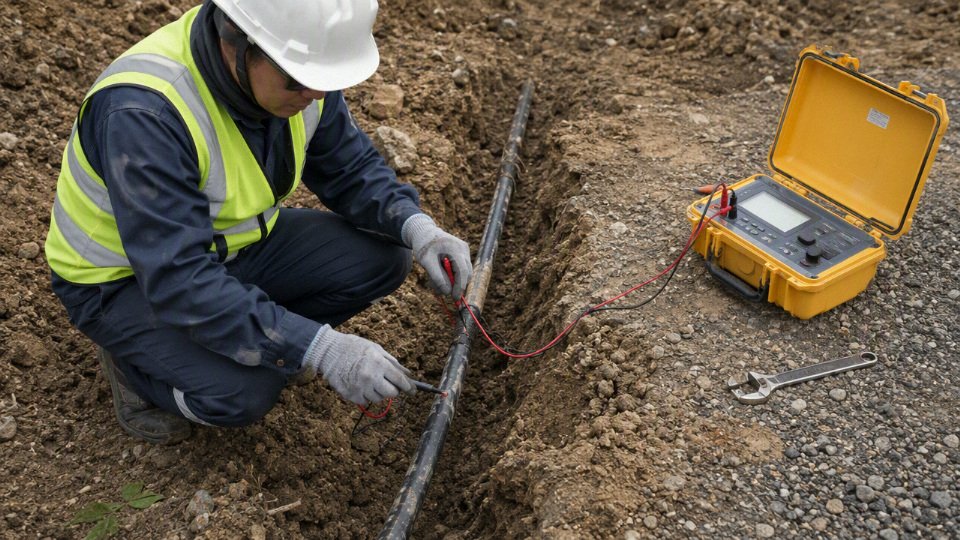
Test before covering and before energizing. At minimum, perform visual inspection, continuity checks, phase identification, and grounding or bonding verification. Insulation resistance testing may be appropriate depending on cable type, voltage class, project specification, and manufacturer guidance. Record test voltage, duration, temperature if relevant, and measured values. Do not energize first and “see if it holds”; that is a troubleshooting method, not a commissioning method.
Keep maintenance records that a future technician can actually use. The project file should include:
- Cable type, conductor size, voltage rating, and product markings
- Route drawing with depth and fixed reference dimensions
- Drum or batch traceability where available
- Test results before backfill and before energizing
- Splice kit type, installer, date, and exact location
- Photos of trench depth, warning tape, crossings, and transitions
- Permit, inspection, and approval records

Direct burial works well when the route is stable, the cable is correctly rated, the trench is clean, and transitions are protected. That conclusion stops holding where mechanical exposure, shallow cover, heavy traffic, corrosive or contaminated soil, repeated excavation, or inspection requirements call for a raceway or another engineered protection method.
Common mistakes and failure modes
The failures I see most often are not exotic cable defects. They are usually substitution errors, shallow burial assumptions, poor protection at transitions, or buying cable that nobody can prove is actually listed for the installation.
- Using indoor NM-B cable underground. NM-B is built for dry interior building spaces, not direct soil contact or continuously wet underground conditions. The paper fillers and jacket system are not intended to manage groundwater, soil chemistry, or long-term moisture exposure. Once water migrates into the assembly, insulation resistance can fall slowly, then show up later as nuisance tripping, corrosion at terminations, or a fault that is painful to locate.
- Burying THHN alone. Individual THHN or THWN-type conductors are normally installed in a raceway, not laid loose in a trench as standalone direct-burial cable. Some conductors carry multiple ratings, but the marking must match the installation. A reel marked only for building wire use does not become direct-burial cable because it has nylon insulation and looks rugged.
Confusing sunlight resistance with burial rating. Sunlight resistance means the jacket or insulation can tolerate ultraviolet exposure. It does not prove the cable is suitable for soil contact, underground wet locations, crushing loads, insects, fertilizer, or backfill abrasion. This mistake is common on farm and landscape jobs where cable sits outside before being buried.
A sunlight-resistant marking alone is not the same as a direct-burial approval.True
Sunlight resistance addresses UV exposure. Direct-burial suitability depends on the cable construction, listing, marking, and the applicable electrical code or local approval.
- Skipping physical protection at risers. The most vulnerable part of a direct-burial run is often where it leaves the ground. String trimmers, mower decks, snow shovels, foot traffic, livestock, dogs, pallet forks, and careless vehicle movement can damage exposed cable. In practice, I expect rigid protection, a proper sleeve, or a code-approved raceway at these transition points, even when the horizontal underground run is direct buried.
Using shallow burial without meeting the exception. NEC Table 300.5 cover requirements can commonly land anywhere from roughly 6 to 24 inches depending on wiring method, voltage, GFCI protection, circuit rating, and traffic conditions. Reduced cover is not a casual convenience. The GFCI protection, residential limitation, circuit size, and wiring method all have to match the code condition before anyone should assume a shallow trench will pass inspection.
Making unlisted underground splices. Underground splices live in a wet, dirty, thermally variable environment. A taped wirenut or ordinary junction method may work for a week and fail after the first freeze-thaw cycle. Moisture entry causes corrosion, higher resistance, heating, intermittent faults, and nuisance trips. The worst part is fault location: a bad buried splice can turn a simple repair into a half-day of trenching.
Ignoring voltage drop on long runs. A conductor sized only by ampacity may still be a poor choice for a gate motor, well pump, barn feeder, detached garage, or long landscape lighting circuit. Starting current and distance matter. If voltage sag is high, motors run hotter, controls chatter, lights dim, and owners blame the equipment instead of the feeder design. Longer underground runs often need larger conductors than the breaker size alone suggests.
Installing cable in rocky backfill. Sharp stone can cut the jacket during pull-in or create point loading after settlement. The damage may not fail insulation immediately; it can take months of wet soil, thermal cycling, and mechanical pressure before leakage current becomes a visible fault. Sand bedding, screened fill, warning tape, and careful compaction are cheap compared with finding a damaged cable under a finished driveway.
Buying cable without traceability. For industrial, utility, or export projects, missing traceability is a commercial risk as much as a technical one. Watch for mismatched jacket markings, unverifiable UL, CSA, IEC, or local-standard claims, inconsistent conductor size, missing test certificates, vague material descriptions, and suppliers who cannot tie a batch number to production records. On international projects, inspection rejection can cost more than the cable.
Assuming conduit fixes a non-burial-rated cable. This is the advanced trap. Underground conduit is treated as a wet location because water eventually gets in through condensation, joints, or damaged fittings. Pulling an indoor-only cable through buried conduit may still violate code and may still expose the cable to moisture conditions it was never designed to survive. Conduit improves mechanical protection, but it does not erase the need for conductors or cable rated for the actual underground environment.
Frequently asked questions
Can UF-B wire be buried without conduit?
Yes, UF-B cable is commonly used for direct burial on residential branch circuits when the cable is marked for underground use and the installation meets local code. In practice, conduit is still often used where the cable comes out of the ground, crosses exposed wall areas, or enters panels, because those spots get hit by shovels, weed trimmers, siding crews, and vehicle traffic.
Can THHN wire be buried directly in the ground?
No. THHN by itself is not a direct-burial wire and should not be laid directly in soil. Many building wires are dual-marked THHN/THWN-2; that may make them suitable for wet conduit, but it still does not automatically make them suitable for direct earth contact.
THHN wire can be buried directly if it is outdoor rated.False
Outdoor or wet-location suitability is not the same as a direct-burial listing. The conductor marking and installation method must specifically support the use.
Is USE-2 the same as UF-B?
No. UF-B is a cable assembly usually used for residential branch circuits, while USE-2 is a conductor type used mainly for underground service entrance and feeder work. USE-2 is not automatically acceptable inside buildings unless it carries another rating, such as RHH or RHW-2, that permits the indoor portion.
Does direct-burial cable need conduit at all?
Often, yes, but not necessarily for the whole run. Direct-burial cable may be installed without continuous conduit underground, but conduit or sleeving is commonly required or sensible at:
- Riser sections from below grade to above grade
- Building entrances
- Pole or pedestal transitions
- Areas exposed to physical damage
- Bored crossings or road sleeves
- Locations where future replacement is expected
How deep does direct-burial cable need to be?
Burial depth is not one fixed number. Under NEC Table 300.5, required cover commonly falls somewhere around 6 to 24 inches depending on wiring method, circuit voltage, GFCI protection, residential versus nonresidential use, and whether the run passes under traffic areas. Always verify the current code edition and local authority interpretation before trenching.
Can I run direct-burial cable under a driveway?
Usually yes, if the cable type and burial depth are approved for the condition, but a driveway is not the same risk as a flower bed. Soil compaction, future saw cutting, frost movement, and vehicle loading all push the design toward deeper cover and often a sleeve or conduit crossing. I would not bury an unsleeved cable shallow under concrete and expect it to be serviceable later.
Can outdoor extension cord cable be buried?
No. Outdoor extension cords are temporary-use products, not underground wiring systems. Even heavy-looking cordage can absorb moisture, get crushed, lose jacket integrity, or be forgotten until someone cuts it during landscaping. If a load needs permanent power, install a permanent wiring method.
Can low-voltage landscape cable be buried directly?
Yes, if it is marked for direct burial and used within the limits of the listed low-voltage system. Depth requirements are often less severe than power circuits, but that does not make the cable immune to edging tools, rodents, irrigation repairs, or rocky backfill. Use the manufacturer’s instructions and local rules, not just the voltage rating.
Can direct-burial cable be installed in conduit anyway?
Yes, if the cable is permitted in conduit and the conduit fill, bending radius, heat, and pulling limits are respected. This is common for added protection, but it can make pulling difficult because flat or stiff cable does not behave like individual conductors. Oversize the raceway rather than fighting it with dish soap and a pickup truck.
What cable should be used for a detached garage or workshop?
For a simple branch circuit, UF-B may be acceptable where the code allows direct burial. For a feeder to a subpanel, engineers and inspectors often prefer properly rated feeder conductors or cable, such as USE-2 or dual-rated USE-2/RHH/RHW-2 where the route and terminations require it. Load, voltage drop, grounding, GFCI rules, and panel arrangement matter before the cable type is finalized.
What is the difference between wet-location and direct-burial rating?
Wet-location rating means the insulation can operate where water is present, such as inside outdoor conduit. Direct-burial rating means the cable or conductor system is suitable for direct contact with soil, with the mechanical and moisture-resistance requirements that implies. Wet-rated does not automatically mean shovel-rated, rock-rated, or soil-chemistry-rated.
How do I verify that a cable is genuinely direct-burial rated?
Check the cable jacket or conductor print first; do not rely on carton wording alone. A serious procurement check should include:
- Exact printed marking on the cable
- Manufacturer datasheet
- Applicable UL, CSA, IEC, or local standard reference
- Voltage and temperature rating
- Wet-location and sunlight-resistance markings where needed
- Approved installation method
- Supplier certificate or compliance document for project files
If the marking is missing, unreadable, or inconsistent with the datasheet, treat the cable as unverified until the manufacturer or supplier confirms it in writing.
Verify your burial cable choice
The safe purchase is not “wire for underground”; it is a cable or conductor set matched to the installation, the governing rulebook, and the ground it will live in. Before releasing a purchase order, define whether the run is residential, commercial, industrial, utility, low-voltage, service entrance, feeder, branch circuit, control, communication, or medium-voltage distribution, because each one can point to a different permitted construction and marking.
Use a short verification loop before buying, especially on projects where the installer, inspector, utility, and procurement team are not in the same room:
- Confirm the governing requirement first.
Check the applicable electrical code, local authority requirements, project specification, utility service rules, and inspection expectations. NEC-based work, IEC-based projects, utility-owned feeders, and private industrial distribution can all treat the same trench differently. If the inspector expects a specific listing or burial cover, a technically good cable may still be rejected. Match the exact marking, not the nickname.
The purchase description should call out the required markings, such as:- Direct burial suitability
- Wet-location rating
- Sunlight resistance where exposed at risers or storage
- Voltage rating
- Temperature rating
- Flame rating where required by the installation
- Copper or aluminum conductor material
- Required dual ratings, such as USE-2/RHH/RHW-2 where applicable
- Check the ground conditions like a maintenance person would.
Soil chemistry, standing water, seasonal flooding, traffic loading, rodent activity, thermal soil conditions, and future excavation risk all matter. A cable that survives clean sand under a garden may not be the right construction for a truck yard, a chemical plant boundary, or a utility corridor that gets opened every few years. Verify the complete installed system.
The cable is only one part of the acceptance package. Review:- Burial depth and cover
- Transition points into conduit or enclosures
- Terminations and lug compatibility
- Splice method and splice rating
- Grounding and bonding
- Warning tape or marker requirements
- Pre-energization testing
- Certificates, datasheets, and inspection documents
For bulk procurement or international projects, prepare a technical inquiry package instead of sending only conductor size and quantity. Include the application, voltage, conductor size and material, insulation or sheath requirement, applicable standard, expected quantity, delivery schedule, packaging needs, destination conditions, and certificate requirements.
Jinda can support that verification step before purchase. With five production bases, 470,000 m² of manufacturing space, more than 1,000 employees, and export experience in more than 50 countries, Jinda is positioned to help buyers confirm suitable underground cable designs, documentation needs, and production planning for project supply. Send clear site conditions, required standards, drawings if available, and expected quantities; the next useful step is a technical and commercial review against the cable construction and compliance package your project actually needs.