Specify the wrong wire type on a commercial build and you’re not just facing an inspection failure — you’re looking at rework costs that can dwarf the original material budget, project delays while the electrical contractor pulls and replaces conductors already run through conduit, and in worst cases, an insulation system that quietly degrades under thermal or moisture load until it becomes a fire hazard. The selection question sounds basic. It rarely is.
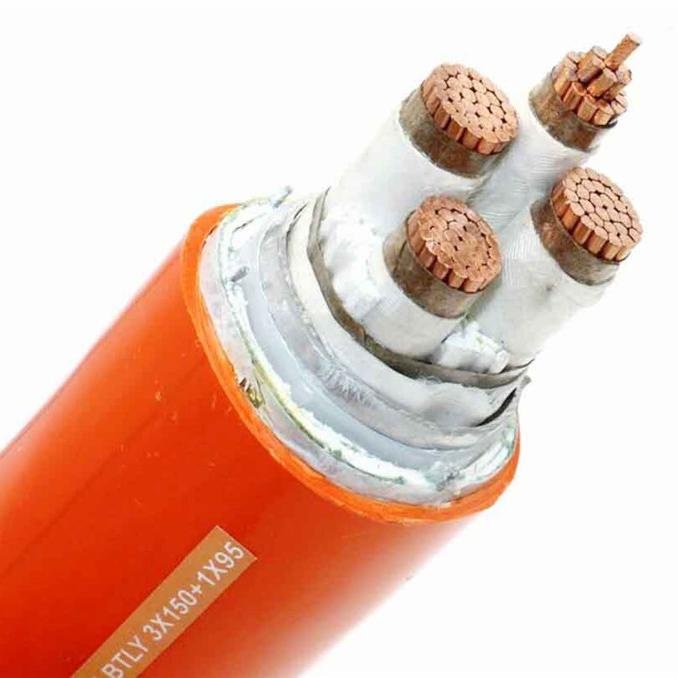
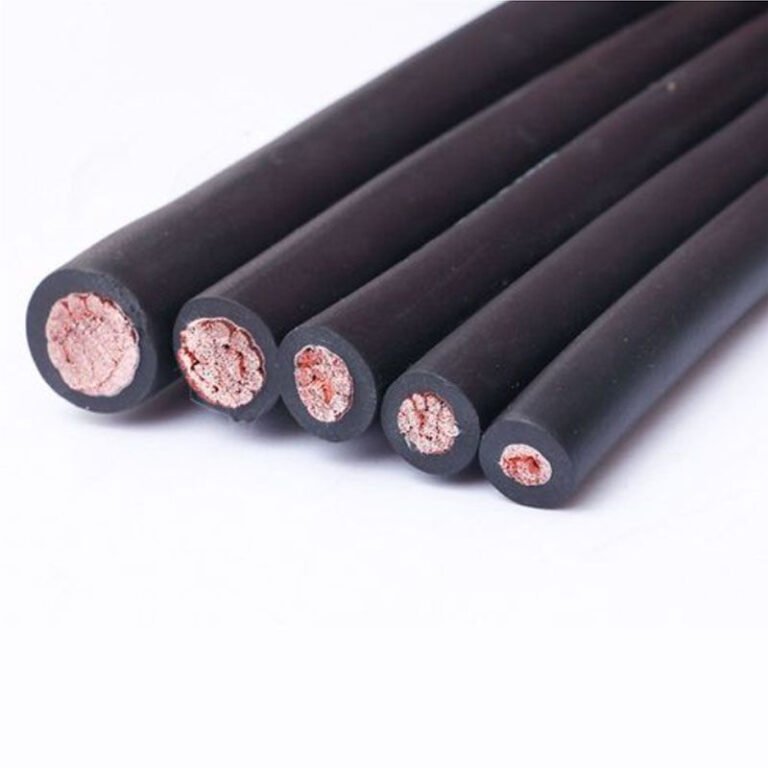
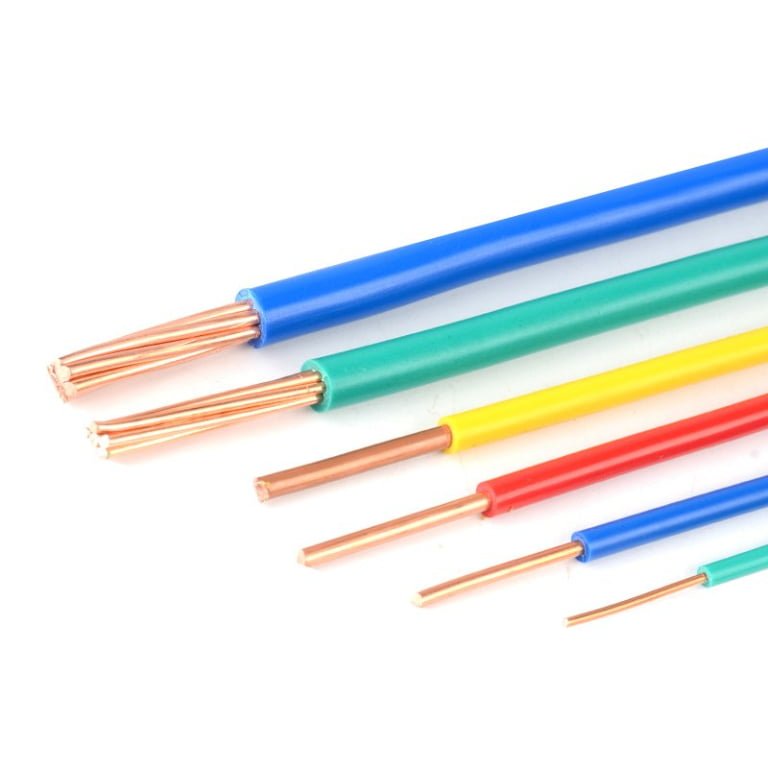
Building wire is a broad category of single-conductor or multi-conductor copper (or sometimes aluminum) wire designed for fixed interior wiring in buildings, run through conduit, raceways, or cable assemblies. Common types include THHN, THWN-2, XHHW-2, and NM-B, each with a specific insulation material, temperature rating, and listed application. The type you need depends on voltage class, installation environment, conduit fill, and the code jurisdiction governing your project.
What makes this genuinely complicated for procurement and engineering teams is that “building wire” isn’t a single product — it’s a family, and the differences between members of that family carry real performance consequences in the field. Understanding where those distinctions come from, what they mean for installation and long-term reliability, and how conductor sizing interacts with insulation rating is what separates a correct specification from one that passes submittal review and then causes problems eighteen months into occupancy.
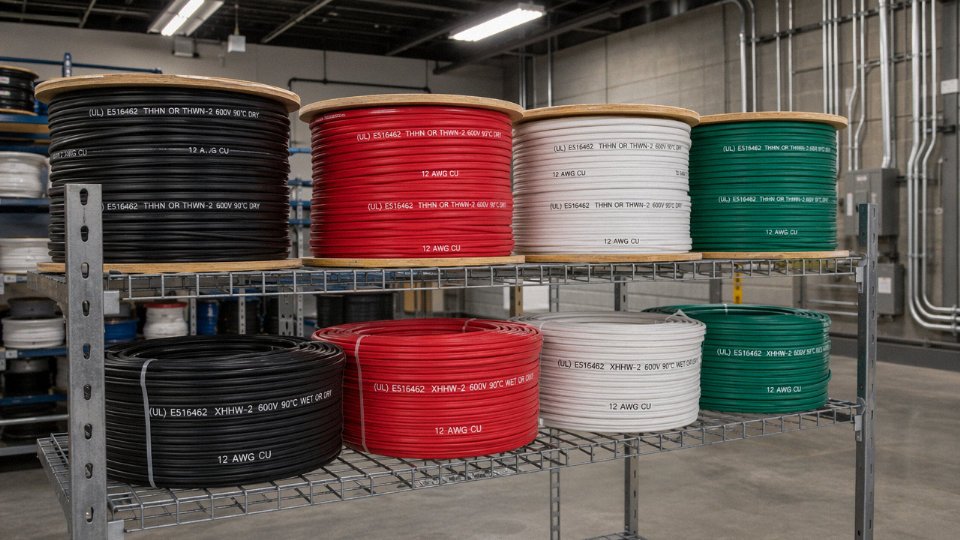
Anatomy of Building Wire: Conductor, Insulation System, and Jacket Layers Explained
Understanding what’s inside a building wire isn’t academic — it determines whether a cable survives a conduit pull, handles the thermal cycling of a commercial rooftop unit, or passes a final inspection in a jurisdiction that enforces UL listing compliance to the letter.
Conductor Construction: Solid vs. Stranded, and Why It Matters on the Floor
The conductor is where the electrical work happens, and the choice between solid and stranded affects installation more than most spec sheets admit. Solid conductors — a single drawn copper rod — are standard for 14 AWG through 10 AWG branch circuit wiring in fixed residential and light commercial work. They’re cheaper to terminate cleanly, hold a screw terminal without fanning out, and are completely appropriate when the wire won’t flex after installation.
Stranded conductors are a different animal. For any pull-through conduit run of meaningful length, especially with bends, stranded wire is noticeably easier to handle and far less likely to kink or work-harden at a tight radius. ASTM B8 governs Class B stranding — the most common commercial grade, typically 7 or 19 strands depending on size — while Class C (per ASTM B174) uses more, finer strands for better flexibility, something you’ll see specified on larger feeders above roughly 2/0 AWG where the installers are wrestling the cable around 90-degree sweeps in a crowded gear room. The flex life of Class C is genuinely better; the tradeoff is slightly higher cost and, occasionally, marginal difficulty getting the larger conductor into a compression lug if the die isn’t matched correctly.
Insulation Materials: PVC, XLPE, and LSZH Each Serve a Distinct Environment
Standard THHN uses a PVC insulation compound extruded over the conductor. PVC is cost-effective, bonds well to the nylon jacket layer applied over it, and performs reliably in dry conduit runs — which describes the majority of building wire installations worldwide. Its limitation is temperature: conventional PVC insulation begins to soften and deform under sustained heat above roughly 90°C, and in a tightly packed conduit bundle running near rated ampacity in a hot electrical room, that margin gets consumed faster than engineers sometimes account for.
XLPE (cross-linked polyethylene) changes the chemistry. The cross-linking creates a three-dimensional polymer network that resists thermal deformation significantly better than thermoplastic PVC, which is why XLPE-insulated conductors show up in direct-burial feeders, higher-temperature industrial branch circuits, and any application where the wire might see occasional fault-current heating. XLPE also handles moisture better, which matters in below-grade conduit that floods seasonally — a real scenario in northern climates where frost heave cracks conduit joints.
LSZH compounds are mandated in confined or poorly ventilated spaces: tunnels, transit stations, data center cable pathways, and increasingly in European commercial construction under CPR (Construction Products Regulation) classifications. The performance rationale is straightforward — conventional PVC produces dense, toxic smoke and hydrochloric acid gas when burned, which impairs evacuation and damages electronics. LSZH compounds sacrifice some flexibility and are more expensive per meter, but in a crowded server hall that’s the right trade.
LSZH insulation produces significantly less smoke and no halogen acid gases compared to standard PVC under fire conditionsTrue
This is established by IEC 60754 (halogen content) and IEC 61034 (smoke density) test standards; LSZH compounds are specifically formulated to meet these criteria, which standard PVC insulation does not.
Temperature Rating Tiers and Their Direct Impact on Ampacity
This is where engineers leave money on the table or create a latent overload problem — sometimes both simultaneously. NEC Table 310.16 ties conductor ampacity directly to insulation temperature rating. A 12 AWG copper conductor in a 60°C column carries roughly 20 A; bump the insulation rating to 75°C and the same conductor is good for around 25 A; at 90°C, closer to 30 A. Those differences compound on large feeder designs.
The catch: the full 90°C ampacity is only available when every component in the circuit — terminations, breaker terminals, connectors — is also rated 90°C. Most standard panelboard terminals are rated 75°C. So specifying THHN (90°C rated) and then terminating it at a 75°C lug means you’re engineering to the 75°C column anyway. Experienced engineers know this; it still catches people on fast-track projects where the electrical contractor and the panel supplier aren’t coordinating closely.
The Nylon Jacket Layer: Small Detail, Real Field Benefit
THHN carries a thin nylon (polyamide) braid over the PVC insulation, and it earns its place. Nylon resists the pulling lubricants — wire soap, gel-type compounds — that would otherwise attack PVC over time and cause surface cracking. It also reduces the coefficient of friction during a conduit pull meaningfully enough that installers on long runs with multiple bends notice the difference. The jacket adds only a fraction of a millimeter to the outer diameter, but that fraction does factor into conduit fill when you’re running eight or ten conductors and calculating to the NEC 40% fill limit. On tight installations, it’s worth accounting for in the conduit schedule rather than discovering the problem at rough-in.
Color Coding and the Commissioning Risk Nobody Talks About Enough
NEC convention: black and red for ungrounded phase conductors, white or gray for neutral, green or bare for equipment ground. IEC convention, used across most of Europe, the Middle East, and much of Asia: brown for line, blue for neutral, green-yellow stripe for protective earth. On international projects — a manufacturing plant being built in Southeast Asia with a North American electrical engineer of record and locally sourced wire — these conventions collide. The wire itself is correct; the colors mean something different to every technician who touches the panel.
Mismatched color coding has caused real commissioning delays and, in a few cases, serious hazards when a blue conductor was assumed to be neutral and terminated accordingly. Specifying color code convention explicitly in the procurement documents is not over-engineering; it’s the kind of detail that prevents a two-week startup delay.
Wall Thickness Tolerances and Conduit Fill
Insulation wall thickness is specified in NFPA 70 and UL 83 with defined minimums — typically in the range of 0.38 mm to 0.76 mm for common building wire sizes, depending on voltage rating and conductor size. Undersized insulation walls affect both dielectric performance and UL listing compliance; a cable that tests thin on wall thickness can fail a spot check and require replacement of an entire conduit run.
The less obvious consequence is conduit fill. If a manufacturer is running slightly thick walls — within tolerance, but toward the upper end — the actual outside diameter of the conductor rises, and if you’ve designed to the theoretical OD from a generic table rather than the specific product datasheet, you may find the calculated fill percentage is optimistic by a few percentage points. On a conduit with three large conductors that’s already near 40% fill, that’s the difference between a legal installation and a re-pull.
The Full Building Wire Type Matrix: THHN, THWN, XHHW, USE-2, RHH/RHW, and Beyond
Decoding the UL Designation Suffix System
Every North American building wire designation is essentially a compressed specification sheet. Once you understand the letter code, you can read any datasheet without hunting for footnotes. The key:
- T — thermoplastic insulation (PVC-based, most common)
- H — rated for 75°C heat; HH — rated for 90°C
- W — moisture-resistant, suitable for wet locations
- N — nylon outer jacket (adds abrasion resistance and pull-through lubricity in conduit)
- X — cross-linked polyethylene (XLPE) insulation instead of thermoplastic
- -2 suffix — upgraded wet rating to 90°C (the “-2” designation matters enormously in wet locations; don’t overlook it)
Work through “THWN-2” using that key: thermoplastic insulation, 75°C heat rating base designation, moisture-resistant, nylon jacket, upgraded to 90°C wet. Simple once you see the pattern. A wire stamped “XHHW-2” tells you cross-linked insulation, dual 90°C rating in both wet and dry conditions.
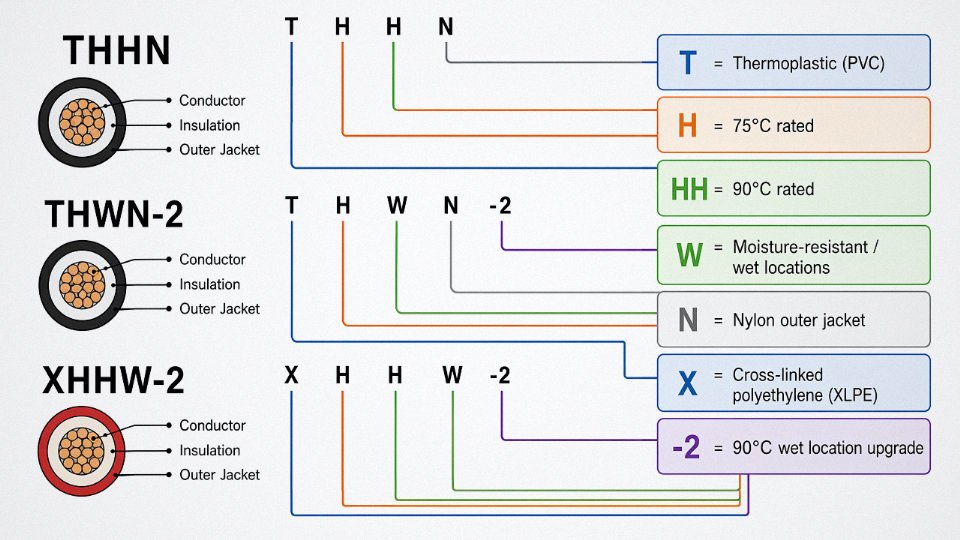
THHN/THWN-2: The Workhorse
This is what fills the vast majority of conduit runs in commercial and industrial buildings across North America. Rated 90°C dry and 75°C wet under the base THWN designation, or 90°C in both conditions under the THWN-2 variant — tested per UL 83. Conductor sizes run from 14 AWG up to 1,000 kcmil depending on feeder requirements.
Critical installation constraint: THHN/THWN-2 is a conduit-and-raceway wire. It is not rated for direct burial on its own. Pulling it through wet concrete without conduit, or burying it in soil thinking the nylon jacket is adequate protection — both are code violations and will cause insulation degradation within a few years, sometimes less in alkaline soils or where groundwater carries chlorides.
THHN/THWN-2 wire can be directly buried in soil without conduit if the nylon jacket is intact.False
THHN/THWN-2 is rated for conduit and raceway installations only. Direct burial requires either conduit enclosure or a wire type specifically rated for direct burial, such as USE-2 or UF-B. The nylon jacket provides mechanical protection during installation but is not a moisture barrier for long-term soil exposure.
XHHW-2: Preferred for Wet and Below-Grade Locations
XHHW-2 uses cross-linked polyethylene insulation, which handles 90°C in both wet and dry environments. The XLPE insulation is meaningfully more resistant to moisture ingress over time compared to PVC, which is why XHHW-2 shows up in service entrance applications, below-grade electrical rooms, and anywhere with persistent humidity. In practice, specifying XHHW-2 in a basement switchgear room costs maybe 8–15% more per foot than THHN depending on conductor size and market copper pricing — usually worth it given the reduced long-term maintenance exposure.
USE-2: Underground Service Entrance and PV Applications
USE-2 is specifically engineered for direct burial and outdoor exposure. It carries a sunlight-resistance rating and a 90°C rating, which is why the photovoltaic industry adopted it heavily for string wiring and underground array-to-inverter runs before purpose-built PV wire (PV Wire / USE-2 dual-listed products) became standard. If you’re procuring wire for a ground-mount solar project, verify the “sunlight resistant” marking is actually printed on the jacket — not all USE-2 in the market meets that marking requirement consistently.
RHH/RHW-2: High-Temperature Industrial Environments
Rubber-insulated, rated to 90°C (RHH dry, RHW-2 wet). Bulkier than THHN for the same ampacity, but the ethylene-propylene rubber (EPR) insulation handles radiant heat environments that PVC cannot — boiler rooms, industrial ovens, process areas where ambient temperatures routinely run above 50°C. The larger insulation wall also provides better resistance to physical damage in tight industrial conduit bundles. Specifiers sometimes overlook RHH/RHW-2 until they get a failure report from a PVC-insulated wire run near a heat source.
NM-B (Romex) vs. Conduit-Installed THHN
NM-B is a different animal structurally. It bundles two or more THHN-equivalent conductors plus a bare equipment grounding conductor inside a flat PVC outer jacket — all wrapped together, not individual conductors in a raceway. It’s rated 60°C at the conductor (despite the 90°C insulation on the inner conductors, the NEC derates the assembly to 60°C due to bundling heat effects). The NEC restricts NM-B to dry, permanently protected locations: wood-frame residential and some light commercial construction, but not in commercial buildings over certain occupancy classifications, not exposed in industrial environments, and not in wet or damp locations.
Individual THHN pulled in conduit gives you flexibility — you can replace a conductor without tearing into a wall, you can upsize later if loads grow, and the raceway itself provides mechanical protection. NM-B trades that flexibility for installation speed and lower first cost in residential framing.
International Equivalents
The designation systems differ significantly outside North America. The table below maps the most commonly specified US types to their closest functional counterparts.
| US Designation | IEC / European (IEC 60227 / HD 21) | UK (BS 6004) | Australia/NZ (AS/NZS 5000.1) | Key Differences |
|---|---|---|---|---|
| THHN/THWN-2 | H07V-R (rigid) / H07V-K (flexible) | 6491B | V-90 (single core, PVC) | IEC types rated in mm², no nylon jacket requirement |
| XHHW-2 | H07RN-F (approx.) / XLPE types vary by country | 6181Y (XLPE) | X-90 (XLPE insulated) | XLPE compound formulations differ; verify UV rating separately |
| USE-2 | No direct equivalent; use armored or UV-rated XLPE | 6943X (multicore, approx.) | SDI (service/direct burial) | Direct burial rules vary by national wiring code |
| NM-B | No equivalent widely used; most markets use conduit systems | 6242Y (flat twin and earth) | TPS flat cable | BS/AS flat cable uses bare CPC, similar end application |
The absence of a “nylon jacket” requirement in IEC designations is worth flagging for procurement teams sourcing wire for mixed North American / international projects. An H07V-K conductor meets the conductor and insulation performance of THHN in many respects but does not carry UL 83 listing — which matters if the project falls under NEC jurisdiction or if the owner’s insurance specifier requires listed materials. Verify listing requirements project by project, not by assumption.
Voltage Classes, Ampacity Ratings, and Conductor Sizing: The Engineering Numbers That Drive Procurement
Rated voltage is one of those spec-sheet entries that confuses procurement teams more than it should. Standard building wire in North America carries a 600 V UL rating; IEC-compliant product is typically rated 450/750 V or 0.6/1 kV. That does not mean the wire is operating anywhere near those limits. A 120 V branch circuit or a 480 V three-phase feeder both sit well inside the 600 V envelope — the rating describes the insulation’s dielectric withstand capability, not the system voltage you’re running. The gap between system voltage and rated voltage is intentional design margin. Where you’ll see 2,000 V-rated building wire come up is in certain industrial feeders, mining applications, or wherever the NEC or a local authority demands extra insulation thickness because of fault exposure or equipment voltage spikes.
Ampacity: What the Tables Actually Tell You
NEC Table 310.16 is the baseline, but it’s worth understanding what “baseline” means here. The table assumes no more than three current-carrying conductors in a raceway, 30°C ambient, and 100% loading. Under those conditions, 12 AWG copper at 90°C (THHN) is rated 30 A, but on a 20 A branch circuit protected by a 20 A breaker you’re not using that headroom — terminal temperature limits at receptacles and breakers usually cap you at the 60°C column anyway, which puts 12 AWG at 20 A. That distinction matters when an engineer specifies THHN expecting to run it hotter than the terminations allow.
Rough ampacity benchmarks from the 75°C copper column, which is the practical column for most commercial work:
| Conductor Size | 75°C Ampacity (copper, in conduit) |
|---|---|
| 12 AWG | 20 A |
| 10 AWG | 30 A |
| 6 AWG | 65 A |
| 2 AWG | 115 A |
| 2/0 AWG | 175 A |
| 350 kcmil | 310 A |
| 500 kcmil | 380 A |
These figures shift considerably once you leave the baseline assumptions.
Derating: Where Projects Get Under-Specified
Derating factors stack multiplicatively, and that’s where under-engineered jobs run into trouble. Conduit fill above three current-carrying conductors triggers an adjustment — nine conductors in a single conduit drops you to 70% of tabulated ampacity. Ambient above 30°C (common in rooftop mechanical rooms, Middle Eastern climates, or plant floors near furnaces) adds another correction factor; at 50°C ambient, THHN copper loses roughly 18–20% of its rated capacity. Then layer on the continuous load rule: any load running three hours or more needs the breaker sized at 125% of load current, which effectively means your conductor has to handle that same 125% without hitting its temperature rating.
A rooftop HVAC circuit pulling 40 A continuous, installed in conduit with eight other conductors in a 45°C mechanical room, can easily demand a conductor two to three sizes larger than a naive ampacity lookup suggests. Skipping that math is how plants end up with nuisance trips or, worse, insulation degradation they won’t notice until a ground fault.
Voltage Drop: The Calculation That Prevents Callbacks
Voltage drop matters most on long branch circuits and large-building feeders. The working formula:
VD = (2 × K × I × L) / CM
Where K = 12.9 for copper (resistivity constant), I = current in amps, L = one-way circuit length in feet, CM = conductor area in circular mils.
Worked example: 100-foot, 20 A, 120 V circuit in 12 AWG copper (6,530 CM).
VD = (2 × 12.9 × 20 × 100) / 6,530 = 7.9 V, or about 6.6% of 120 V.
That exceeds the 3% branch circuit guideline the NEC recommends and the 5% total system limit. Stepping up to 10 AWG (10,380 CM) drops voltage loss to roughly 5.0 V — still marginal. For a 100-foot 20 A run, 10 AWG is the right call, not 12 AWG, even though the breaker rating alone would permit 12.
The NEC voltage drop guidelines of 3% for branch circuits and 5% total are recommendations, not mandatory code requirements.True
NEC 210.19(A) and 215.2(A) include informational notes recommending these limits, but they are not enforceable code mandates — enforcement depends on local amendments and AHJ interpretation. That said, most engineers treat them as de facto minimums.
Aluminum Conductors: The Cost Trade-Off
Aluminum costs roughly 40–60% less per pound than copper, but you can’t size it the same way. For equivalent ampacity, aluminum typically needs to be two AWG sizes larger — 2 AWG aluminum to match 4 AWG copper, for instance. That offsets some of the material savings with larger conduit and more labor. The bigger field risk is oxidation at terminations: aluminum oxide is resistive, and a loose or uncoated termination on an aluminum feeder will heat up and eventually fail. Anti-oxidant compound (Noalox or equivalent) at every termination isn’t optional — it’s a code requirement under NEC 110.14 for aluminum connections. In practice, aluminum makes economic sense on feeders 1/0 AWG and larger, where the weight and cost savings become meaningful. On branch circuit runs, the labor and fitting cost rarely justifies switching from copper.
Procurement: Reel Sizing and Waste Control
Standard reel or coil sizes run 500 ft, 1,000 ft, and 2,500 ft — though some manufacturers offer 5,000 ft continuous reels for large commercial projects. The mismatch between those standard lengths and actual run lengths is where project waste accumulates quietly.
A practical approach: calculate total circuit length per conductor size from your panel schedule and conduit layout drawings, add 10–15% for pulls, splices, and panel tails, then divide by your chosen reel length to determine reel count. Rounding up is obvious, but ordering an extra partial reel “just in case” often means paying full reel price for leftover footage that sits in a warehouse. On a mid-size commercial job with, say, 18,000 feet of 12 AWG THHN to pull, the difference between ordering seventeen 1,000-ft reels versus eighteen can be $800–1,200 in stranded copper depending on the market price that week. That’s worth thirty minutes of planning.
Avoid mid-project reorders if you can — lead times on larger conductor sizes (350 kcmil and up) can run 3–8 weeks depending on mill backlog, and a job site stall waiting on feeder wire is an expensive lesson in procurement sequencing.
Standards and Certifications Governing Building Wire: UL, NEC, IEC, and Global Compliance Roadmap
Specifying the right wire type is only half the job. The other half is confirming that the product in your hand actually meets the standard you’re specifying — and that the installation itself complies with the governing code. These are two separate things, and conflating them creates real problems on inspection day.
UL 83: What the Listing Mark Actually Certifies
UL 83 is the foundational North American product standard for thermoplastic-insulated wires and cables, and the UL listing mark printed on the jacket is not a formality. To earn it, wire must pass a battery of physical and environmental tests: vertical flame propagation, crush resistance, cold bend (typically at -25°C), cold impact, and oil resistance for certain designations. The cold bend test matters more than people realize — in northern climates or unheated warehouses, pulling stiff, cracked wire through conduit in January is a common source of insulation damage that doesn’t show up until an arc fault trips the breaker six months later.
A UL listing mark on building wire jacket means the product has passed UL 83 physical and flame tests and is subject to UL's ongoing factory follow-up inspection program.True
UL 83 covers thermoplastic-insulated wires and cables for use in electrical systems up to 600 V. The listing mark indicates both initial product testing and periodic factory surveillance by UL inspectors, distinguishing it from a simple self-declaration.
The mark also signals ongoing factory surveillance. UL inspectors make unannounced visits; a supplier who can’t maintain that cadence loses the listing. When you’re sourcing internationally, ask for the UL file number and verify it at UL’s Product iQ database before the first shipment arrives.
NEC Article 310 and Why Two Documents Must Coexist
UL 83 tells you what the wire is. NFPA 70 (the National Electrical Code), specifically Article 310, tells you where and how you can use it. A wire can be fully UL-listed and still be installed illegally if the installer ignores ampacity correction factors for bundled conductors, ambient temperature above 30°C, or conduit fill ratios. In practice, the most common mistake is running THHN at its 90°C table ampacity in a conduit that also carries six other circuits — the NEC requires derating, and skipping that step creates a thermal runaway scenario that no wire rating can protect against.
CSA C22.2 No. 75 for Canadian Supply Chains
Cross-border projects between the U.S. and Canada come up constantly, and the practical solution is dual-listed wire carrying both UL and CSA marks from a single production run. CSA C22.2 No. 75 aligns closely with UL 83 in most test parameters, so manufacturers running both programs simultaneously can typically achieve dual listing without maintaining entirely separate product lines. Procurement managers should confirm the CSA file number independently — a UL mark does not automatically imply CSA compliance, regardless of what a sales rep tells you.
IEC 60227, IEC 60502-1, and the European Pathway
Outside North America, the IEC framework dominates. IEC 60227 covers PVC-insulated cables at 300/500 V and 450/750 V; IEC 60502-1 picks up at 0.6/1 kV and governs the heavier building feeders used in commercial and industrial work across Europe, the Middle East, and much of Southeast Asia. Voltage designation notation differs from North American convention — “0.6/1 kV” means 0.6 kV phase-to-ground and 1 kV phase-to-phase, which catches out engineers accustomed to reading “600 V” ratings.
CE marking for cables sold into the EU follows the Low Voltage Directive 2014/35/EU, supplemented by the Construction Products Regulation (CPR) for cables permanently installed in buildings. CPR introduced the Euroclass flame performance classification (Aca through Fca), which applies to fixed installation cables and is separate from the basic LVD CE mark. If you’re supplying a commercial building project in Germany, France, or the Gulf states that mirrors EU specifications, expect to provide both.
LSZH: Three Tests, Not One
Low-smoke halogen-free (LSZH or LSOH) wire is increasingly specified for transit, hospitality, healthcare, and data center projects — anywhere occupant evacuation matters. Buyers sometimes accept a single test certificate and assume it covers the full LSZH claim. It doesn’t. A genuinely compliant LSZH product requires three separate test results: IEC 60332-1 (or -3 for bundled cables) for flame propagation, IEC 60754-1 for halogen acid gas emission during combustion, and IEC 61034-2 for smoke density. A product can pass flame spread but still emit dense, toxic smoke from filler compounds — that failure mode is exactly what the smoke density test is designed to catch. Insist on all three certificates.
RoHS, REACH, and the Growing Documentary Burden
European procurement now routinely requires RoHS (Directive 2011/65/EU) and REACH (Regulation EC 1907/2006) compliance declarations, and Middle Eastern and Southeast Asian project owners are increasingly mirroring those requirements in their purchase specifications. A supplier’s declaration of conformity for RoHS should identify the specific restricted substances (lead, cadmium, mercury, hexavalent chromium, and the four phthalates added in 2019) and confirm testing or technical documentation for each. REACH compliance, particularly around SVHC (Substances of Very High Concern) in the candidate list, requires ongoing monitoring because the list is updated roughly twice a year. If a supplier hands you a REACH declaration dated three years ago without any update history, that’s a flag.
Multi-Standard Production in Practice
Maintaining simultaneous UL, CSA, IEC, and LSZH certifications across multiple production sites is operationally demanding — raw material controls, production records, and QC protocols have to stay consistent across every line or a single audit nonconformance can suspend an entire product family. Jinda’s five production bases in China operate under a unified quality management system that supports this multi-certification model, enabling customers across North America, Europe, the Middle East, and Southeast Asia to source from a single supply relationship without managing separate regional qualification processes. For large international projects where the wire specification changes between sections of the same facility, that kind of flexibility has real logistical value.
Installation Environments and Application-Specific Building Wire Selection: Wet, Dry, Direct Burial, High Temperature, and Fire-Rated
Getting the wire type right for the environment is where specification errors actually cost money. Over-specifying wastes budget; under-specifying causes insulation degradation, NEC violations, and — in the worst cases — fires or unplanned outages that dwarf the cost of the wire itself. Each designation in the building wire family exists for a reason, and the suffix letters are a compressed environmental specification, not marketing.
Dry Interior Locations: THHN as the Default
For interior walls, above-ceiling raceways, and conduit runs inside conditioned spaces, THHN is the workhorse. It’s rated 90°C in dry conditions, passes UL 83, and is produced in higher volumes than almost any other building wire type — which keeps lead times short and pricing competitive. The practical limitation engineers sometimes overlook is conduit fill: NEC Chapter 9 tables cap fill at 40% for three or more conductors in a single conduit, and that bites hard when you’re pulling multiple large-gauge circuits through the same sleeve. In cable tray, bundling more than roughly 6–9 current-carrying conductors together triggers derating under NEC 310.15(B)(3)(a) — ampacity can drop to 50–70% of the base value depending on bundle size and ambient temperature. Missing that calculation and relying on the breaker for protection is a genuine field error, and it happens more than it should.
Wet and Damp Locations: Why the “W” Suffix Is Non-Negotiable
Underground conduit runs, exterior raceways, parking structures, and any location where condensation is predictable require THWN-2 or XHHW-2. The “W” rating confirms the insulation system is qualified for 75°C continuous in wet conditions (THWN-2 also carries 90°C dry). PVC insulation without wet-location listing absorbs moisture at a slow but cumulative rate; over three to seven years in a consistently wet raceway, that manifests as reduced insulation resistance, tracking, and eventually ground faults. The polyester or nylon jacketing on THWN-2 is a meaningful mechanical and moisture barrier, not just a label difference.
THHN-only wire (without the W rating) will pass initial megohm testing even after installation in wet conduitTrue
Fresh PVC insulation resists moisture well enough to pass initial insulation resistance tests, but prolonged wet exposure degrades it over time — the failure is cumulative and shows up years later, not at commissioning.
Direct Burial: Jacket Chemistry and Burial Depth Together
USE-2 and UF-B are the correct choices when conduit is absent and the conductor goes directly into soil. NEC Table 300.5 sets minimum burial depths — generally 600 mm (24 in.) for residential UF-B circuits and up to 450 mm (18 in.) for USE-2 under certain conditions, with specific exceptions for concrete encasement or RMC. Soil chemistry matters here too. Alkaline soils common in arid regions and acidic soils near decomposing organic fill both attack generic jacket compounds over time. USE-2 jacketing is formulated to handle that, and the sunlight-resistance rating matters for any exposed run above grade near the entry point.
High-Temperature Environments: Derating Is Not Optional
Boiler rooms, rooftop HVAC equipment in hot climates, and the wiring compartments of industrial ovens regularly see ambient temperatures of 40°C–60°C. At 40°C ambient, NEC correction factors reduce THHN’s usable ampacity by roughly 10–12%. At 50°C, that correction drops to around 75% of the base rating. At 60°C, you’re looking at 58–65% depending on conductor size. RHH/RHW-2 with cross-linked polyethylene insulation holds its rated capacity better across this range than standard PVC-insulated wire, and XHHW-2 behaves similarly. Using THHN in a 55°C boiler room without applying correction factors and then wondering why breakers trip or insulation discolors is a scenario any facilities engineer will recognize.
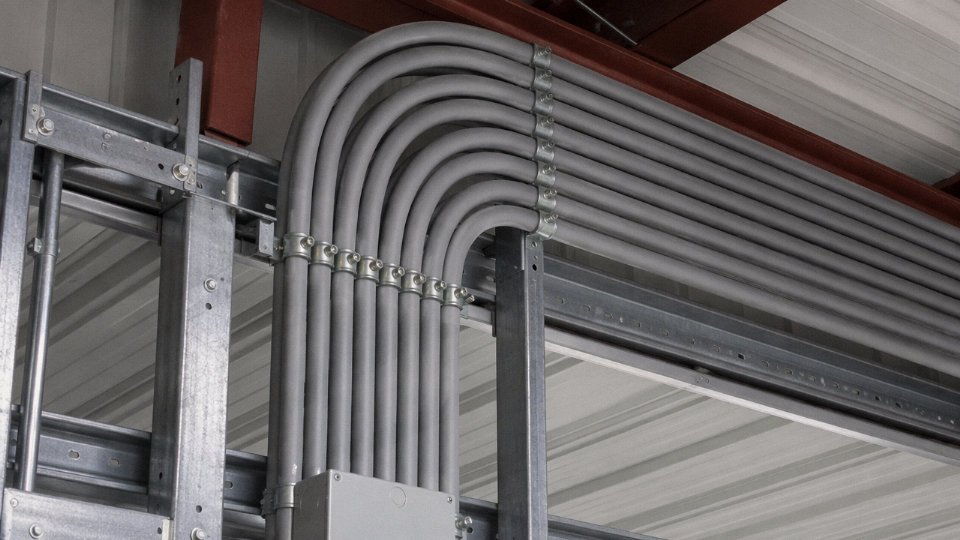
Fire-Rated and Life-Safety Circuits: A Different Category Entirely
MI (mineral-insulated) cable and IEC 60331- or UL 2196-tested circuit integrity cables are not standard building wire with better labeling — they are a structurally different product. MI cable uses compressed magnesium oxide as insulation inside a copper or stainless sheath, maintaining circuit function at 750°C–1000°C for 90–120 minutes depending on construction. These serve fire alarm circuits, emergency lighting feeders, and smoke control systems where the NEC and local fire codes require maintained circuit operation during a fire event. Specifying standard THHN for a rated fire-pump feeder is a code violation in most jurisdictions and a potentially catastrophic design error.
Enclosed and High-Occupancy Spaces: LSZH and Plenum Rating
Data centers, transit tunnels, and airport terminals create a specific toxicity problem. Standard PVC insulation burns with hydrogen chloride and other halogenated gases — in a confined space during evacuation, that matters independently of flame spread. LSZH (low-smoke zero-halogen) building wire reduces toxic gas output and smoke density. For air-handling spaces (plenums), CMP-rated cable per UL 910 is the required designation; it meets a significantly more demanding flame and smoke test than standard or LSZH wire. The cost premium for CMP or LSZH over standard THHN runs roughly 20–45% depending on conductor size and market conditions, which makes substituting non-plenum cable in plenum spaces a tempting field shortcut — one that fails inspections and creates genuine fire risk.
PV and Renewable Energy Tie-Ins
Rooftop and ground-mount photovoltaic arrays sit outside the typical building wire envelope. USE-2 is listed for PV source circuits but PV Wire per UL 4703 is increasingly the specified product because it adds sunlight resistance, thicker insulation rated to 2 kV, and better resistance to UV degradation over a 25–30 year panel lifespan. Where PV circuits transition into the building and connect to inverters or distribution panels, the feeder conductors typically revert to standard building wire designations — THWN-2 or XHHW-2 for any runs that may see moisture. Getting that transition point documented in the design drawings matters for inspection and for maintenance teams who will be troubleshooting years later.
Building Wire vs. Power Cable vs. Control Cable: Clearing Up the Most Common Misclassification Errors
This is where procurement errors get expensive. A project manager pulls a cable schedule, sees “600 V copper conductor, PVC insulation,” and assumes the spec is interchangeable across product families. It isn’t — and mixing these categories can mean failed inspections, equipment damage, or a conduit pull that has to be completely redone.
Where the Voltage Boundary Actually Lives
Building wire is a low-voltage product. The practical ceiling is 600 V for most NEC-governed installations, with some newer designations (XHHW-2, certain USE-2 configurations) carrying a 1,000 V rating to accommodate larger inverter-fed photovoltaic systems. Anything above that — and in practice this means 5 kV and up — belongs to medium-voltage cable territory, governed by UL 1072 and designations like MV-90 or MV-105.
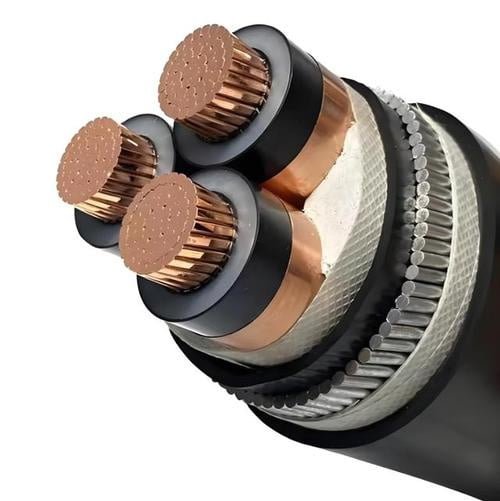
The structural difference is not cosmetic. Medium-voltage cables incorporate extruded semi-conductive stress-relief layers — an inner stress control layer over the conductor, and an outer semi-con layer under the metallic shield — because at 5 kV and above, electrical stress concentrates at geometric irregularities in a way that simply destroys unshielded insulation over time. Building wire has none of that. No semi-con layer, no extruded shield, no corrugated or tape armor as a standard feature. If someone hands you what looks like a fat THHN and claims it’s suitable for a 15 kV feeder run, that’s a hard no.
A standard THHN/THWN-2 building wire can be safely substituted for MV-90 cable on a 5 kV feeder circuit if the ampacity ratings match.False
THHN/THWN-2 is rated for 600 V maximum. It lacks the semi-conductive stress relief layers, extruded insulation shield, and metallic shield required for medium-voltage service. Using it at 5 kV will result in insulation breakdown, potentially immediately or through progressive degradation — and it will not pass inspection.
Control and Instrumentation Cable Is a Different Animal
Multi-pair shielded instrumentation cable — think Belden-style twisted pairs, foil shields, drain wires, designed to ISA-S82.01 or IEC 60189 — is built for signal integrity at milliamp or millivolt levels, not for carrying 20 or 30 A of load current. The insulation walls are often thinner, the conductors smaller, and the whole construction is optimized to suppress noise pickup and maintain capacitance balance across pairs. Run 15 A of 120 V branch circuit current through a typical 22 AWG instrumentation pair and you’ll get insulation failure, sometimes fast, sometimes slow — but you’ll also corrupt every signal on adjacent pairs long before the insulation gives out completely.
The reverse error causes its own problems. Using 12 AWG THHN where a shielded instrumentation cable is specified means the analog signal riding on that wire is now exposed to whatever electromagnetic interference lives in the conduit with it. In a motor control center environment, that’s a lot of interference.
Armored Cable: The Legitimate Hybrid
MC cable (UL 1569) and SWA cable (BS 5467) occupy a sensible middle ground. The conductors inside are building-wire-grade — THHN in most North American MC, PVC/XLPE in SWA — but they’re wrapped in a metal interlocking aluminum armor or steel wire armor respectively. This matters for installation method. MC cable in the right configuration can eliminate the conduit entirely, which speeds up rough-in on commercial tenant fit-outs considerably. But it’s not a universal conduit substitute; check the local authority’s interpretation, because some jurisdictions restrict MC in concrete encasement or direct burial without additional protection.
The Tray Cable Gray Zone
TC-ER (Tray Cable — Exposed Run, UL 1277) regularly gets misquoted as equivalent to conduit-installed building wire. It isn’t, quite. TC-ER carries additional requirements for crush resistance and sunlight resistance that standard THHN in conduit never needs. The conductors and insulation may look identical on a datasheet, but the overall assembly testing is different. For outdoor cable tray runs on rooftops or between buildings, TC-ER is the right call — and specifying THHN pulled through an open tray in UV exposure is asking for premature insulation degradation, usually within three to five years in hot climates.
Five Questions Before You Classify a Cable as Building Wire
| Question | What you’re ruling out |
|---|---|
| What is the rated system voltage? | Medium-voltage cable if above 1,000 V |
| What is the installation method? | TC-ER or MC if exposed tray or no conduit |
| Indoor dry, wet location, or direct burial? | Controls USE-2 vs. THHN vs. THWN-2 selection |
| What regulatory jurisdiction governs the project? | NEC, IEC, BS, or local equivalent — affects which marks are required |
| Is this a power circuit or a signal/control circuit? | Eliminates instrumentation cable cross-application |
Run through these before writing a purchase order. It takes two minutes and can save weeks of rework.
Quality Assurance in Building Wire Manufacturing: What Happens Before the Reel Leaves the Factory
Buying building wire on price alone is a reasonable starting point for commodity procurement — until you pull wire through conduit on a live project and find pinholes in the insulation, or your incoming resistance test shows conductor purity that doesn’t match the mill certificate. What separates a reliable supplier from a cheap one usually isn’t visible on the reel. It’s buried in process controls most buyers never ask about.
Raw Material Control: Where Quality Either Starts or Fails
Copper conductor quality is non-negotiable. ETP (electrolytic tough-pitch) copper rod must hit 99.9% minimum purity; anything lower raises resistivity, which means real-world ampacity falls short of what the datasheet claims. Incoming rod is tested for conductor resistance per ASTM B3 — a straightforward test, but one that’s frequently skipped by lower-tier producers who rely entirely on the rod mill’s certificate without independent verification. In practice, a batch of slightly off-spec rod that slips through incoming inspection can affect hundreds of reels before anyone catches it at the reel-end stage.
Aluminum conductors add another variable. The alloy matters: 1350-series aluminum is the standard for solid and stranded feeders, while 8000-series (AA-8030, AA-8176) is specified for branch circuit wiring where flexibility and termination reliability are concerns. The two are not interchangeable at the specification level, and a supplier who can’t tell you which alloy they’re running on a given product line is worth treating with caution.
CV Line vs. Batch Extrusion: The XLPE Cross-Linking Problem
For XLPE-insulated building wire, the manufacturing equipment matters as much as the compound. Cross-linking polyethylene requires sustained high temperature, and if moisture is present during that process, it nucleates microvoids in the insulation matrix — defects that won’t show up on a spark test but will degrade dielectric strength over years of service. A properly designed continuous vulcanization (CV) line runs the conductor through a nitrogen-gas-sealed tube during the cross-linking stage, excluding atmospheric moisture entirely. Batch or open-steam curing can’t replicate this, and the difference shows up in long-term aging tests even if initial hipot results look acceptable.
In-Line Spark Testing: Every Meter, Not Just Samples
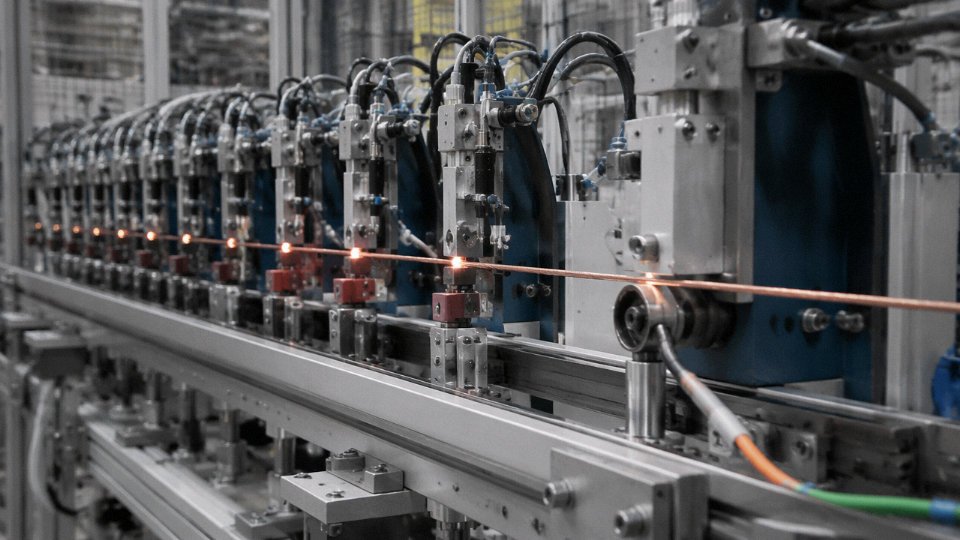
Holiday (spark) testing runs every linear meter of insulated conductor past a high-voltage electrode — typically 2,000 to 3,000 V AC, or a DC equivalent adjusted for insulation wall thickness — before the jacketing pass. The threshold depends on insulation type and nominal wall thickness; UL 83 specifies the test voltage formula directly. A fault anywhere triggers an audible alarm and line stop. Competent manufacturers log each test event; if a supplier can’t produce spark-test records for a specific production lot, that’s a gap in their traceability chain.
Reel-End Electrical Testing
Finished reels get a second round of electrical verification: conductor resistance per ASTM B8, insulation resistance measured with a 500 V megohmmeter held for 60 seconds (IR values should be in the hundreds of MΩ·km range for new product — anything lower warrants investigation), and a dielectric withstand test at roughly 2,500 V AC for one minute. A single reel that fails hipot at this stage tells you the in-line process had a gap somewhere.
Dimensional Verification
UL 83 Section 8 requires micrometer measurement of insulation wall thickness at four quadrant positions on a cross-section. The minimum wall thickness tolerance is -10% from nominal — meaning a 0.38 mm nominal wall cannot go below approximately 0.34 mm at any measured point. Thin spots concentrate electrical stress and are one of the most common failure modes in commodity wire made on worn or poorly maintained tooling.
Type Tests vs. Production Surveillance
A type test report proves a specific construction passed a specific set of tests on a specific date. It does not prove that today’s production matches that construction.
A one-time UL type test certificate guarantees ongoing production qualityFalse
Type tests qualify a product construction at a point in time. Ongoing production quality requires periodic surveillance testing, third-party audits, and lot-by-lot certified test reports (CTRs). Buyers should request CTRs tied to the actual production batch, not just the original type test file number.
When auditing a supplier, ask for certified test reports (CTRs) referenced to the production batch number on your purchase order — not a generic type-test file. Reputable manufacturers can produce these within a day or two. If the response is a scan of a certificate from several years ago with no batch linkage, that’s a significant due-diligence flag.
Jinda’s Integrated Quality System
Across all five of Jinda’s production bases, ISO 9001:2015 certification governs the quality management system, with traceability linking each shipped reel back to its production batch records — copper rod heat number, extrusion line, spark-test log, and reel-end test data. The dedicated R&D laboratory runs accredited tests on incoming materials and finished product, not just paper-based supplier qualification. For international procurement teams managing multi-lot orders across long lead times, that kind of documented traceability is what makes supplier audits tractable and dispute resolution straightforward when questions arise in the field.
Frequently Asked Questions About Building Wire Types, Selection, and Sourcing
Is THHN the same as building wire?
No — though it’s easy to see why the two terms get conflated. THHN/THWN-2 is the single most specified product within the building wire category in North America, dominant enough that some contractors use the names interchangeably on job sites. But building wire is the category: it includes XHHW-2, USE-2, RHH/RHW, and several other designations, each engineered for different temperature, moisture, and installation conditions. Saying “THHN is building wire” is a bit like saying “a Phillips-head is a screwdriver” — technically not wrong in casual conversation, but imprecise enough to cause a real specification error when the job requires, say, an XHHW-2 rated for direct sunlight exposure or a USE-2 for direct burial without conduit.
Can building wire be used outdoors?
Only if the specific designation covers that condition — and the installation method matters as much as the wire type. THWN-2 or XHHW-2 pulled through conduit is acceptable in wet outdoor locations per NEC requirements. Standard THHN rated for dry locations only, run exposed in direct sunlight or buried directly in soil, is a code violation and will degrade in ways you won’t see until it fails: UV breakdown of the PVC jacket, moisture ingress into the insulation, eventual ground faults. The “W” suffix in THWN explicitly signals wet-location suitability; the “-2” suffix confirms the 90°C wet rating. If the project drawings just say “THHN” for an outdoor conduit run, that’s worth a written RFI before the wire goes in.
What is the difference between 600 V and 1,000 V building wire?
The 600 V rating covers the vast majority of North American commercial and residential branch circuits and feeders. The 1,000 V class — standard under IEC 60227 and IEC 60502-1 — uses a thicker insulation wall, which provides a higher dielectric safety margin and is required in many European and industrial applications where system design or local codes demand it. In practice, the insulation wall difference between the two voltage classes runs roughly 0.2–0.4 mm depending on conductor cross-section, which affects both material cost and conduit fill calculations. Specifying 1,000 V wire on a project designed around 600 V NEC tables is not automatically conservative — it can push you outside your conduit fill budget for larger conductor bundles.
How do I verify that a supplier’s UL or IEC certifications are genuine?
Go to the primary source. For UL listings, use the UL Product iQ database (iq.ul.com) and search by manufacturer name and product category — a legitimate listing will show the exact file number, the scope of listing, and the specific product constructions covered. For IEC certifications, the IECEE CB Scheme database (www.iecee.org) lets you verify CB Test Certificates by manufacturer and standard. Don’t accept a scanned certificate image as verification; those are trivially easy to alter. Cross-referencing the certificate number against the live database takes about three minutes and has caught more than a few fraudulent claims in procurement audits.
UL Product iQ and the IECEE CB Scheme database both allow free public verification of specific manufacturer listings and certificates.True
Both databases are publicly accessible and are the authoritative sources for confirming UL and IEC certification status; UL Product iQ is maintained at iq.ul.com and IECEE records are searchable at iecee.org.
Why does building wire have a printed legend on the jacket?
Because it’s required — and because it’s the first thing an electrical inspector checks before approving a rough-in. NEC Section 310.120 and UL 83 both mandate that the jacket print identify conductor size, insulation type, voltage rating, temperature rating, UL listing, and manufacturer name, with markings at intervals no greater than 610 mm (24 inches). That print string is not cosmetic. An inspector who can’t read a clear, complete legend on installed wire can and often will call for pull-and-replace. On bulk reels, faded or incomplete printing is usually a sign of a production line running too fast or using under-dosed ink — worth flagging in a pre-shipment inspection.
What is the minimum order quantity for building wire from an international manufacturer?
For sea-freight orders direct from Chinese manufacturers, the practical floor is typically somewhere in the range of 1,000–5,000 kg per size per order, though this varies with conductor cross-section (larger sizes have lower per-unit weight and the MOQ may be expressed in meters or reel count instead), whether the product requires a special certification run, and the manufacturer’s current production schedule. Stocking distributors in-country can supply smaller quantities at a meaningfully higher per-kilogram cost — usually 15–35% more, depending on the size and the distributor’s margin structure. For mixed-specification projects, consolidating multiple sizes into a single container shipment is almost always worth the coordination effort.
Does Jinda supply building wire that meets both UL and IEC standards simultaneously?
Yes. Jinda manufactures dual-certified building wire designed to satisfy UL 83 and NEC requirements alongside IEC 60227 and IEC 60502-1 requirements within a single product construction. This matters for international EPC contractors and developers running projects across multiple regulatory jurisdictions — rather than managing separate supply streams for North American and European-spec wire, a dual-certified product simplifies procurement, reduces inventory complexity at the project site, and keeps documentation unified for multi-country compliance reviews. Certification scope and available conductor sizes are worth confirming against the specific project specification at the RFQ stage rather than assuming all sizes in the range carry identical dual certification.
Sourcing Building Wire Internationally: Evaluation Criteria, Lead Times, and Long-Term Supply Partnership Strategy
Getting the wire specification right is only half the job. The other half is finding a supplier who can actually deliver — on time, to spec, with documentation that clears customs and satisfies the engineer of record. International procurement adds enough variables that even experienced buyers get burned, usually on lead times or certification mismatches discovered after the container is already on the water.
The Five Supplier Qualification Criteria That Are Non-Negotiable
Third-party certifications come first, and not just because a datasheet says “UL Listed.” Verify the listing directly on UL’s Product iQ database or the equivalent registry. For projects in the Gulf, SASO approval is a hard requirement; West Africa commonly requires SONCAP; the EU and many Southeast Asian markets want CE and ROHS compliance. A supplier who hands you a certificate PDF without a traceable listing number is a risk.
Raw material traceability matters more than most buyers realize. Copper purity directly affects ampacity and long-term conductor resistance — an 8-AWG THHN built with 99.9% electrolytic-tough-pitch copper behaves differently over a 30-year service life than one built with lower-grade rod. Ask for mill certificates. A serious manufacturer keeps them on file and provides them without drama.
Factory audit access is a reasonable ask for any order above roughly $200,000–300,000, depending on your company’s threshold. Audits do not have to be in-person; a structured third-party audit through SGS or Bureau Veritas covers most of what you need to know about production controls, raw material intake, and finished goods QA. Suppliers who resist audits are telling you something.
Documented QA procedures — actual ITP (Inspection and Test Plan) documents, not a one-page quality policy — let you verify that conductor resistance testing, spark testing, and dimensional checks are built into the production process rather than performed selectively for show. Financial stability for blanket orders is the quieter criterion, but if you are planning a 12-month rolling supply agreement for a large commercial project, you need a supplier with the working capital to hold copper inventory against your forecasted volumes without renegotiating price every quarter.
Lead Time Realities
Standard THHN in common sizes — 12 AWG through 4/0 AWG — typically runs 30–45 days production lead time from a major Chinese manufacturer, assuming copper rod is available and no upstream supply disruption. That number stretches to 60–90 days for special constructions: aluminum conductors in large sizes, custom reel lengths, dual-rated THHN/THWN-2 with non-standard jacket colors, or full-reel configurations outside the factory’s standard offerings.
The practical implication is that a buffer stock agreement — where the supplier holds, say, 60–90 days of your forecasted volume in finished goods against a modest deposit — is worth negotiating on any project where electrical rough-in cannot slip. Construction schedules rarely go exactly as planned, and being two weeks short on 250 kcmil feeder wire during a critical commissioning window is an expensive problem.
Total Landed Cost: Unit Price Is the Starting Point, Not the Answer
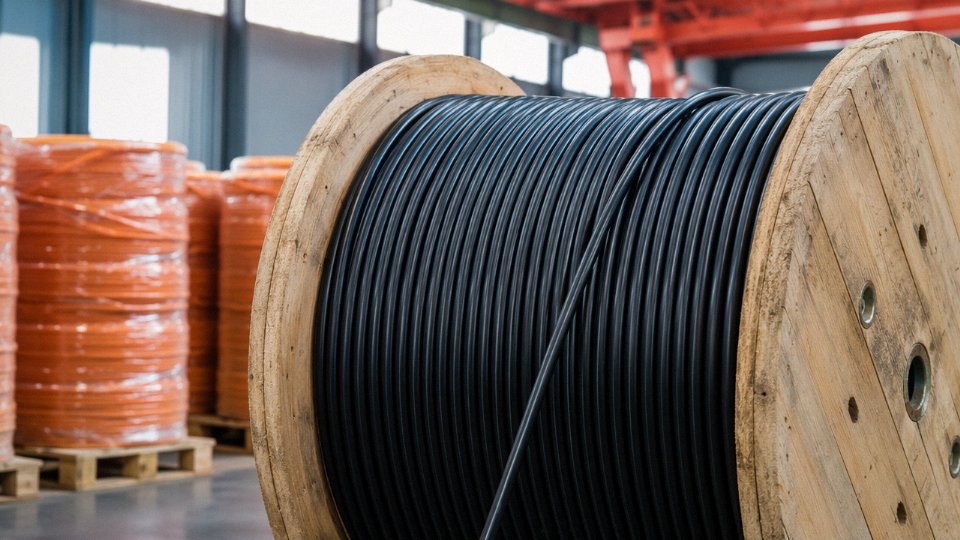
The HS code for insulated electric conductors of the building wire type is generally 8544.49. Import duty rates under that code vary — roughly 0% to 8% depending on the destination country and any applicable free trade agreements — and that swing alone can shift your cost-per-meter by a meaningful margin. Add ocean freight (which, depending on container rates and origin port, can run anywhere from $0.008 to $0.025 per meter on large reel orders), pre-shipment inspection fees, and letter-of-credit banking costs, and the unit price on the quotation can understate true landed cost by 12–22%. Run the full landed cost model before comparing suppliers on price.
HS code 8544.49 applies to insulated electric conductors for building wireTrue
HS 8544.49 covers insulated electric conductors fitted or not fitted with connectors, for a voltage not exceeding 1,000 V, and is the standard classification applied to building wire including THHN and similar types in international trade.
Writing a Specification That Gets You a Compliant Quotation
A professional RFQ for building wire should state, at minimum: conductor material (copper or aluminum), conductor class (solid or stranded, and stranding class per ASTM B8 or equivalent), conductor size in both AWG and mm², insulation type and certification required, voltage rating, temperature rating, applicable standard (UL 83, IEC 60227, or other), jacket color and color code standard, reel size or traverse wind preference, length per reel with acceptable tolerance (typically ±0%/+2% or as specified), country of destination, and required delivery date. Vague RFQs produce vague quotations and downstream disputes. The more specific your document, the fewer surprises at inspection.
Risk Mitigation on Critical Projects
For projects where a supply failure causes genuine financial exposure, a split-source strategy — qualifying two suppliers, even if you award 80% to one — is worth the administrative overhead. Pre-shipment inspection by an independent party before the container is sealed is standard practice among experienced international buyers and typically costs $400–900 per inspection, which is trivial against the cost of a rejected shipment. One habit worth building: retain a labeled cable sample from each production lot. Disputes about conductor cross-section, insulation thickness, or material compliance are far easier to resolve when you have a physical sample tied to a production lot number.
Jinda’s Supply Capability
Shandong Jinda Special Cable Group operates five production bases across Shandong, China, with a combined 470,000 m² of manufacturing space and over 1,000 employees. The export team serves customers in more than 50 countries and is set up to handle the documentation requirements — test reports, third-party certifications, packing lists formatted for customs clearance — that international projects demand. The product range covers the full building wire spectrum from 14 AWG THHN for branch circuit work up to 1,000 kcmil aluminum service entrance conductors for heavy commercial feeders, with technical support available for specification review when a project’s requirements fall outside standard catalog offerings.